Beginner Acoustic Guitar Essentials
Guitar Anatomy
Getting to Know Your Guitar
Before you can play a single note, it helps to know your way around the instrument. A guitar might seem complex, but it's really just a collection of simple parts working together to make music. Let's break down the main components of an acoustic guitar, starting from the top.
The diagram above gives a bird's-eye view. Now let's walk through each part so you know what it does.
The Headstock and Neck
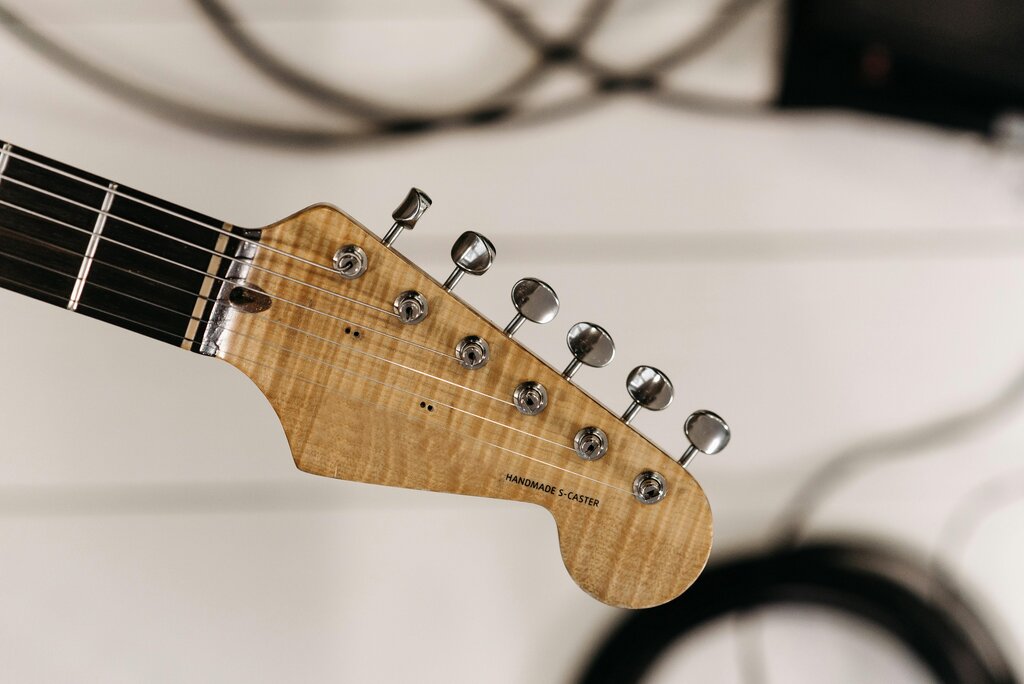
The headstock is at the very top of the guitar. Its main job is to hold the tuning pegs (also called tuners or machine heads). These are the knobs you twist to change the pitch of the strings. Turning them tightens the strings, making the pitch higher, while loosening them makes the pitch lower.
At the base of the headstock is a small, grooved strip called the nut. The strings pass through these grooves, which keeps them properly spaced and at the correct height as they run down the guitar.
Connected to the headstock is the long, wooden neck. This is where your fretting hand does its work. The back of the neck is curved for a comfortable grip, while the front side is a flat piece of wood called the fretboard (or fingerboard).
Embedded in the fretboard are thin metal strips called frets. When you press a string down against a fret, you shorten the vibrating length of the string. This changes its pitch, allowing you to play different notes. Each space between two frets corresponds to a specific note.
The Body and Bridge
The body is the largest part of the acoustic guitar. It acts as a resonance chamber, amplifying the sound created by the vibrating strings. Without the hollow body, an acoustic guitar would be incredibly quiet.
In the middle of the body is the soundhole, which helps project the amplified sound out of the guitar.
Mounted on the body is the bridge. This is the anchor point for the strings. The strings are held in place by bridge pins, and they pass over a thin strip called the saddle. Similar to the nut, the saddle sets the string height and spacing at the body end of the guitar.

The Strings
Finally, we have the strings. A standard guitar has six strings. They are numbered from 1 to 6, starting with the thinnest string (highest pitch) and moving to the thickest (lowest pitch).
However, musicians usually refer to them by their note names in standard tuning. It's a good idea to memorize these names. A common mnemonic to help remember them from thickest to thinnest is "Eddie Ate Dynamite, Good Bye Eddie."
| String Number | Note (Standard Tuning) | Description |
|---|---|---|
| 6 | E | Thickest, lowest pitch |
| 5 | A | |
| 4 | D | |
| 3 | G | |
| 2 | B | |
| 1 | e | Thinnest, highest pitch |
Notice that both the 6th and 1st strings are the note E, but they are two octaves apart. The lowercase 'e' for the 1st string signifies its higher pitch.
Understanding these parts and their names is the first step on your journey. It gives you the vocabulary to understand lessons, talk with other musicians, and take care of your instrument.
What is the primary function of the tuning pegs on a guitar?
Which part of the acoustic guitar acts as a resonance chamber to amplify the sound?