Bee Biology
Bee Morpho-Anatomy
The Engineering Behind the Bee
Bees are not just simple insects; they are masterful biological machines built for efficiency. In this chapter, we will dissect the specialized anatomy of the Apidae family, exploring everything from their intricate nectar-gathering mouthparts to the powerful muscles that sustain their flight. By the end of this journey, you will understand how these distinct physical adaptations integrate into a perfect system for high-energy foraging and complex nest building.
The Head as a Multifunctional Toolkit
The head of an Apidae specimen is far more than just a center for sensory input; it is a dynamic, multifunctional toolkit designed for high-stakes survival. While you might recognize the standard insect blueprint—a pair of , two antennae, and a set of mandibles—the Apidae family has modified these basics into a precision engineering suite.
For a bee, the head is the front line of the foraging mission. It must navigate complex floral landscapes, detect chemical signatures in the air, and, most importantly, extract energy from deep within flowers that other insects simply cannot reach.
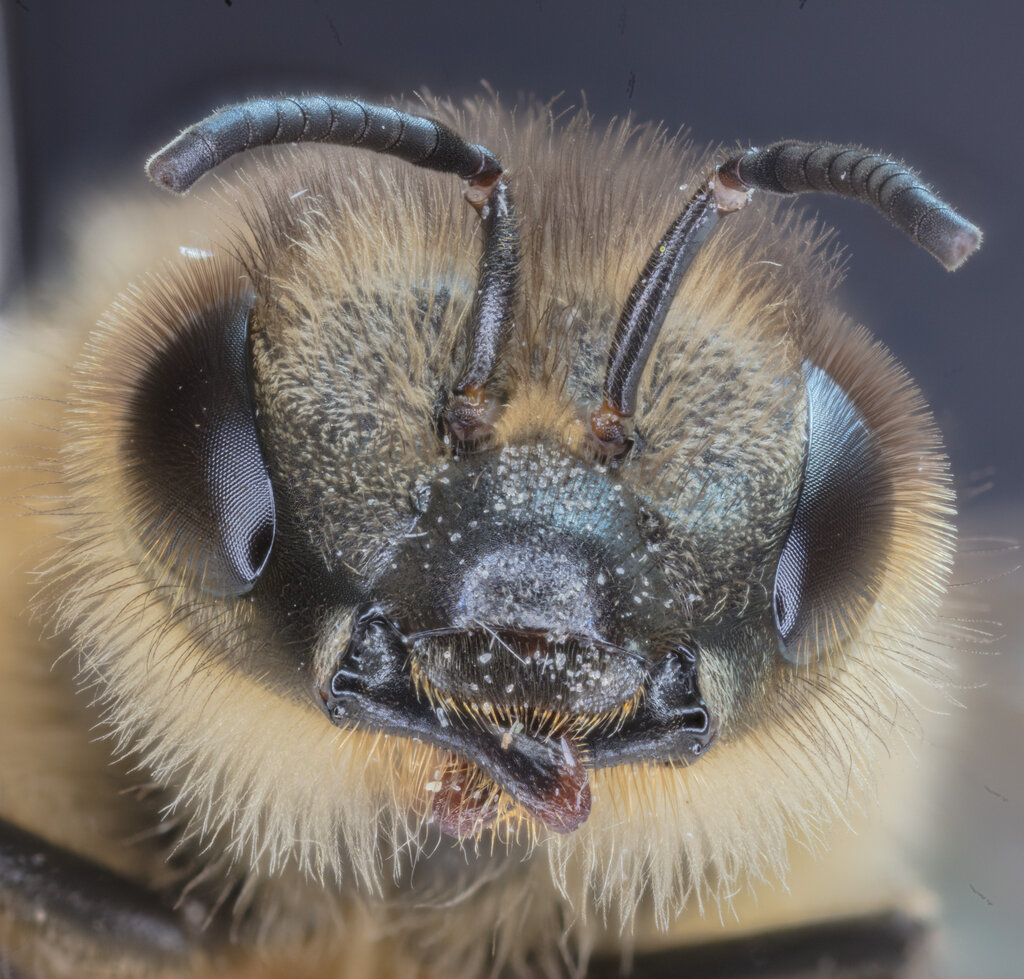
The most striking adaptation is the transition from a simple chewing mouth to a complex chewing-lapping mechanism. Unlike generalist insects that might only bite or sponge up liquids, the bee is a hybrid engineer. It retains strong mandibles for tasks like grooming, fighting, and manipulating wax, but it adds a sophisticated retractable straw for drinking nectar.
glossa
noun
The specialized, flexible tongue-like structure within a bee's mouthparts used to lap up or suck nectar.
This glossa is the heart of the system. It is not a rigid tube but a hairy, flexible appendage that can rapidly flick in and out of a liquid. When a bee finds a nectar source, it dips this 'tongue' into the fluid. The dense hairs on the glossa increase the surface area, trapping the sticky nectar through capillary action before it is pulled back into the mouth.
This system is supported by the maxillae and labium, which fold together to create a protective sheath or a functional tube. It is a masterpiece of fluid dynamics: the bee can switch from solid manipulation to liquid suction in a fraction of a second.
This design represents a clear evolutionary trade-off. While a generalist beetle might have simpler, tougher mouthparts for eating a wide variety of leaves, the bee has specialized. This specialization makes them incredibly efficient at extracting high-energy sugar, but it binds them to the world of flowering plants.
The mechanics of extraction are almost rhythmic. As the bee enters a flower, its sensory hairs detect the nectar's presence, the head tilts, and the tongue unfurls. It is a high-speed, high-pressure operation that fuels the bee's intense metabolic needs.
Understanding the head as a toolkit is the first step in appreciating the bee's total design. From the strong grip of its mandibles to the delicate reach of its glossa, every millimeter is optimized for the high-energy demands of the colony. Next, we will see how this energy is put to use by looking at the engine room of the bee: the thorax.