Become an English Fluency Master
English Sounds
The Building Blocks of Sound
Think of English words as structures built from individual bricks of sound. Mastering pronunciation starts with these fundamental bricks, known as phonemes. A phoneme is the smallest unit of sound that can change a word's meaning. For example, the only difference between "pat" and "bat" is the first sound. That means /p/ and /b/ are distinct phonemes in English.
English spelling can be misleading. The letter 'a' sounds different in "cat," "father," and "late." That's why focusing on the sounds themselves, not the letters, is the key to clear pronunciation. We'll explore the three main types of sounds: vowels, consonants, and diphthongs.
Vowels: The Core of Syllables
Every syllable in English has a vowel sound at its core. Vowels are produced with an open vocal tract, meaning the air flows freely from your lungs out through your mouth. The specific sound you make depends on the shape of your mouth and the position of your tongue.
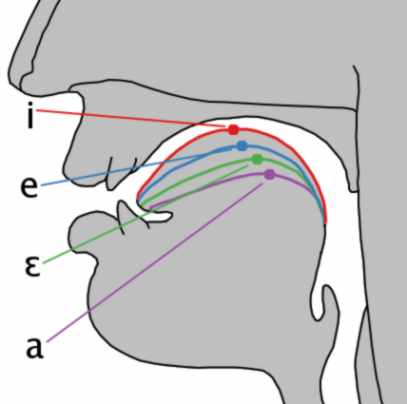
Think about the sounds in "feet" versus "food." To make the sound in "feet," your tongue is high and at the front of your mouth. For "food," it moves back and stays high. These small movements create all the different vowel sounds. Here are some of the most common ones:
| Phonetic Symbol | As in... |
|---|---|
| /iː/ | feet, see, mean |
| /ɪ/ | fit, sit, gym |
| /e/ | bet, said, head |
| /æ/ | cat, apple, sad |
| /ɑː/ | car, father, hot |
| /ɔː/ | door, saw, caught |
| /ʊ/ | good, foot, put |
| /uː/ | food, blue, new |
| /ʌ/ | cup, sun, but |
| /ə/ | about, sofa, taken |
The /ə/ sound, called the "schwa," is the most common vowel sound in English. It's a quick, relaxed sound found in unstressed syllables.
Consonants: Shaping the Air
If vowels are the open flow of air, consonants are sounds made by obstructing that flow. You create consonants by using your lips, teeth, or tongue to block the air completely or to force it through a narrow opening.
Some consonants are like twins, made in the same place in the mouth but with one key difference: vibration in your vocal cords. These are called voiced and voiceless pairs. For example, place your fingers on your throat and say "sss." Now say "zzz." You should feel a vibration for "zzz" but not for "sss." That vibration is voicing.
| Voiceless | Voiced |
|---|---|
| /p/ (pat) | /b/ (bat) |
| /t/ (ten) | /d/ (den) |
| /k/ (cat) | /g/ (gap) |
| /f/ (fan) | /v/ (van) |
| /s/ (sip) | /z/ (zip) |
| /θ/ (thin) | /ð/ (this) |
| /ʃ/ (ship) | /ʒ/ (measure) |
| /tʃ/ (chip) | /dʒ/ (judge) |
Other consonants don't come in pairs, like /m/ (man), /n/ (no), /l/ (leg), /r/ (red), and /h/ (hat).
Diphthongs: Two Sounds in One
Diphthongs, or gliding vowels, are two vowel sounds that are combined into a single syllable. Your mouth starts in the position for one vowel and glides into the position for another. It's a smooth, continuous movement.
English has a much larger set of vowel sounds than many other languages, which can make them challenging to learn.
For example, say the word "boy." You can feel your mouth shape change from the /ɔː/ sound to the /ɪ/ sound. Here are the common diphthongs:
| Phonetic Symbol | As in... |
|---|---|
| /aɪ/ | my, buy, eye |
| /eɪ/ | day, pay, eight |
| /ɔɪ/ | boy, toy, coin |
| /aʊ/ | cow, now, out |
| /oʊ/ | no, go, boat |
Sharpening Your Hearing
One of the best ways to train your ear and tongue is by practicing with minimal pairs. These are pairs of words that are identical except for one single sound.
minimal pair
noun
A pair of words that differ in only one phoneme, or sound, such as 'pin' and 'pen'.
Practicing minimal pairs helps you distinguish between sounds that might not exist in your native language. Listen carefully to the difference, and then try to produce both sounds distinctly.
| Pair Type | Example 1 | Example 2 |
|---|---|---|
| Vowels | ship /ʃɪp/ | sheep /ʃiːp/ |
| Vowels | pen /pen/ | pan /pæn/ |
| Vowels | desk /desk/ | disk /dɪsk/ |
| Consonants | fan /fæn/ | van /væn/ |
| Consonants | thin /θɪn/ | fin /fɪn/ |
| Consonants | rice /raɪs/ | rise /raɪz/ |
To get the most out of this, it helps to practice the individual sounds in isolation. This is where phonetic drills come in. For a sound you find difficult, like the /θ/ in "thin," try this:
- Isolate the sound: Make the /θ/ sound by itself. Place the tip of your tongue between your teeth and blow air.
- Use it at the beginning of words: thin, think, thank, three.
- Use it in the middle: something, author, method, healthy.
- Use it at the end: both, math, path, mouth.
This focused repetition builds muscle memory.
By practicing the precise mouth movements, tongue positions, and vocal cord vibrations associated with each phoneme, learners can develop the muscle memory necessary for more natural and fluent English speech.
Let's test what you've learned about these fundamental sounds.
What is the definition of a phoneme?
True or False: In English, the way a word is spelled is a completely reliable guide to how it should be pronounced.
Mastering these individual sounds is the first major step toward clear and confident English pronunciation. Consistent practice will make producing them feel natural.