Become an AI Engineer
Introduction to AI Engineering
What is an AI Engineer?
An AI engineer is a professional who designs, builds, and manages artificial intelligence systems. Think of them as the architects and construction workers of the AI world. They don't just dream up intelligent systems; they handle the practical, hands-on work of bringing them to life and making sure they run smoothly.
This role is a blend of a few different fields. It combines the software development skills of a software engineer, the data-handling expertise of a data scientist, and a deep understanding of machine learning models. Their goal is to solve real-world problems by creating AI solutions that can learn, reason, and make decisions.
An AI engineer is responsible for creating systems and models that enable machines to perform tasks that typically require human intelligence, such as decision-making, natural language processing, and visual perception.
They work on everything from the chatbots you interact with online to the recommendation engines that suggest what to watch next. It's a role that's becoming more critical as companies increasingly rely on AI to improve their products and services.
Core Responsibilities
The day-to-day work of an AI engineer can vary, but it generally revolves around the lifecycle of an AI model. This isn't a one-and-done process; it's a continuous cycle of building, deploying, and improving.
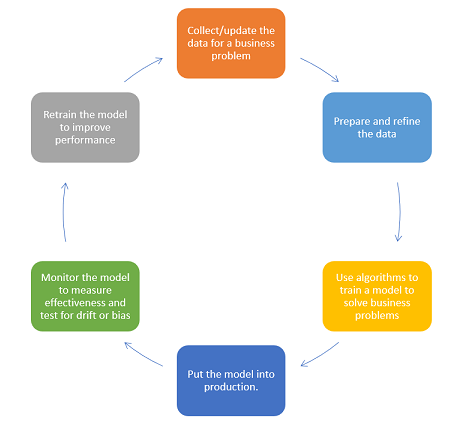
Here are some of their key responsibilities:
- Designing and Developing AI Models: They select the right algorithms and build models tailored to solve a specific business problem.
- Building Data Pipelines: AI models need a constant flow of high-quality data. Engineers create and manage the infrastructure that collects, cleans, and processes this data.
- Deploying Models to Production: A model isn't useful until it's part of a live application. AI engineers integrate their models into existing software and systems.
- Monitoring and Maintenance: Once a model is live, they watch its performance closely. They ensure it's accurate, efficient, and fair, and they retrain or update it as needed.
The AI Engineer's Toolkit
To succeed, an AI engineer needs a mix of technical know-how and strong soft skills. It's not enough to be a great coder; you also have to be a great problem-solver and collaborator.
Essential technical skills include programming (especially in languages like Python), a solid grasp of statistics and mathematics, and experience with data modeling and machine learning frameworks.
Beyond the technical side, soft skills are just as important. AI engineers need to communicate complex ideas clearly to colleagues who may not have a technical background. They also need to work closely with data scientists, software developers, and business leaders to bring a project to fruition.
Key Concepts
Three areas form the foundation of an AI engineer's work: data science, machine learning, and deep learning. While related, they each play a distinct role.
Data Science is the broad field of extracting knowledge and insights from data. It involves collecting, cleaning, analyzing, and visualizing data to find patterns. AI engineers use data science principles to prepare the information their models will learn from.
Machine Learning (ML) is a subset of AI where systems learn from data to identify patterns and make decisions with minimal human intervention. Instead of being programmed with explicit rules, an ML model learns by example. Spam filters in your email are a classic example.
Deep Learning (DL) is a more advanced subset of machine learning. It uses complex structures called neural networks, which are inspired by the human brain. Deep learning is particularly good at finding intricate patterns in huge datasets, making it ideal for tasks like image recognition and natural language processing.
Now that you have an overview of what AI engineering is all about, let's test your knowledge.
Which statement best describes the primary role of an AI engineer?
The continuous cycle of an AI model's lifecycle, managed by an AI engineer, involves building, deploying, and __________.
Understanding the role of an AI engineer is the first step. They are the bridge between the potential of artificial intelligence and its practical application in the world.