Become a Product Manager
Introduction to Product Management
What Is Product Management?
Product management is the process of guiding a product through its entire journey, from the initial idea to its launch and beyond. Think of it as the strategic force that ensures a product is valuable to customers and viable for the business.
Product management is the strategic practice of driving the development, market launch, and continual support and improvement of a company's products.
Without good product management, companies might build things nobody wants, waste resources, or miss key market opportunities. It's the discipline that connects business strategy, design, and technology to create products that people love and that achieve business goals. It ensures that the right product is built for the right audience at the right time.
The Product Manager's Role
A Product Manager (PM) is responsible for the product's success. They are often called the "CEO of the product," but they don't have direct authority over the teams they work with. Instead, they lead through influence, communication, and a clear vision. Their job isn't to have all the answers but to ask the right questions and steer the team toward the best solutions.
Product Managers focus on the 'what' and the 'why'—what problem are we solving, and why is it important?
Key responsibilities include:
- Defining the product vision and strategy: Setting the long-term direction for the product and ensuring it aligns with the company's goals.
- Understanding user needs: Talking to customers, analyzing data, and conducting research to deeply understand the problems that need solving.
- Prioritizing what to build: Deciding which features and improvements are most important to work on next, based on user needs and business value.
- Collaborating with cross-functional teams: Working closely with engineers, designers, marketers, and salespeople to bring the product to life.
While the PM sets the vision, creating a successful product requires a full team effort. They rely on the expertise of others to design, build, and market the product effectively.
Note: It's important to keep in mind that creating a product is a team sport and so it is NOT the product manager's job to do all of these activities on their own.
The Product Lifecycle
Every product goes through a lifecycle, which describes the stages it passes through from its creation to its eventual retirement. Understanding this cycle helps a Product Manager make strategic decisions about features, marketing, and pricing. While models can vary, a typical product lifecycle includes four main stages.
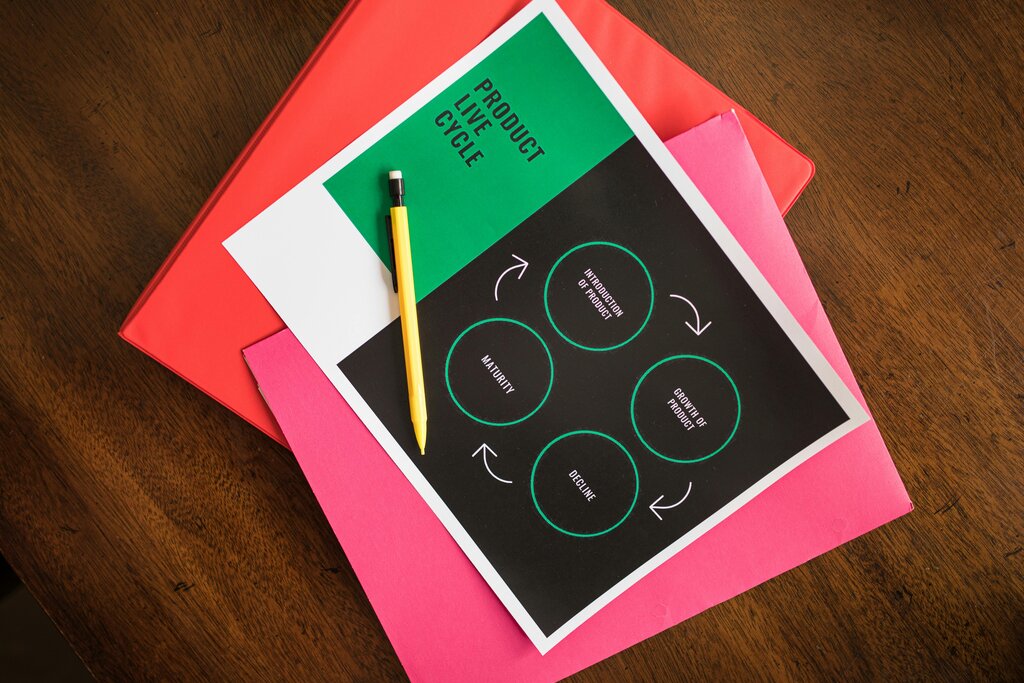
- Introduction: The product is launched into the market. The focus is on building awareness and acquiring the first set of users.
- Growth: The product starts to gain traction, and the user base grows rapidly. The goal is to scale, add features, and capture more market share.
- Maturity: The market becomes saturated, and growth slows down. The focus shifts to retaining customers, optimizing the product, and defending against competitors.
- Decline: The product becomes outdated or less relevant, and sales begin to fall. The company must decide whether to reinvent the product, phase it out, or replace it with something new.
Key Roles Explained
The terms Product Manager, Product Owner, and Project Manager are often used interchangeably, but they represent distinct roles with different responsibilities. While one person might sometimes wear multiple hats in a small company, their functions are unique.
| Role | Primary Focus | Key Question | Analogy |
|---|---|---|---|
| Product Manager | Product Vision & Strategy | What should we build and why? | The Architect |
| Product Owner | Development Backlog | What should the team build next? | The Builder |
| Project Manager | Execution & Timeline | How and when will we build it? | The Foreman |
The Product Manager sets the long-term vision. They are focused on the market, the user, and the overall business success of the product.
The Product Owner is a specific role within the Agile and Scrum frameworks. They are more tactical, managing the product backlog (the to-do list for the development team) and ensuring the team is working on the highest-value tasks in each sprint.
The Project Manager is responsible for executing a specific project with a defined scope, timeline, and budget. Their goal is to deliver the project on time and within budget.
Product managers focus on the "what" and "why" behind building products, while project managers concentrate on the "how" and "when" of getting things done.
These roles must collaborate closely. The Product Manager's strategy informs the Product Owner's backlog, and the Project Manager ensures the resources and timeline are in place to make it all happen.
What is the primary function of product management?
A Product Manager is often called the 'CEO of the product', but they typically lead their cross-functional team through __________.
Understanding these core concepts is the first step in mastering the world of product management.