Become a Certified Pilates Instructor
Pilates Principles
The Man Behind the Method
The story of Pilates begins with its creator, Joseph Pilates. Born in Germany in 1883, he was a frail child who suffered from asthma, rickets, and rheumatic fever. Determined to overcome his physical limitations, he dedicated his life to studying anatomy and various forms of exercise, from yoga to bodybuilding.
His breakthrough came during World War I. While interned in England, he began developing his method, which he called "Contrology." He worked as a nurse and orderly, rigging springs to hospital beds to help bedridden patients maintain muscle tone. This innovative setup was the forerunner of the modern Pilates Reformer machine.
After the war, he moved to New York City and opened a studio with his wife, Clara. His method quickly gained a following among the city's dancers and athletes, who found it invaluable for rehabilitation and building long, lean strength without bulk.
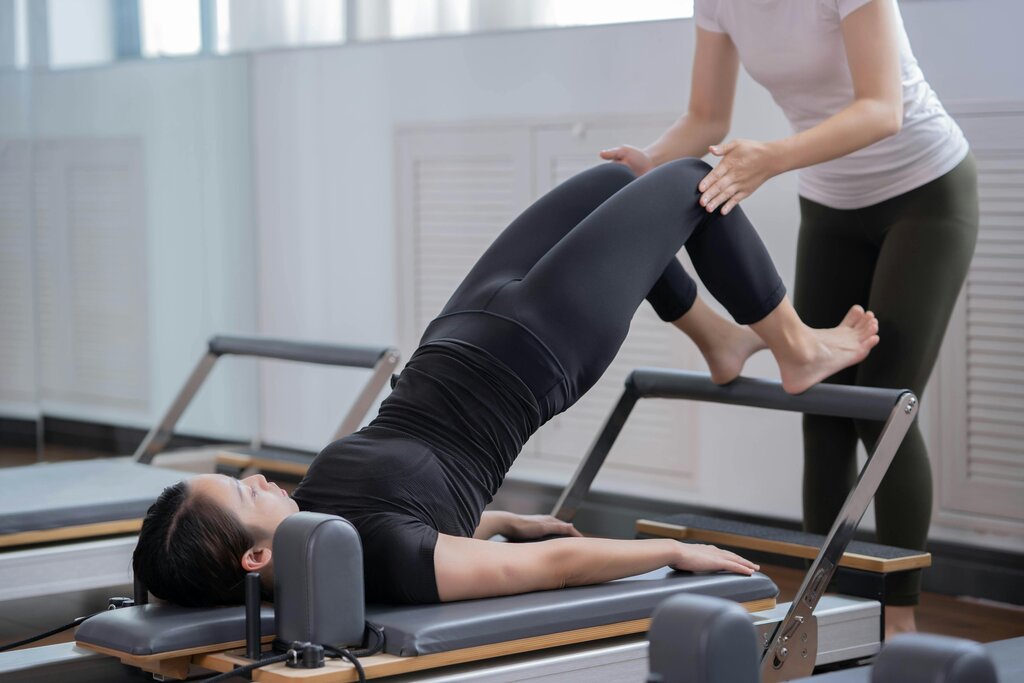
The Core Philosophy
At its heart, Pilates is a mind-body exercise system. Joseph Pilates believed in creating a uniformly developed body, correcting wrong postures, and restoring physical vitality. The goal isn't just to work your muscles, but to have your mind fully engaged in controlling them.
This creates a powerful connection that improves body awareness, coordination, and balance. It's about the quality of the movement, not just the quantity of repetitions. A few precise movements done with intention are far more effective than many sloppy ones.
The core idea is simple: A strong, stable center allows the rest of the body to move freely and efficiently.
The Six Guiding Principles
To achieve the full benefits of Pilates, practitioners follow six key principles. They are the foundation of every exercise and the philosophy that guides the practice.
Concentration
noun
Bringing full attention to each movement. It's about being present and aware of how your body feels and moves through space.
If you're thinking about your grocery list, you're not doing Pilates. The mind-body connection is paramount. By focusing intently, you ensure that you are performing the movement correctly and getting the maximum benefit.
Control: Every movement in Pilates is deliberate and performed with muscular control. There are no careless, jerky motions. This control is essential for preventing injury and achieving the sculpted, toned look associated with the practice.
Center: All movement originates from your core, what Joseph Pilates called the "powerhouse." This includes your abdomen, lower back, hips, and buttocks. By strengthening your center, you develop a stable foundation for all movement, both in the studio and in daily life.
Flow: Pilates exercises are meant to be performed with a sense of grace and ease. The movements are smooth and continuous, flowing from one to the next. The transitions are just as important as the exercises themselves, creating a workout that feels more like a dance than a series of static holds.
Precision: Every movement has a purpose and a specific placement. Alignment, posture, and the trajectory of each body part are critical. It’s this attention to detail that ensures the correct muscles are working and the body is moving efficiently.
Breathing: Proper breathing is fundamental. In Pilates, you are taught to breathe deeply into your back and ribcage. The breath is coordinated with the movement, typically inhaling to prepare for a movement and exhaling during the exertion. This technique oxygenates your muscles, helps you engage your core, and reduces stress.
These principles work together to create a holistic exercise system. By mastering them, you build not just physical strength, but also mental focus and a profound sense of well-being.
Now, let's test your knowledge of these foundational concepts.
What was the original name Joseph Pilates gave to his exercise method?
The early version of the Pilates Reformer was first developed in what setting?
Understanding these principles provides the foundation you need to begin practicing and teaching Pilates effectively.