Beat Post-Work Overthinking
Understanding Overthinking
The Thought Treadmill
Have you ever found yourself replaying a conversation from hours ago? Or maybe you're lying awake at night, analyzing every detail of a project deadline. This is overthinking. It's when your mind gets stuck on a loop, chewing on the same thoughts without moving toward a solution.
Thinking is great. Problem-solving is essential. But overthinking is different. It’s a mental spiral that doesn't lead to insight or action. Instead, it often focuses on things you can't control, like past events or future worries. This repetitive, unproductive thought process is also known as rumination.
Rumination
noun
The act of continuously thinking about the same thoughts, which tend to be sad or dark.
So why does our brain do this? Overthinking is often linked to our brain's natural response to threats. When faced with danger, our bodies enter a state of high alert, preparing to fight or flee. In the modern world, this system can be triggered by psychological stress, not just physical danger. An ambiguous email from your boss or a critical comment from a coworker can activate the same stress circuits.
Instead of running from a predator, your mind runs in circles, trying to analyze the 'threat' from every angle. It's searching for a sense of control in an uncertain situation. This creates a feedback loop: the more you worry, the more important the problem seems, which in turn fuels more worry. This cycle is a hallmark of anxiety and chronic stress.
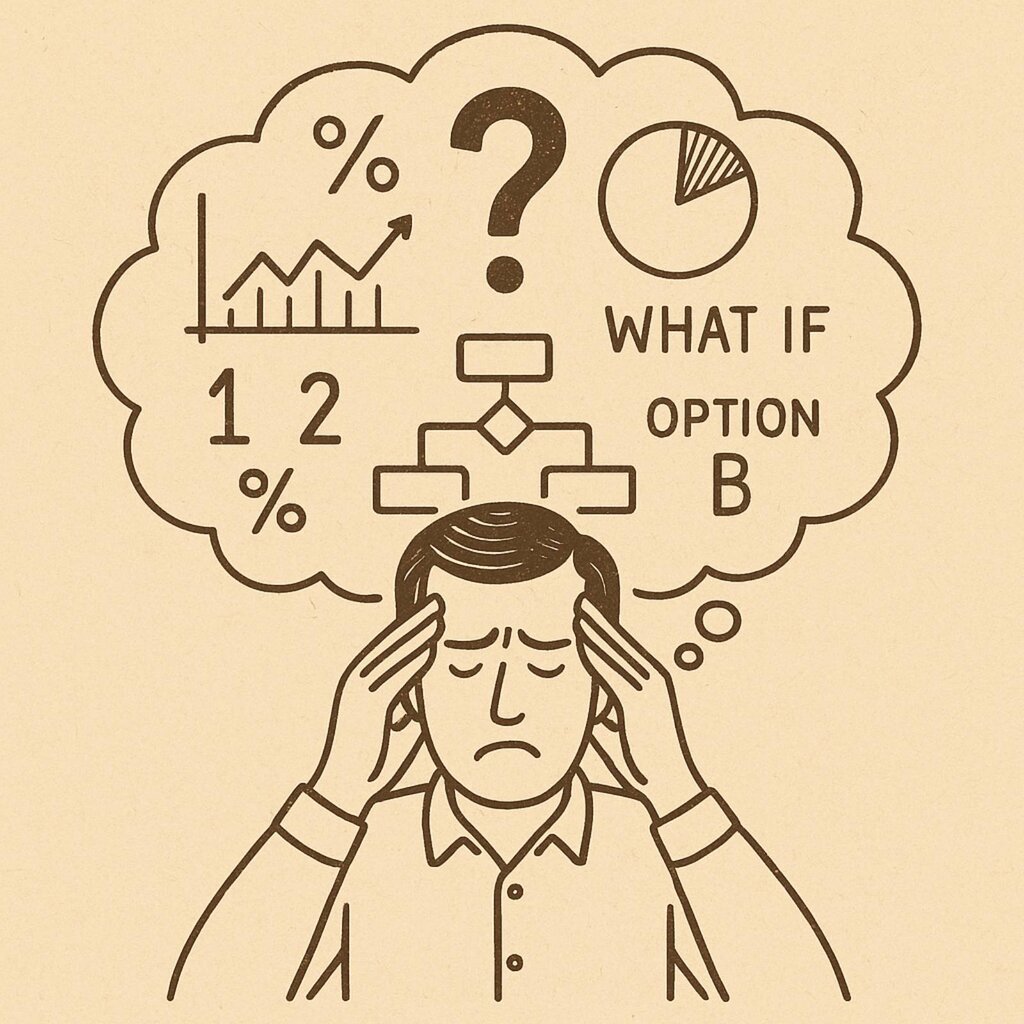
The impact of this mental habit isn't trivial. Constant overthinking drains your mental energy, making it hard to focus on the present moment. It can disrupt sleep, as the mind refuses to power down. Over time, it can contribute significantly to mental health challenges, leaving you feeling exhausted, irritable, and overwhelmed.
Common Triggers
Overthinking doesn't happen in a vacuum. It's often sparked by specific situations or internal states. Recognizing these triggers is the first step toward breaking the cycle.
Common workplace stressors are major culprits. Tight deadlines, high stakes projects, or difficult feedback can easily send your mind into overdrive. Uncertainty is another powerful trigger. When you don't know the outcome of a situation, like waiting for a promotion or the result of a big presentation, your brain might try to fill in the gaps by imagining every possible scenario, especially the negative ones.
Personal insecurities also play a huge role. Fear of failure, perfectionism, and imposter syndrome can make you second-guess every decision. You might obsess over small mistakes, convinced they're proof that you're not good enough. This internal pressure creates fertile ground for rumination to take root.
These thoughts might be repetitive (rumination), going over the same subject over and over — or they might bounce from one worry to the next.
Simply noticing when you're caught in these thought loops is a crucial starting point. By understanding what overthinking is and what sets it off, you begin to take back control.