Bâbord and Tribord Maritime Navigation
Port and Starboard Basics
The Unchanging Sides of a Ship
On land, left and right are simple. But on a boat, these terms can get confusing. If you're facing the back of the vessel, your left is the crewmate's right. This ambiguity can be dangerous in a fast-moving situation. That's why sailors use fixed, unchanging terms for the two sides of a vessel.
When you are on a boat and looking towards the front (the bow), the left side is always port, and the right side is always starboard. It doesn’t matter which way you are personally facing; the port side is always the port side.
Port
In French, the term for port is 'bâbord'.
Starboard
And for starboard, it's 'tribord'. These aren't just translations; they are the universal language of the sea, ensuring every crew member is on the same page.
A good way to remember the difference between port and starboard is that ‘port’ and ‘left’ both have four letters.
A Look Back in Time
These terms aren't arbitrary. They come from the very structure of ancient sailing vessels. Before ships had central rudders, they were steered with a large oar fixed to the back of the hull.
For most sailors, who were right-handed, this steering oar was placed on the right side of the ship. The old Norse word for this was stýri (steer) and borð (the side of a boat). Over time, this became "starboard" in English.
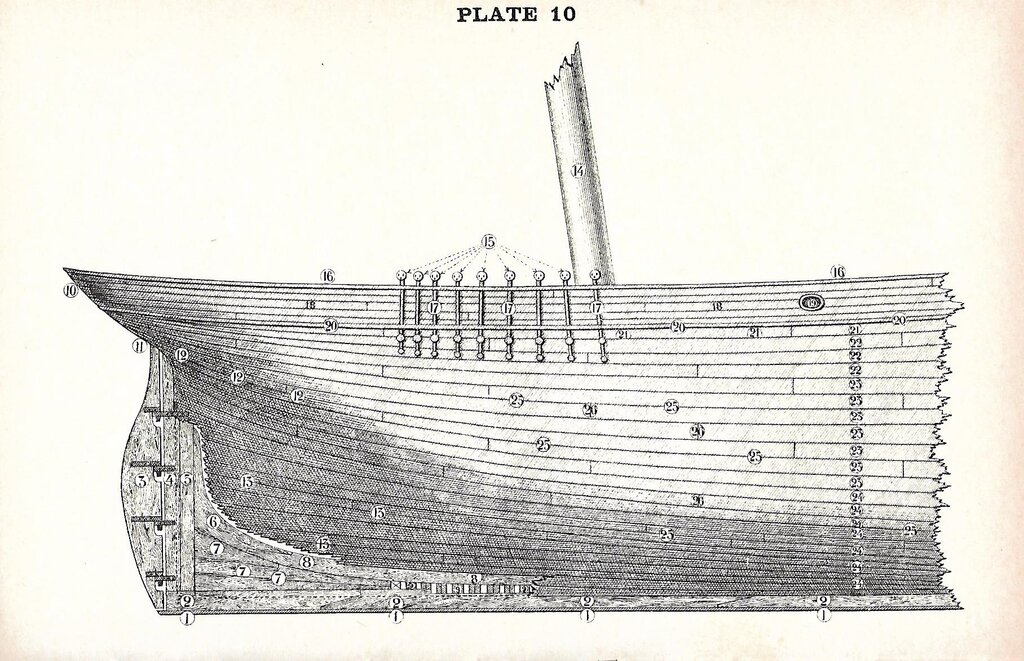
With a large steering oar permanently on the right, it was impractical to dock that side against a pier. You'd risk damaging the most important piece of equipment on the vessel. So, ships would always tie up to the dock on their left side. This was the side where cargo and passengers were loaded and unloaded—the side facing the port. Thus, the left side became known as the "port side."
An older term for the port side was 'larboard,' but it was too easily confused with 'starboard' when shouted over the wind and waves. The British Royal Navy officially replaced it with 'port' in 1844 to ensure clarity.
Why It Matters
Using port and starboard is about clear, unambiguous communication. When the captain yells, "Hard to port!" there is no question about which way to turn the wheel. This clarity is essential for maneuvering safely and is critical in an emergency.
These terms are also fundamental to the "rules of the road" at sea. Navigation lights, buoys that mark channels, and rules for giving way to other vessels are all based on the concepts of port and starboard.
Sailing terminology serves a purpose—it helps sailors avoid misunderstandings while sailing.
For instance, at night, a vessel is required to show a red light on its port side and a green light on its starboard side. Seeing another boat's lights tells you which direction it's heading and who has the right of way. It's a simple, elegant system that prevents collisions.
Ready to test your knowledge?
If you are standing on a boat looking toward the bow (the front), which side is 'port'?
The term 'starboard' has historical roots. What is its origin?
Mastering port and starboard is the first step in learning the language of the sea. It's a small detail that makes a world of difference in safety and communication on the water.