Bayesian Engine for AI Uncertainty Compression
Bayesian Signal Integration
From Feedback to Evidence
In an Instrumented Exposure Loop (IEL), an AI's output isn't a final judgment. It's a piece of evidence. Instead of treating feedback as a simple "correct" or "incorrect" signal, we can interpret it through a probabilistic lens. This is where the Bayesian update becomes the engine for refining our understanding of the State Space.
Every signal from the AI is a statement about the world. Our task is to quantify how much that statement should influence our current beliefs. We do this by treating each piece of AI feedback as a likelihood function. This moves us from a binary world of right and wrong to a more nuanced one of probabilities.
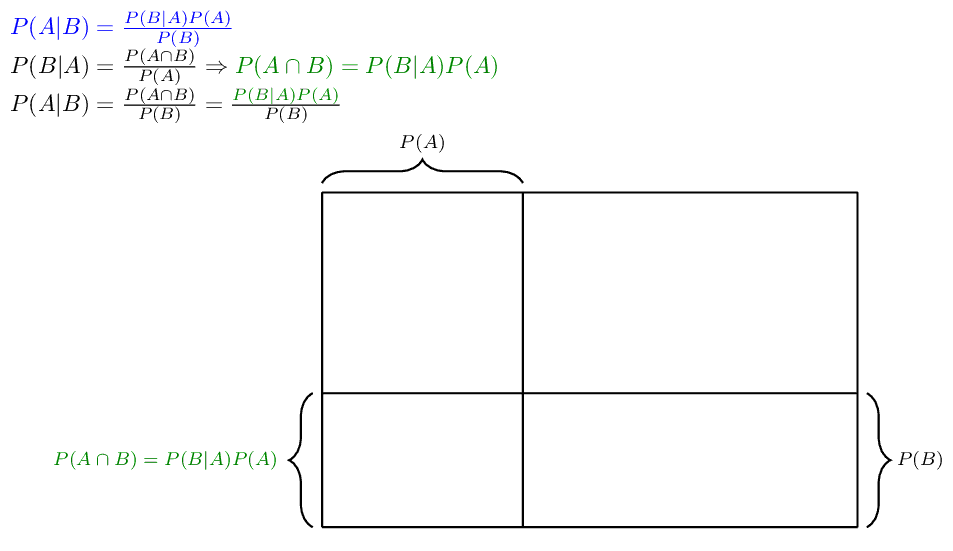
Bayes' Theorem provides a way to update the probability of a hypothesis, event, or condition A being true after taking into account new evidence or information B.
The core of this process is Bayes' Theorem, which you've seen before. We'll focus on one specific component: the likelihood.
This term, , is where we translate raw AI output into a mathematical weight. It's the bridge between a behavioral signal and a formal update to our State Space model. A strong, reliable signal from the AI translates to a high likelihood value, giving it more power to shift our beliefs. A noisy or uncertain signal gets a lower value, tempering its influence.
Weighing the Signal
Not all AI feedback is created equal. The diagnostic power of a signal depends on its quality, often described by a signal-to-noise ratio. A high ratio means the AI's output is clear and directly relevant to the state we're trying to measure. A low ratio implies the feedback is ambiguous, contains errors, or is only weakly correlated with the true state.
Likelihood
noun
In Bayesian statistics, the probability of observing the given data, assuming a particular set of model parameters or a specific hypothesis is true. It quantifies how well a hypothesis explains the evidence.
Imagine an AI designed to detect user frustration by analyzing mouse movements. If it signals "high frustration," we need to map that qualitative label to a quantitative likelihood. How do we do that?
One common method is to use historical performance data. If this AI is correct 80% of the time when users are actually frustrated, we might assign a likelihood of 0.8 to its "high frustration" signal. This calibration step is crucial. It ensures we're not over- or under-valuing the AI's contribution.
By mapping these signals to likelihoods, we can systematically integrate diverse and imperfect information. An AI's output becomes one of many inputs used to refine the probability distribution across our State Space, effectively reducing uncertainty with each new piece of evidence.
Mapping Feedback to Constraints
The updated probabilities in the State Space act as new constraints on our system's understanding. If the probability of a user being "stuck" increases significantly after a Bayesian update, this can trigger a change in the system's behavior, like offering a tutorial or simplifying the interface.
Each signal from the IEL, once converted into a likelihood and processed through a Bayesian update, effectively prunes the tree of possibilities. It makes certain regions of the State Space more probable and others less so. Behavioral signals are therefore not just passive data points; they are active tools for diagnosis and adaptation.
The goal is to move from a state of high uncertainty (many possibilities are equally likely) to a state of lower uncertainty (a few possibilities are highly likely) by continuously integrating evidence.
This process is iterative. The newly updated State Space (the posterior probability) becomes the prior for the next loop. When the next behavioral signal arrives, the process repeats, continually sharpening the system's model of the world one observation at a time.
Time to test your knowledge on these concepts.
In an Instrumented Exposure Loop (IEL), what is the primary role of an AI's output?
In the context of Bayesian updates for an IEL, what does the likelihood term, , represent?
By treating AI feedback as diagnostic evidence within a Bayesian framework, we create a robust and adaptive system. This approach allows us to formally manage uncertainty and continuously learn from new information.