Bauhaus Design Principles for Artists
Introduction to Bauhaus
A School for a New World
Germany in 1919 was a nation picking up the pieces. World War I had ended, leaving behind a scarred landscape and a shaken society. In the midst of this turmoil, the forward-looking Weimar Republic was born, and with it, a surge of creative energy. People wanted to build a new, better world, and that required a new way of thinking about everything, including art and design.
Architect Walter Gropius saw an opportunity. He believed the old ways of teaching art were obsolete. The rigid separation between the painter, the sculptor, and the craftsman felt outdated. He envisioned a place where all arts would come together, united by a common purpose. In 1919, in the city of Weimar, he founded a radical new school: the Staatliches Bauhaus, or simply, the Bauhaus.
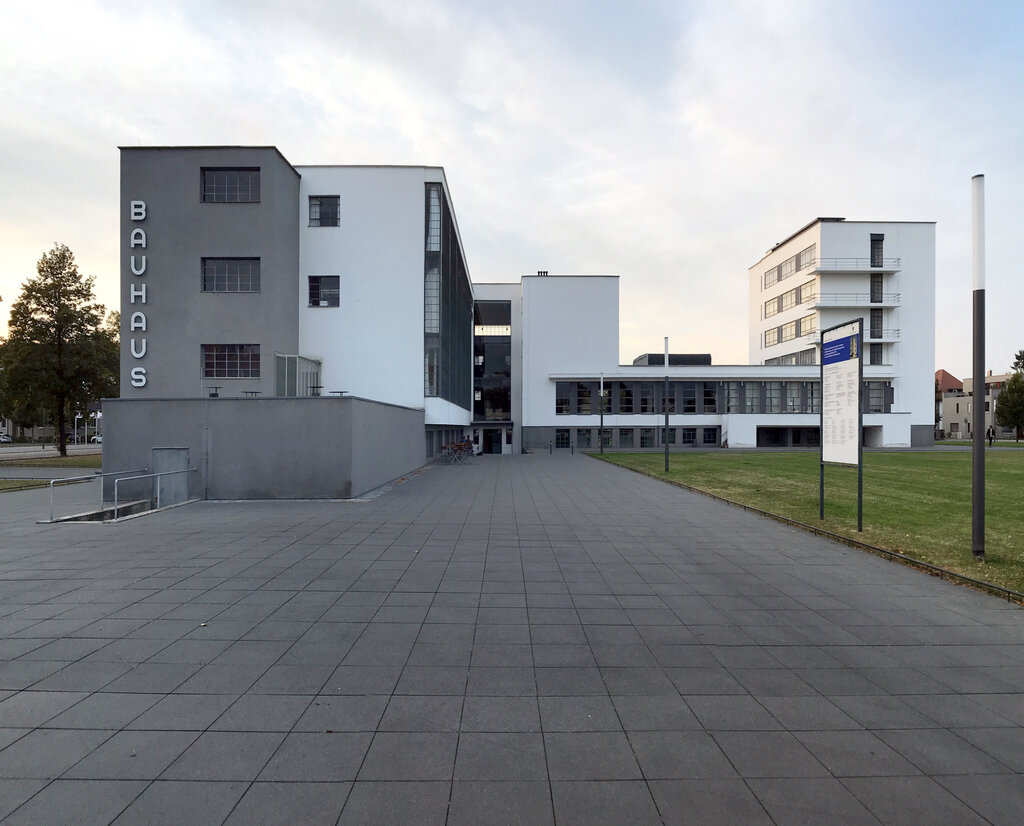
The name itself was a statement. Bauhaus translates roughly to "building house." It signaled a hands-on, collaborative approach. The school's ultimate goal was the Gesamtkunstwerk, or "total work of art," a complete building where architecture, furniture, textiles, and art all worked in harmony.
Gropius wanted to erase the distinction between artists and artisans, reuniting creativity with practical skill.
Art Meets Industry
The Bauhaus wasn't just about combining art and craft; it was about connecting them to modern life and technology. Gropius and his colleagues recognized that the age of the machine was here to stay. Instead of retreating to old-fashioned, handmade methods, they embraced industrial production.
The mission was to create prototypes for mass production. Students worked in workshops for metal, weaving, pottery, and furniture, learning to design objects that were not only beautiful but also functional and reproducible. This was a deeply social idea. By designing for industry, the Bauhaus aimed to make high-quality, well-designed objects accessible to ordinary people, not just the wealthy elite.
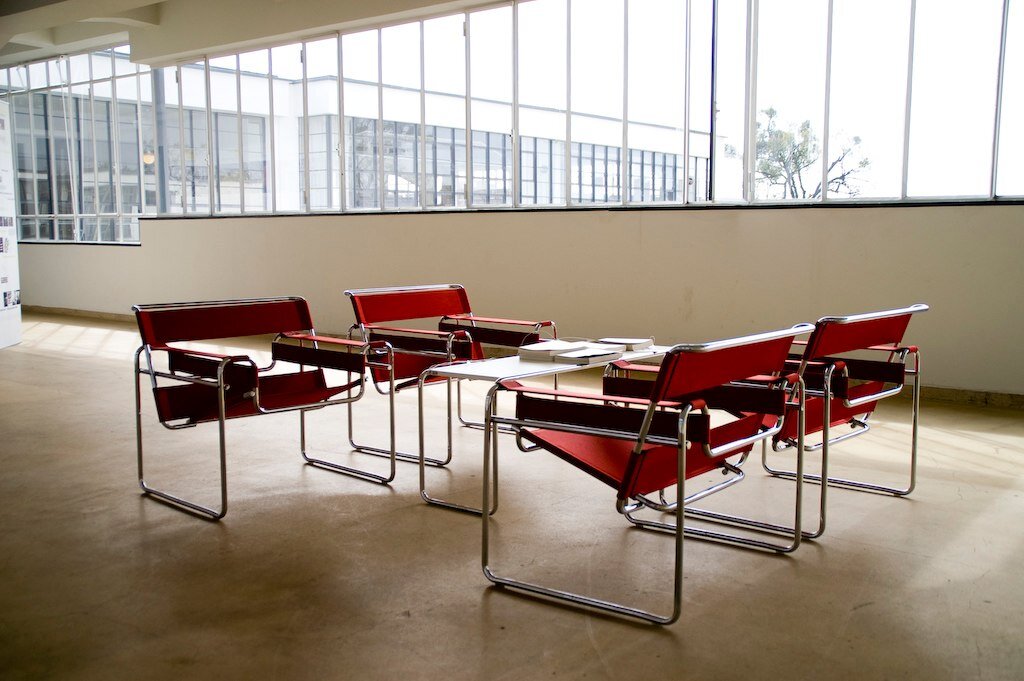
This philosophy had a profound impact that spread far beyond the school's walls. The focus on clean lines, simple geometric forms, and functionality became a cornerstone of modern architecture and design. From skyscrapers and city apartments to teapots and office chairs, the ideas tested in the Bauhaus workshops shaped the look and feel of the 20th century.
Think of the sleek furniture in a modern office, the simple typography on a website, or the open-plan layout of a contemporary home. The DNA of the Bauhaus is present in all of them. The school itself only operated for 14 years before being closed by political pressure in 1933, but its influence has been lasting and global.
The German term 'Gesamtkunstwerk', a primary goal of the Bauhaus school, translates to what concept?
The Bauhaus philosophy was revolutionary because it embraced __________ instead of rejecting it.
The Bauhaus was more than a school; it was a movement born from a specific moment in history, with a powerful vision for how design could serve a modern, democratic society.