Bass Fretboard Shapes
Bass Guitar Basics
Meet the Bass Guitar
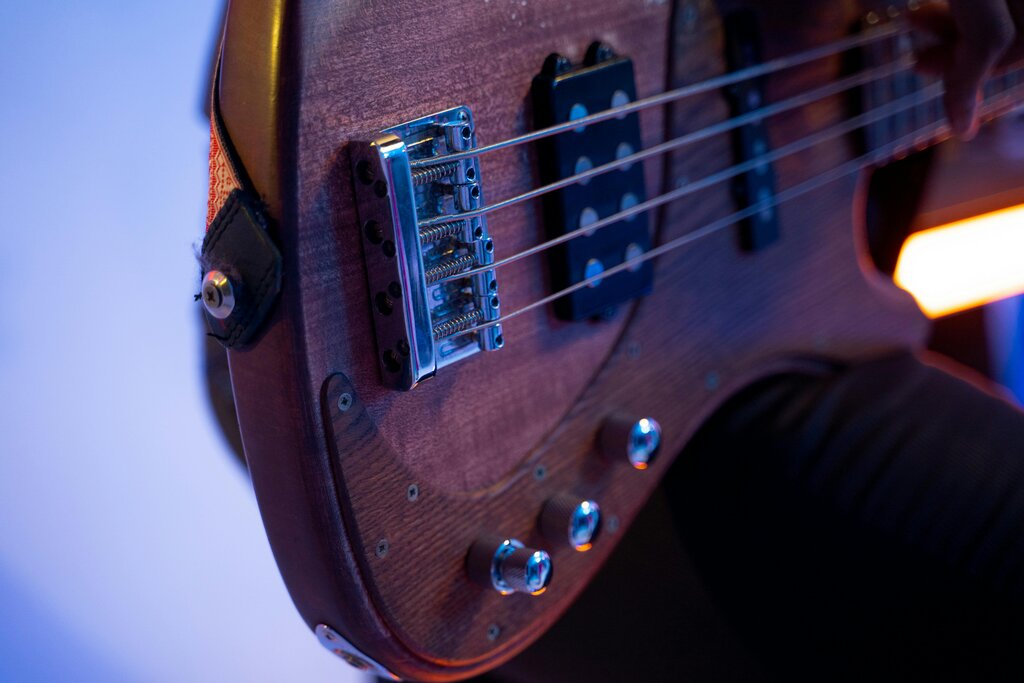
The bass guitar is a cornerstone of modern music, but it can look a little intimidating at first. Let's break it down into its three main sections: the body, the neck, and the headstock.
The body is the main part of the bass. It holds the bridge, which anchors the strings, and the pickups, which are magnets that convert the string vibrations into an electrical signal. The knobs control the instrument's volume and tone.
The long, thin neck is where you'll do most of the work. Its top surface is the fretboard, which is divided by metal strips called frets. Pressing a string against a fret changes its pitch.
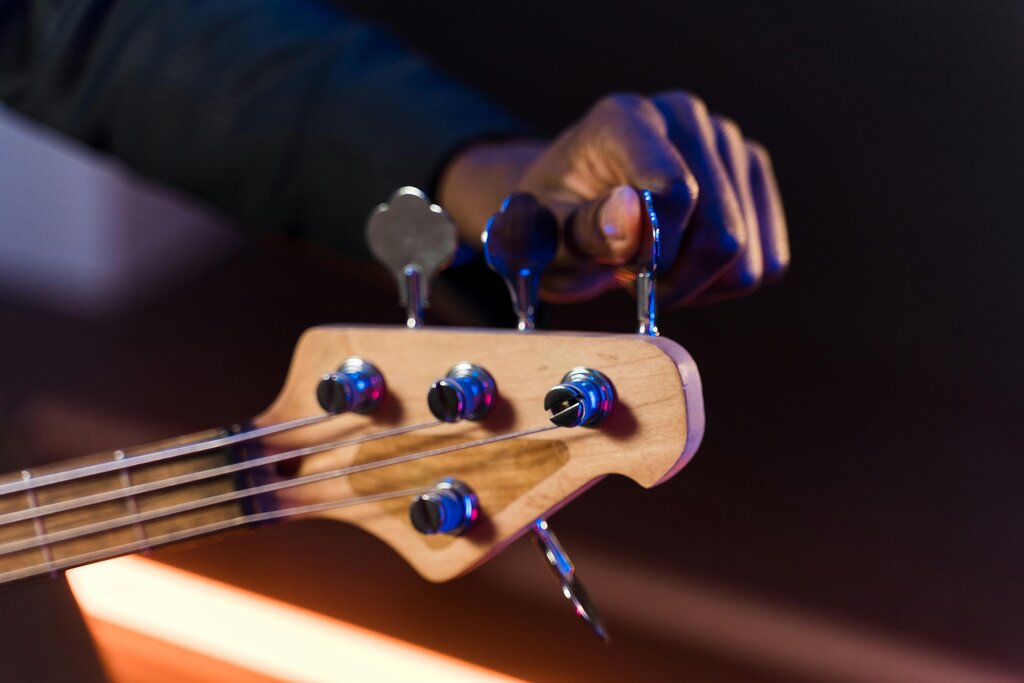
At the very top is the headstock. It holds the tuning pegs, which you turn to tighten or loosen the strings, changing their pitch to get them in tune. The nut is a small piece that guides the strings from the neck to the tuning pegs.
Tuning Up
Before you play, you need to make sure your bass is in tune. Tuning simply means adjusting the pitch of each string to a standard note. For a standard 4-string bass, the strings are tuned to E, A, D, and G.
The thickest, lowest-sounding string is the E string. The strings get progressively thinner and higher in pitch as you move across the fretboard.
| String | Note |
|---|---|
| 4 (Thickest) | E |
| 3 | A |
| 2 | D |
| 1 (Thinnest) | G |
Many players use a mnemonic to remember the string order from thickest to thinnest.
Elephants And Donkeys Grow Big
You'll use the tuning pegs on the headstock to adjust each string until it matches its target note. Using an electronic tuner is the easiest way to do this accurately.
Finding Your Place in the Band
So, what does a bassist actually do? The bass player has a crucial dual role: bridging rhythm and harmony. Think of the bass as the foundation of a house. It supports everything built on top of it.
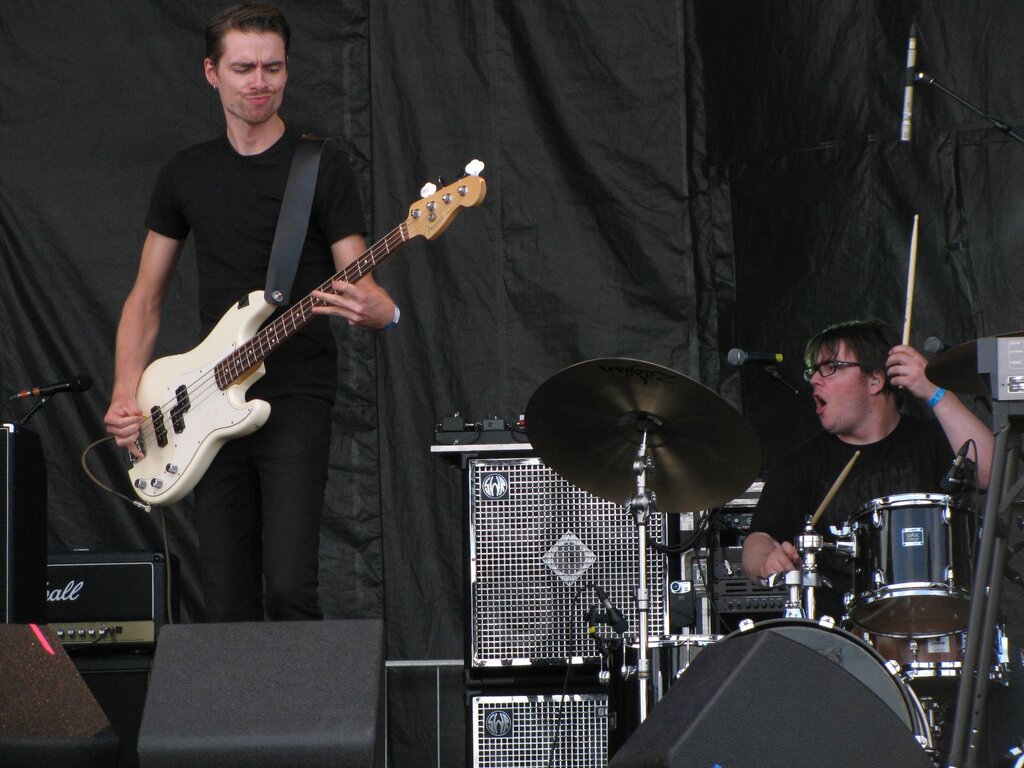
On one hand, the bassist locks in with the drummer to create the rhythmic pulse, or groove, of the song. This is what makes you want to tap your foot. Together, the bass and drums are called the rhythm section.
On the other hand, the bass outlines the song's chords, providing the harmonic foundation. While the guitarist or pianist plays the full chords, the bassist usually emphasizes the most important notes, called root notes. This tells the listener's ear what the chord is and guides the song's progression.
One of the most important things to understand is how bass lines relate to the chords.
By playing the right notes at the right time, the bassist connects the rhythmic feel of the drums with the melodic and harmonic ideas of the other instruments. Without a solid bass line, a song can feel empty or disconnected.
Now that you know the parts of your instrument, how to tune it, and your role in a band, you're ready to start playing.