Basics of Operating Systems
Introduction to Operating Systems
What is an Operating System?
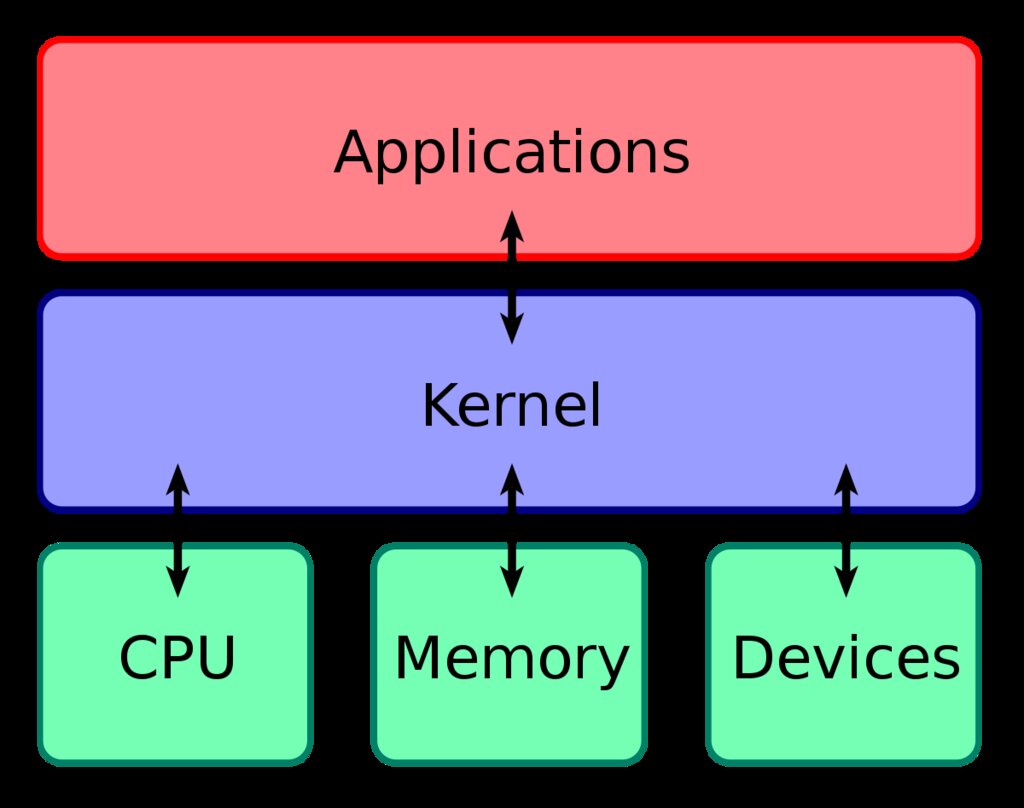
Think of an operating system (OS) as the general manager of your computer. It’s the essential software that directs all the hardware and other software. Without an OS, your laptop or phone would just be a collection of silent, inactive parts. It’s the bridge that connects you and your applications to the physical components like the processor, memory, and storage.
At its core, an operating system (OS) is the software that manages computer hardware and software resources, and provides common services for computer programs.
The main purpose of an OS is to make the computer easy to use and to manage its resources efficiently. Imagine trying to run a web browser, a music player, and a word processor all at once. The OS is what juggles these tasks, making sure each application gets a fair share of the computer's power (CPU time), memory (RAM), and storage space. It prevents them from interfering with each other, creating a stable environment where everything can run smoothly.
This role is called resource management. The OS allocates resources to programs that need them and ensures that when one program is finished, its resources are freed up for others to use. It’s a traffic cop, a scheduler, and a security guard, all rolled into one.
A Tour of OS Types
Operating systems aren't one-size-fits-all. They have evolved over decades to solve different problems and serve different needs. Let's look at a few major types.
Batch Operating System
noun
An early type of OS where jobs with similar needs are grouped together and run as a group without direct user interaction.
Batch systems were the pioneers. Imagine you have a pile of chores: laundry, dishes, and vacuuming. A batch approach would be to do all the laundry first, then all the dishes, then all the vacuuming. You collect similar tasks (the "batch") and execute them one after another. Early computers worked this way, running jobs from punch cards without anyone interacting with them directly until the entire batch was complete.
Time-sharing systems allow many users to interact with a single computer at the same time.
Time-sharing operating systems were a major leap forward. This is the kind of system most of us are familiar with today, like Windows, macOS, and Linux. The OS switches between different tasks so quickly that it creates the illusion that everything is running simultaneously. It gives each user or program a tiny slice of the processor's time, rotating through them thousands of times per second. This allows you to browse the web while listening to music and receiving email notifications, all seemingly at once.
Distributed Operating System
noun
A system that manages a group of independent, networked computers and makes them appear to be a single computer.
Finally, we have distributed operating systems. These systems connect multiple separate computers but present them to the user as one single, powerful machine. The OS manages the communication and coordination between all the different machines, distributing tasks across them to get work done faster and more reliably. The internet itself, and the cloud services that run on it, are large-scale examples of distributed systems at work.
Now that you know what an operating system is and the different forms it can take, it's a good time to test your knowledge.
What is the primary role of an operating system?
Which type of operating system is designed to run a group of similar jobs one after another without any user interaction?
Understanding these fundamentals provides a solid base for exploring how computers truly work, from the inside out.