Basic Modern Standard Arabic Conversation
Arabic Alphabet
The Arabic Alphabet
Welcome to the Arabic script. The first thing you'll notice is that it looks very different from the Latin alphabet. It's written from right to left, and the letters are typically connected in a cursive, flowing style.
The alphabet has 28 letters. Once you get to know them, you'll start to see the building blocks of a language spoken by hundreds of millions of people.
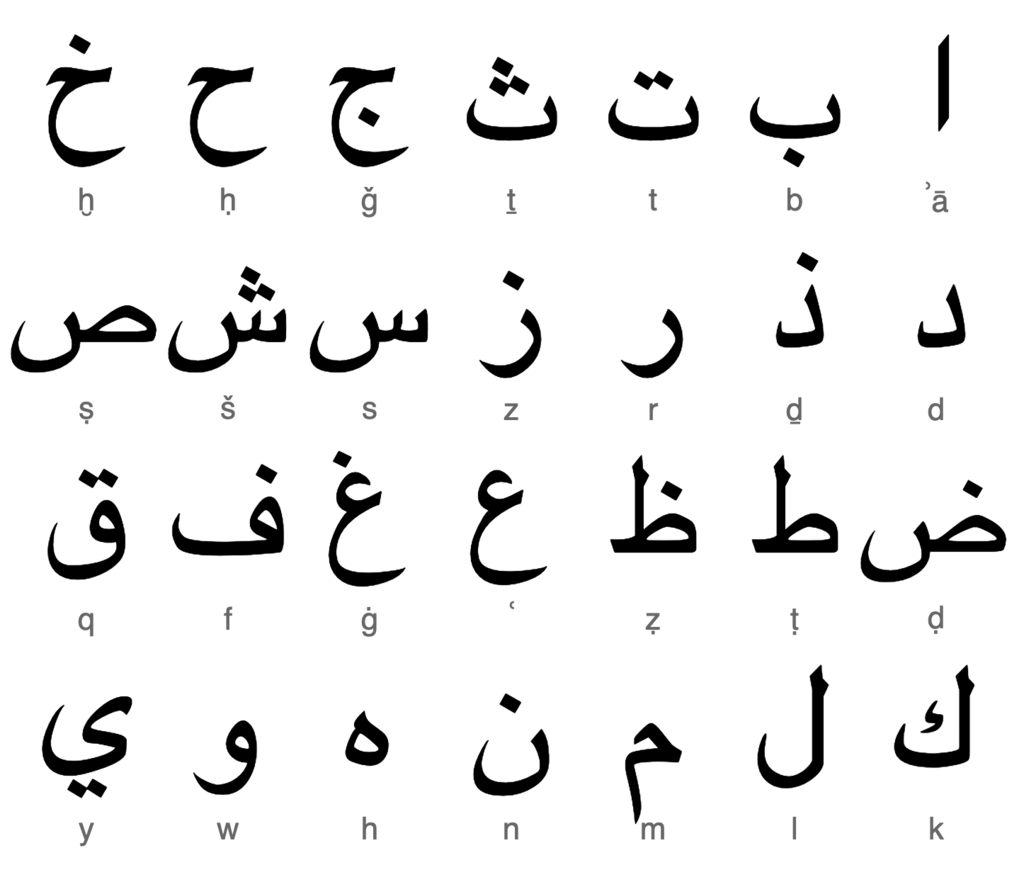
Unlike English where we can write in print or cursive, Arabic is almost always written in a connected script. Think of it less as a choice and more as the default way of writing. This means that a letter's shape can change slightly depending on where it appears in a word.
Letters and Sounds
Let's meet the letters. Some sounds will be familiar, like 'b' and 'm'. Others, like the throaty 'ayn (ع) or the emphatic 'ḍād (ض), might be new to your tongue. The best way to learn is to listen to a native speaker and try to mimic the sounds. Don't worry about getting it perfect right away.
Focus on listening and repeating. Your ear is one of your best tools for learning pronunciation.
Here are the 28 letters of the alphabet. We've broken them into smaller groups to make them easier to learn.
| Letter | Name | Pronunciation Guide |
|---|---|---|
| ا | Alif | 'a' as in 'car' |
| ب | Bā' | 'b' as in 'bed' |
| ت | Tā' | 't' as in 'top' |
| ث | Thā' | 'th' as in 'three' |
| ج | Jīm | 'j' as in 'jam' |
| ح | Ḥā' | A breathy 'h', from the throat |
| خ | Khā' | Like the 'ch' in Scottish 'loch' |
Notice how many letters are distinguished only by the number and placement of dots. Paying attention to these small details is key.
| Letter | Name | Pronunciation Guide |
|---|---|---|
| د | Dāl | 'd' as in 'dog' |
| ذ | Dhāl | 'th' as in 'this' |
| ر | Rā' | A rolled 'r', like in Spanish |
| ز | Zāy | 'z' as in 'zoo' |
| س | Sīn | 's' as in 'sun' |
| ش | Shīn | 'sh' as in 'shoe' |
| ص | Ṣād | An emphatic 's', stronger than Sīn |
Let's continue with the next set of letters.
| Letter | Name | Pronunciation Guide |
|---|---|---|
| ض | Ḍād | An emphatic 'd', stronger than Dāl |
| ط | Ṭā' | An emphatic 't', stronger than Tā' |
| ظ | Ẓā' | An emphatic 'z' or 'th' sound |
| ع | 'Ayn | A deep sound from the back of the throat |
| غ | Ghayn | A gargling sound, like a French 'r' |
| ف | Fā' | 'f' as in 'fish' |
| ق | Qāf | A 'k' sound made further back in the throat |
And here are the final letters of the alphabet.
| Letter | Name | Pronunciation Guide |
|---|---|---|
| ك | Kāf | 'k' as in 'king' |
| ل | Lām | 'l' as in 'light' |
| م | Mīm | 'm' as in 'moon' |
| ن | Nūn | 'n' as in 'net' |
| ه | Hā' | 'h' as in 'hat' |
| و | Wāw | 'w' as in 'water', or a 'oo' vowel |
| ي | Yā' | 'y' as in 'yes', or an 'ee' vowel |
One Letter, Four Shapes
Because Arabic is cursive, letters change shape depending on their neighbors. A letter can have up to four forms:
- Isolated: When it stands alone.
- Initial: When it's at the beginning of a word.
- Medial: When it's in the middle of a word, connected on both sides.
- Final: When it's at the end of a word, connected to the letter before it.
Think of it like puzzle pieces designed to link together. The core shape of the letter usually stays the same, but it grows tails and arms to connect to other letters.
Most letters connect from both sides. However, six letters are a bit different. They are sometimes called 'one-way connectors' or 'non-connecting' letters.
These letters are: Alif (ا), Dāl (د), Dhāl (ذ), Rā' (ر), Zāy (ز), and Wāw (و).
They will connect to a letter that comes before them, but they will never connect to a letter that comes after them. This creates a small break in the middle of a word. When you see one, you just start the next letter in its initial form.
For example, in the word for 'door', باب (bāb), the Alif (ا) connects to the Bā' (ب) before it, but forces a break before the final Bā'.
Now that you've been introduced to the letters, their sounds, and their shapes, it's time to test your knowledge.
In which direction is the Arabic script written?
Why do most Arabic letters change their shape?
Great job. Getting familiar with the alphabet is the biggest and most important first step. Keep practicing, and soon these shapes will become as familiar as the letters you're reading now.