Basic Japanese Conversation
Japanese Writing Systems
One Language, Three Scripts
The Japanese writing system is unique. Instead of one alphabet, it uses three different scripts that work together: Hiragana, Katakana, and Kanji. Think of them like different toolsets for writing. Hiragana and Katakana are the foundational phonetic scripts, called kana. Each character represents a syllable, like "ka" or "mo". Kanji are characters borrowed from Chinese that represent whole words or ideas.
For now, we'll focus only on the kana. Mastering them is the first and most important step to reading and writing Japanese.
Hiragana The Everyday Script
Hiragana (ひらがな) is the primary script you'll use. It has soft, curvy characters and is used for native Japanese words, grammatical particles, and verb endings. If you're not sure which script to use, Hiragana is often the right choice.
There are 46 basic Hiragana characters, each representing a distinct sound. They are organized in a grid called the gojūon (五十音), which means "fifty sounds."
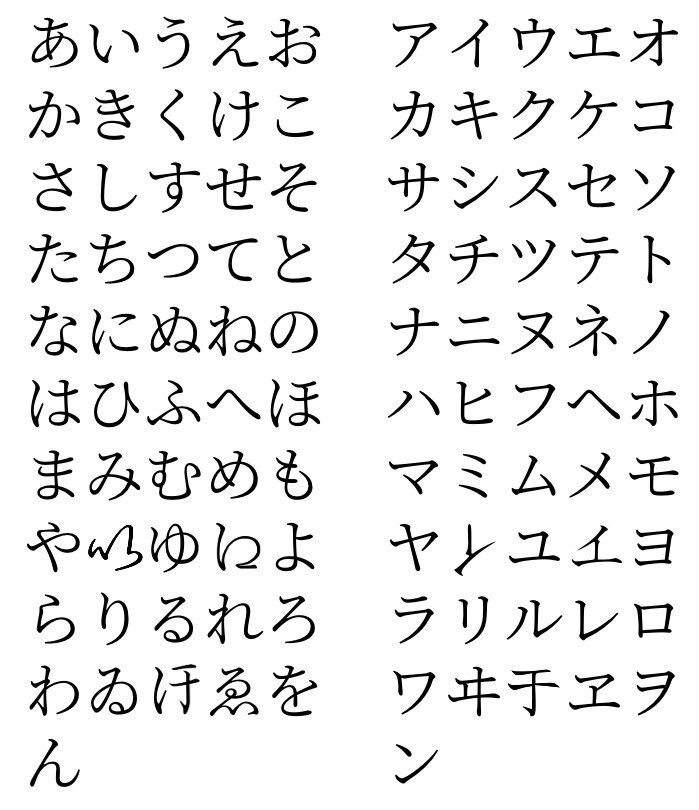
Every character is a combination of a consonant and one of five vowels: あ (a), い (i), う (u), え (e), お (o). The sounds are consistent and crisp. For example, the character か (ka) is formed from the consonant 'k' and the vowel 'a'.
Katakana The Angular Script
Katakana (カタカナ) has the exact same set of 46 sounds as Hiragana, but the characters look different. They are sharp and angular. Its main job is to write words borrowed from other languages.
| English Word | Katakana | Romaji |
|---|---|---|
| Coffee | コーヒー | kōhī |
| Taxi | タクシー | takushī |
| America | アメリカ | amerika |
Katakana is also used for emphasis, like using italics in English. You'll see it in advertisements, for scientific terms like animal names, and for onomatopoeia (sound words).
Hiragana is for Japanese grammar and native words. Katakana is for foreign loanwords and emphasis. They have the same sounds, just different shapes and jobs.
How to Write Them
When writing kana, stroke order is important. It ensures the characters are balanced and legible. Each character has a specific sequence of strokes. While it might seem tedious at first, practicing the correct order builds muscle memory and makes writing much faster and cleaner later on.
Notice how Hiragana is flowing and curved, while Katakana is made of sharp, straight lines. This visual difference helps your brain quickly identify the type of word you are reading.
Now, let's try reading a few simple words that use only Hiragana and Katakana.
| Word | Romaji | Meaning |
|---|---|---|
| ねこ | neko | cat |
| いぬ | inu | dog |
| カメラ | kamera | camera |
| すし | sushi | sushi |
| ピンク | pinku | pink |
Ready to test what you've learned about these two essential scripts?
What are the three primary scripts that make up the modern Japanese writing system?
Which script is primarily used for writing native Japanese words, verb endings, and grammatical particles?
By practicing these two scripts until they become second nature, you build a solid foundation for everything else in Japanese.