Basic Greek Language Skills
Greek Alphabet
The Greek Alphabet
Before you can read or speak a word of Greek, you need to know its alphabet. This is the foundation for everything else. The Greek alphabet has 24 letters. You'll probably recognize some of them, since they're often used in math and science. Many letters in the English alphabet actually evolved from these Greek characters, so you have a head start.
Learning the Greek alphabet is the first step in mastering the language.
The best way to learn them is to see them, say them, and write them. Let's go through the letters in three small groups. Focus on the name of the letter and the sound it makes.
| Uppercase | Lowercase | Name | Pronunciation |
|---|---|---|---|
| Α | α | Alpha (άλφα) | like the 'a' in apple |
| Β | β | Beta (βήτα) | like the 'v' in van |
| Γ | γ | Gamma (γάμμα) | like the 'y' in yes |
| Δ | δ | Delta (δέλτα) | like the 'th' in that |
| Ε | ε | Epsilon (έψιλον) | like the 'e' in pet |
| Ζ | ζ | Zeta (ζήτα) | like the 'z' in zoo |
| Η | η | Eta (ήτα) | like the 'ee' in meet |
| Θ | θ | Theta (θήτα) | like the 'th' in thin |
See? Some of those look very familiar. Alpha and Beta are where we get the word "alphabet." Others, like Gamma and Delta, might remind you of scientific terms. Now for the next set.
| Uppercase | Lowercase | Name | Pronunciation |
|---|---|---|---|
| Ι | ι | Iota (ιώτα) | like the 'ee' in meet |
| Κ | κ | Kappa (κάππα) | like the 'k' in kite |
| Λ | λ | Lambda (λάμδα) | like the 'l' in lamp |
| Μ | μ | Mu (μι) | like the 'm' in man |
| Ν | ν | Nu (νι) | like the 'n' in nap |
| Ξ | ξ | Xi (ξι) | like the 'x' in box |
| Ο | ο | Omicron (όμικρον) | like the 'o' in pot |
| Π | π | Pi (πι) | like the 'p' in pin |
This group also contains many familiar letters, including Pi (), which you know from math class. Notice that two different letters, Eta (η) and Iota (ι), make the same "ee" sound. This is common in Greek.
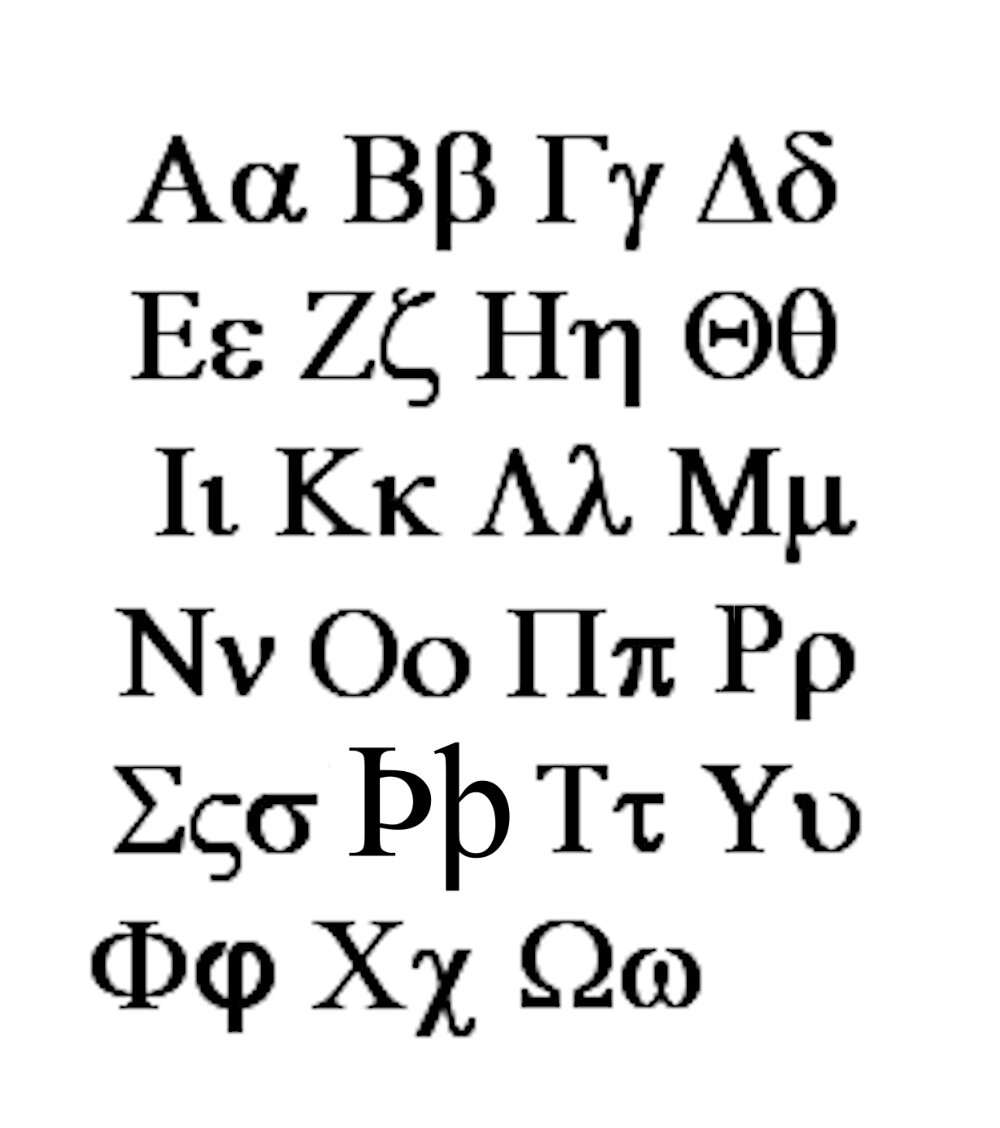
Let's finish with the last group of letters.
| Uppercase | Lowercase | Name | Pronunciation |
|---|---|---|---|
| Ρ | ρ | Rho (ρω) | like the 'r' in rat (rolled) |
| Σ | σ / ς | Sigma (σίγμα) | like the 's' in sun |
| Τ | τ | Tau (ταυ) | like the 't' in top |
| Υ | υ | Upsilon (ύψιλον) | like the 'ee' in meet |
| Φ | φ | Phi (φι) | like the 'f' in fun |
| Χ | χ | Chi (χι) | like the 'ch' in Loch Ness |
| Ψ | ψ | Psi (ψι) | like the 'ps' in lapse |
| Ω | ω | Omega (ωμέγα) | like the 'o' in pot |
You might have noticed something strange with Sigma. It has two lowercase forms. The 'σ' is used at the beginning or in the middle of a word, while the 'ς' is only used at the very end of a word. Upsilon (υ) is the third letter we've seen that makes the "ee" sound, and Omega (ω) makes the same sound as Omicron (ο).
Reading Simple Words
Now that you've seen all the letters, let's try sounding out a few simple words. This is just for practice. Don't worry about memorizing what they mean yet. Just focus on recognizing the letters and making the right sounds.
yes
This word uses Nu (ν), Alpha (α), and Iota (ι). Sound it out: n-e. That's it. It just means "yes."
no
Here we have Omicron (ο), Chi (χ), and Iota (ι). Put the sounds together: o-ch-i. This means "no."
coffee
This one is a bit longer: Kappa (κ), Alpha (α), Phi (φ), Epsilon (ε), and the final Sigma (ς). Let's try it: k-a-f-e-s. Notice the 'ς' at the end.
Time to check your knowledge.
The English word "alphabet" is derived from which two Greek letters?
Which of the following is NOT a Greek letter that can make the "ee" sound as in "see"?
Getting comfortable with these letters is the most important first step you can take. Practice recognizing them and saying their sounds out loud. Soon, it will feel completely natural.