Basic French Conversation
French Pronunciation
Making French Sounds
French pronunciation can feel like a puzzle. Unlike English, where letters can have multiple sounds (think of the 'a' in cat, father, and late), French is much more consistent. Once you learn the rules for a letter or a combination of letters, you can apply them almost everywhere. The key is learning to shape your mouth in new ways.
The biggest difference is that French vowels are “pure.” When you say an English vowel like “o” in go, your mouth moves, starting in one position and ending in another. In French, when you make a vowel sound, your mouth holds a single, fixed position. This takes practice, but it's the foundation of a good French accent.
The Vowels
Let's start with the basic vowel sounds. There are more vowels in French than in English, and some will be completely new. The International Phonetic Alphabet, or IPA, gives us a unique symbol for every sound, which is incredibly helpful for learning pronunciation without confusion.
| Sound (IPA) | Example Letter(s) | French Example | Sounds Like... |
|---|---|---|---|
| /i/ | i, y | vie (life), style | The 'ee' in see |
| /a/ | a, à | patte (paw), là (there) | The 'a' in father |
| /u/ | ou | vous (you) | The 'oo' in food |
| /e/ | é, er, ez, et | été (summer) | The 'ay' in say, but shorter |
| /ɛ/ | è, ê, ai, ei | père (father) | The 'e' in bed |
| /o/ | o, ô, au, eau | beau (beautiful) | The 'o' in boat |
| /ɔ/ | o | botte (boot) | The 'o' in lot (British English) |
| /y/ | u, û | tu (you) | No English equivalent. Say 'ee' and round your lips tightly. |
| /ø/ | eu, œu | deux (two) | No English equivalent. Say 'ay' and round your lips. |
| /œ/ | eu, œu | neuf (nine) | No English equivalent. Say 'eh' and round your lips. |
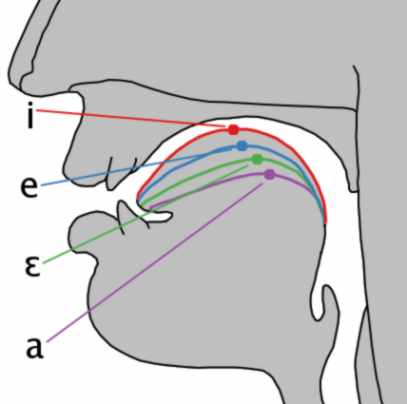
Practice the /y/ sound: Say "eeeee" and, without stopping the sound or moving your tongue, slowly round your lips into a tight circle, as if you were about to whistle. That new sound is the French u.
Consonants and Nasal Vowels
Many French consonants are similar to English, but a few are tricky. The French 'r' is produced in the back of the throat, not with the tongue like in English. It's a light, scraping sound, almost like gargling softly.
Another key feature is the silent final consonant. In most cases, if a word ends in -d, -p, -s, -t, -x, or -z, you don't pronounce it. For example, trop (too much) is pronounced "tro," and vous (you) is pronounced "voo."
Now for something uniquely French: nasal vowels. These occur when a vowel is followed by an 'n' or 'm' in the same syllable. Instead of pronouncing the 'n' or 'm', the sound is pushed through your nose. It creates an open, resonant sound.
| Nasal Sound (IPA) | Common Spelling | French Example | English Approximation |
|---|---|---|---|
| /ɑ̃/ | an, am, en, em | enfant (child) | Like the 'on' in encore |
| /ɛ̃/ | in, im, ain, ein | vin (wine) | Like the 'an' in bank, but more nasal |
| /ɔ̃/ | on, om | bon (good) | Like the 'on' in song, but with rounded lips |
| /œ̃/ | un, um | un (one) | No close equivalent. Start with /ɛ̃/ and round your lips. |
To feel the difference, try saying the word bon. Now, pinch your nose and try to say it again. You can't! That's because the sound needs to resonate in your nasal cavity.
Connecting Your Words
Fluent French sounds like a continuous stream of music because words are often linked together. This happens in two main ways: elision and liaison.
elision
noun
The dropping of a final vowel sound when the next word begins with a vowel. In writing, this is marked with an apostrophe.
Elision makes the language flow more smoothly. You'll see it constantly with short words like le, la, je, and de.
Liaison is a bit different. Remember those silent final consonants? Sometimes, they come back to life! When a word ending in a normally silent consonant is followed by a word starting with a vowel, the consonant sound is pronounced to link the two words.
For example, vous is pronounced "voo." Avez is pronounced "avay." But when you say vous avez (you have), you link them with the 's' sound, and it becomes "voo-z-avay."
This is one of the trickiest parts of French pronunciation, but also one of the most important for sounding natural. Not every potential link is made, but common ones include the 's' in les, des, and vous, the 'n' in un and on, and the 't' in est.
Remember, pronunciation is key to making your French sound authentic.
Ready to test your knowledge of these core concepts?
What is the main difference between how vowels are pronounced in French compared to English?
In the phrase "vous avez" (you have), the 's' at the end of "vous" is pronounced. What is this phenomenon called?
Mastering French pronunciation is a journey of training your ear and your mouth. Listen actively, imitate what you hear, and don't be afraid to exaggerate the sounds at first. It will feel strange, but it's the fastest way to build new muscle memory.