Basic French Comprehension
French Pronunciation Basics
The Music of French
Getting started with French pronunciation can feel like learning a new instrument. The sounds are precise, the rhythm is steady, and there's a certain musicality to it. Unlike English, where spelling can be a poor guide to pronunciation, French is much more consistent. Once you learn the rules for how letters and letter combinations sound, you can pronounce words you've never seen before with confidence.
The key is to forget some of your English habits. French sounds are often crisper and produced more towards the front of the mouth. Let's dive into the basic building blocks.
Vowels and Consonants
French has a rich set of vowel sounds, and they are the heart of its melody. Unlike English vowels, which often glide from one sound to another (like the 'o' in 'go'), French vowels are pure. You hold a single, unchanging mouth position for each one.
For example, the 'ou' sound in French is always a clean 'oo' sound, as in 'soup'. It never wavers.
all
Similarly, the French 'u' sound has no English equivalent. To make it, say 'ee' as in 'see', but round your lips as if you were about to whistle.
you
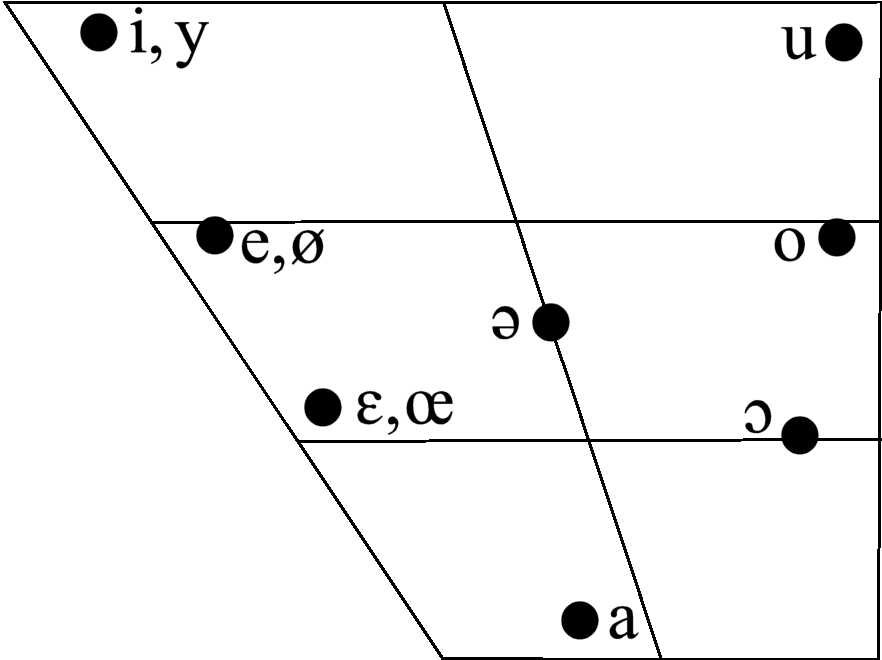
Many French consonants are similar to their English counterparts, but a few stand out. The French 'r' is probably the most famous. It's not rolled with the tip of the tongue like in Spanish, nor is it the soft 'r' of English. It's produced in the back of the throat, almost like a light gargle. Think of the sound at the beginning of the name 'Jacques'.
Another key rule is that final consonants are usually silent. This is a big one. Think of words like trop (too much), chaud (hot), or petit (small). The final 'p', 'd', and 't' are not pronounced. However, there's an exception: if the final consonant is C, R, F, or L, it is often pronounced. A helpful mnemonic is CaReFuL.
Example: The word sac (bag) pronounces the 'c', and fil (thread) pronounces the 'l'.
Linking It All Together
Now for the features that make French flow so smoothly. The first is its set of nasal vowels. These are created when air passes through both the nose and the mouth. You can feel the vibration in your nose when you make these sounds. They typically occur when a vowel is followed by an 'n' or 'm' in the same syllable.
| Combination | Sound like... |
|---|---|
| an / en | 'on' in 'song' |
| in / ain | 'an' in 'sang' |
| on | 'on' in 'long' |
Listen for the nasal vowel in the word enfant (child). Both the 'en' and the 'an' create this unique sound. The 'n' and 'm' themselves are not pronounced; they just signal that the vowel is nasal.
Next, we have two concepts that link words together: liaison and elision. They are essential for making speech sound natural and fluid.
liaison
noun
The linking of a normally silent final consonant of one word to the beginning of the next word if it starts with a vowel or silent 'h'.
For example, vous avez (you have) sounds like 'voo-za-vay'.
elision
noun
The dropping of a final vowel sound before a word that begins with a vowel or silent 'h'. The dropped vowel is replaced by an apostrophe in writing.
Finally, let's talk about rhythm. English is a stress-timed language, meaning some syllables are stressed and longer while others are unstressed and shorter. French, on the other hand, is syllable-timed. Each syllable gets roughly the same amount of time, creating a steady, machine-gun-like rhythm. This gives the language its characteristic cadence.
Think of the sentence 'Je ne sais pas' (I don't know). In French, each of the four syllables gets equal weight: je-ne-sais-pas. There's no single stressed word like there might be in English.
Listen to native speakers: Immersion and repetition are key to mastering pronunciation.
As you practice, focus on these fundamentals. Your ear will gradually tune in to the unique sounds and rhythms of French.