Baseball's Obscure Rules
Introduction to Baseball Rules
The Point of the Game
At its heart, baseball is a simple contest between two teams. Each team has nine players on the field at a time. The goal is to score more points, called “runs,” than the other team. A game is divided into nine periods called innings. In each inning, both teams get a turn to bat and try to score.
So, how do you score a run? A player on the batting team (the offense) stands at home plate and tries to hit a ball thrown by the pitcher of the fielding team (the defense). After hitting the ball, the batter runs to first base. The ultimate goal is to run around all four bases in order—first, second, third, and finally back to home plate. Each time a player successfully touches all four bases and returns home, their team scores one run.
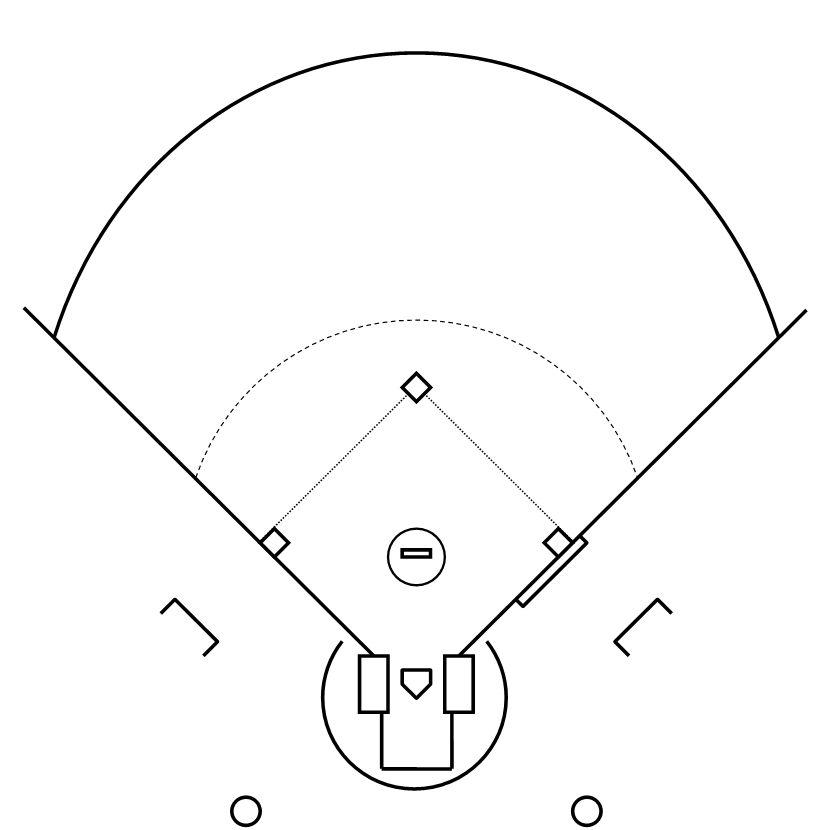
The Players and Their Places
When a team is on defense, its nine players spread out across the field in specific positions. These positions are divided into two main groups: infielders and outfielders. The pitcher and catcher, who work together to start every play, are known as the battery.
The infielders are the four players positioned around the bases: the First Baseman, Second Baseman, Third Baseman, and the Shortstop (who stands between second and third base). Their job is to field balls hit on the ground or in the air in their territory.
The outfielders—the Left Fielder, Center Fielder, and Right Fielder—cover the large grassy area beyond the infield. They are responsible for catching long fly balls and preventing batters from getting extra bases.
The team on offense sends one player at a time to bat, hoping to become a runner and score.
How a Game Unfolds
Each inning is split into two halves. In the top half, the visiting team bats while the home team plays defense. In the bottom half, they switch. A team's turn at bat continues until the defense gets three players “out.”
The central action is the duel between the pitcher and the batter. The pitcher throws the ball over home plate, trying to get it through an invisible region called the strike zone. This zone is generally over the plate, between the batter's chest and knees.
A batter's turn at bat is decided by balls and strikes. If a pitcher throws the ball through the strike zone and the batter doesn't swing, it's a strike. If the batter swings and misses, it's also a strike. If the pitcher's throw is outside the zone and the batter doesn't swing, it's a ball.
The count of balls and strikes determines the outcome:
- Three strikes and the batter is out. This is a strikeout.
- Four balls and the batter gets to go to first base automatically. This is called a walk.
Of course, the batter's goal is to hit the ball. A successful hit puts the ball in play, and the real action begins. The batter runs to first base while the defense scrambles to field the ball and get them out.
Besides a strikeout, there are a few other common ways to get an out:
- Fly out: A batter hits the ball in the air and a defensive player catches it before it touches the ground.
- Force out: A fielder gets the ball to a base before the runner who is forced to run to that base arrives.
- Tag out: A fielder touches a runner with the ball (or the glove holding the ball) when the runner is not on a base.
Once a team gets three outs, their turn at bat is over, and the other team gets its chance to hit. This cycle continues for nine innings.
Common Terms
Baseball has its own language. Here are a few key terms to know.
| Term | Definition |
|---|---|
| Run | A point scored when a player legally advances to and touches home plate. |
| Inning | A division of the game where both teams have a turn at bat. |
| Strike | A pitch that the batter swings at and misses, does not swing at but passes through the strike zone, or hits foul with less than two strikes. |
| Ball | A pitch that is thrown outside of the strike zone that the batter does not swing at. |
| Out | When the defense retires a batter or runner, contributing to the three outs needed to end the inning. |
| Home Run | A fair ball hit out of the park or far enough for the batter to round all the bases and score a run. |
Ready to test your knowledge? Let's review these concepts.
Now, let's see how well you've grasped the fundamentals.
What is the primary objective in a game of baseball?
A batter has a count of 3 balls and 2 strikes. What happens if the next pitch is called a ball?
These are the core rules that shape every play. With this foundation, you can start to appreciate the strategy and skill that make baseball a classic game.