Baseball Basics
Baseball Basics
The Field of Play
A baseball field is a unique blend of geometric precision and open space. It's often called a diamond for the shape of its infield, where most of the action begins. This area is defined by four bases arranged in a square: home plate, first base, second base, and third base.
The bases are 90 feet apart. The pitcher stands on a raised circular mound in the middle of the infield and throws the ball to the batter at home plate. The grassy area beyond the infield is the outfield. The game's objective is simple: a player must hit the ball and run around all the bases, touching each one in order, to score a point, called a run.
Players and Their Roles
Each team has nine players on the field at a time, each with a specific defensive job. These positions are divided into three main groups: the battery, the infielders, and the outfielders.
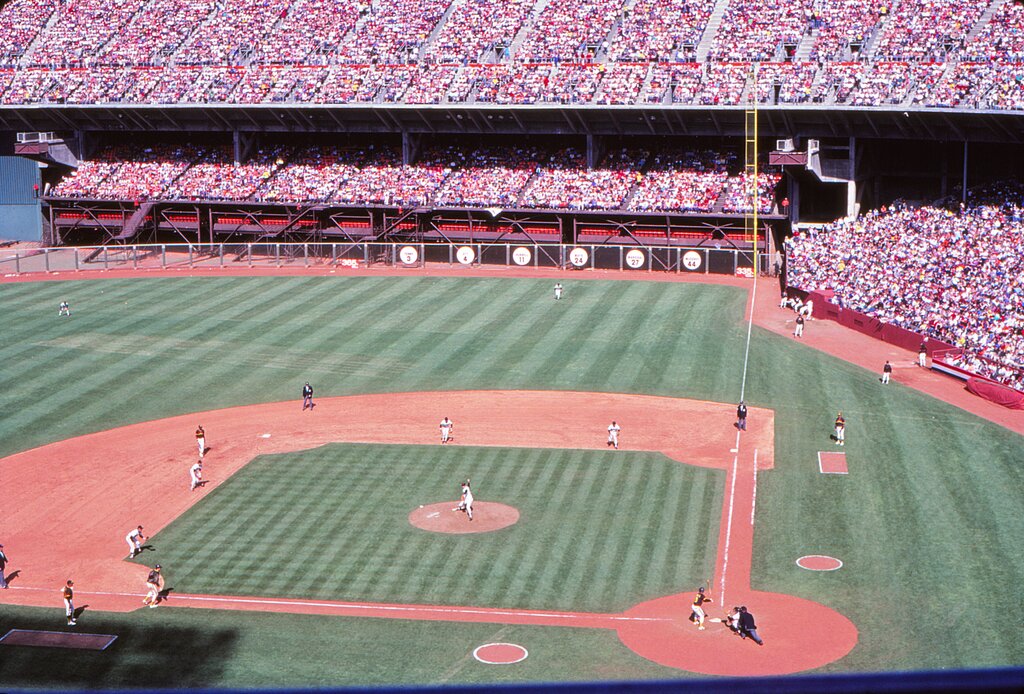
The battery consists of the pitcher and the catcher. They work together to get the batter out. The infielders are positioned around the four bases to field balls hit on the ground or in the air. The outfielders cover the large grassy area and are responsible for catching long fly balls.
| Position | Role |
|---|---|
| Pitcher (P) | Throws the ball to the batter from the pitcher's mound. |
| Catcher (C) | Crouches behind home plate to catch pitches the batter doesn't hit. |
| First Baseman (1B) | Fields balls hit near first base. |
| Second Baseman (2B) | Covers the area between first and second base. |
| Shortstop (SS) | Fields balls between second and third base; a key defensive position. |
| Third Baseman (3B) | Guards the area around third base. |
| Left Fielder (LF) | Covers the left portion of the outfield. |
| Center Fielder (CF) | Covers the middle of the outfield; often the fastest player. |
| Right Fielder (RF) | Covers the right portion of the outfield. |
How a Game Unfolds
A baseball game is structured around innings. A standard game consists of nine innings. An inning is a unit of play where both teams get a turn to bat and try to score runs.
Each inning is split into two halves: the top and the bottom. In the top half, the visiting team bats while the home team plays defense. In the bottom half, they switch roles. The goal for the batting team is to score as many runs as possible before the defending team can get three players out.
The Rules of the At-Bat
Every play begins with a showdown between the pitcher and the batter, called an at-bat. The pitcher throws the ball over home plate, and the batter tries to hit it. This interaction is governed by a count of balls and strikes.
Strike
noun
A pitch that the batter swings at and misses, does not swing at but passes through the strike zone, or hits into foul territory (with less than two strikes).
Ball
noun
A pitch that is thrown outside the strike zone and that the batter does not swing at.
The count is always announced with balls first, then strikes. For example, a count of "2-1" means two balls and one strike.
The at-bat ends in one of several ways. If the batter gets three strikes, it's a strikeout, and that batter is out. If the pitcher throws four balls, it's a walk, and the batter gets to advance to first base automatically.
Three strikes and you're out. Four balls and you take your base.
Of course, the batter can also hit the ball. If they hit it and it's caught in the air by a defender, they are out. If it lands safely in fair territory, they become a runner and try to advance around the bases.
The defensive team's goal in each half-inning is to get three outs. Once they do, their turn on defense is over, and they get to bat. A run is scored when a player legally advances to and touches home plate. The team with the most runs after nine innings wins the game.
Let's review these core concepts.
Ready to test your knowledge?
What is the distance between the bases on a standard baseball field?
In baseball, which two positions make up the 'battery'?
With these fundamentals, you have the building blocks to understand and enjoy the game of baseball.