Barry Harris Guitar Harmonics
Introduction to Barry Harris's Harmonic Theory
The Barry Harris Method
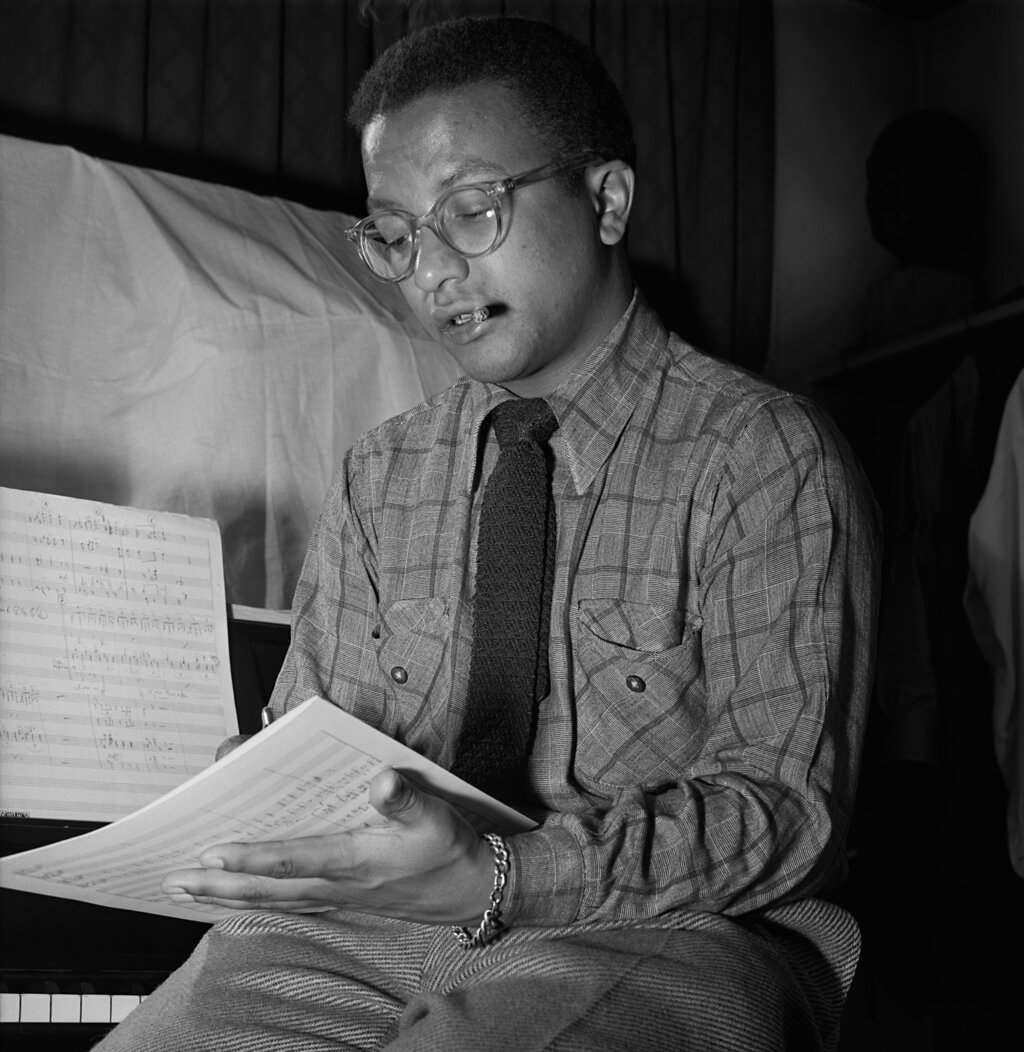
Barry Harris was a legendary jazz pianist and, more importantly, a gifted teacher. He developed a unique way of thinking about harmony that has influenced countless musicians. Instead of seeing chords as static blocks of sound, he saw them as part of a flowing, connected system. His approach simplifies complex jazz harmony into a set of elegant, movable rules.
At the heart of his system are two fundamental building blocks: the sixth chord and the diminished chord. By understanding how these two pieces work, we can unlock a powerful method for creating smooth, logical, and beautiful harmonic lines.
Sixth Chords as Home Base
In much of jazz theory, the seventh chord is king. We talk about major 7ths, minor 7ths, and dominant 7ths. Barry Harris took a different path. He built his entire system on the foundation of the sixth chord.
A sixth chord is a simple four-note chord. For a major sixth, you take a major triad (root, 3rd, 5th) and add the 6th note of the scale. A C Major 6 chord, for example, contains the notes C, E, G, and A. For a minor sixth, you take a minor triad (root, flat 3rd, 5th) and add the 6th. A C Minor 6 has C, E♭, G, and A.
In the Harris system, sixth chords are the stable sounds. Think of them as the pillars or home bases of your harmony.
Why this chord? The sixth chord has a classic, stable sound that avoids the tension often found in seventh chords. It provides a consonant, resolved feeling that Harris used as the anchor for his harmonic movements. All the scales and chords in his system relate back to these foundational sixth chords.
Movement with Diminished Chords
If sixth chords are the destination, diminished chords are the vehicle. A diminished chord is a tense, unstable chord built from a stack of minor thirds. For example, a C diminished 7th chord is C, E♭, G♭, and B♭♭ (which is A).
This inherent tension is its superpower. A diminished chord desperately wants to resolve to something more stable. Barry Harris uses this property to create a sense of forward motion. He cleverly places diminished chords between the stable sixth chords.
Diminished chords are the connecting tissue. They are passing chords that smoothly link one sixth chord to the next.
Integrating the Two
The magic of the Barry Harris system is in the seamless integration of these two chord types. He created scales made of alternating sixth and diminished chords. By moving up or down this combined scale, a musician can create lines that are harmonically rich and perfectly logical.
Imagine a scale of chords. The first chord is a stable C Major 6. The next chord is a passing diminished chord. The chord after that is a stable D Minor 6, another 'home base' within the key. This creates a beautiful, flowing sound that outlines the underlying harmony perfectly.
This simple alternation of stable and tense sounds is the foundation of his entire improvisational concept. It provides a clear roadmap for navigating chord changes, allowing for fluid, melodic lines that always sound connected to the harmony.
Ready to check your understanding? Let's review these core ideas.
What are the two fundamental building blocks of the Barry Harris harmonic system?
According to the Barry Harris method, what is the primary function of the diminished chord?
This interplay between sixth and diminished chords is the core principle of Barry Harris's harmonic world. By mastering this concept, you gain a new lens through which to see and hear jazz harmony.