Banjo Basics
Banjo Basics
Getting to Know Your Banjo
Before you can start picking and grinning, it helps to know your way around the instrument. The banjo has a distinct look and sound, and understanding its components is the first step toward playing it well. Let's take a look at the anatomy of a standard 5-string banjo.
The sound starts at the strings. When you pluck them, their vibrations travel through the bridge to the head, which is the drum-like surface stretched over the pot. This is what gives the banjo its bright, percussive tone. The neck is where you'll press down on the strings against the frets to change notes. At the top, the headstock holds four of the five tuning pegs, which you turn to tighten or loosen the strings and change their pitch. The fifth tuning peg is located partway down the neck and controls the shorter 5th string, also known as the drone string.
Tuning Up
Before you play, you need to be in tune. The most common tuning for the 5-string banjo, especially in bluegrass music, is called Open G. It's named this because if you strum all the open strings, you'll hear a G major chord.
The standard Open G tuning is: g D G B D
Let’s break that down string by string, starting with the one closest to you as you hold the banjo:
- 5th String (the short one): g (This is the high G, above middle C)
- 4th String: D (below middle C)
- 3rd String: G (below middle C)
- 2nd String: B (below middle C)
- 1st String (farthest from you): D (above middle C)
Notice the 5th string is tuned higher than the 3rd and 4th strings. This is unique to the banjo. The easiest way to get in tune is with an electronic clip-on tuner. Just clip it to the headstock, pluck a string, and turn the corresponding tuning peg until the tuner shows you've hit the right note.
Posture and Hand Position
How you hold the banjo is just as important as how you play it. Good posture prevents strain and makes playing feel easier and more natural. Start by sitting on a straight-backed chair without arms. Your feet should be flat on the floor.
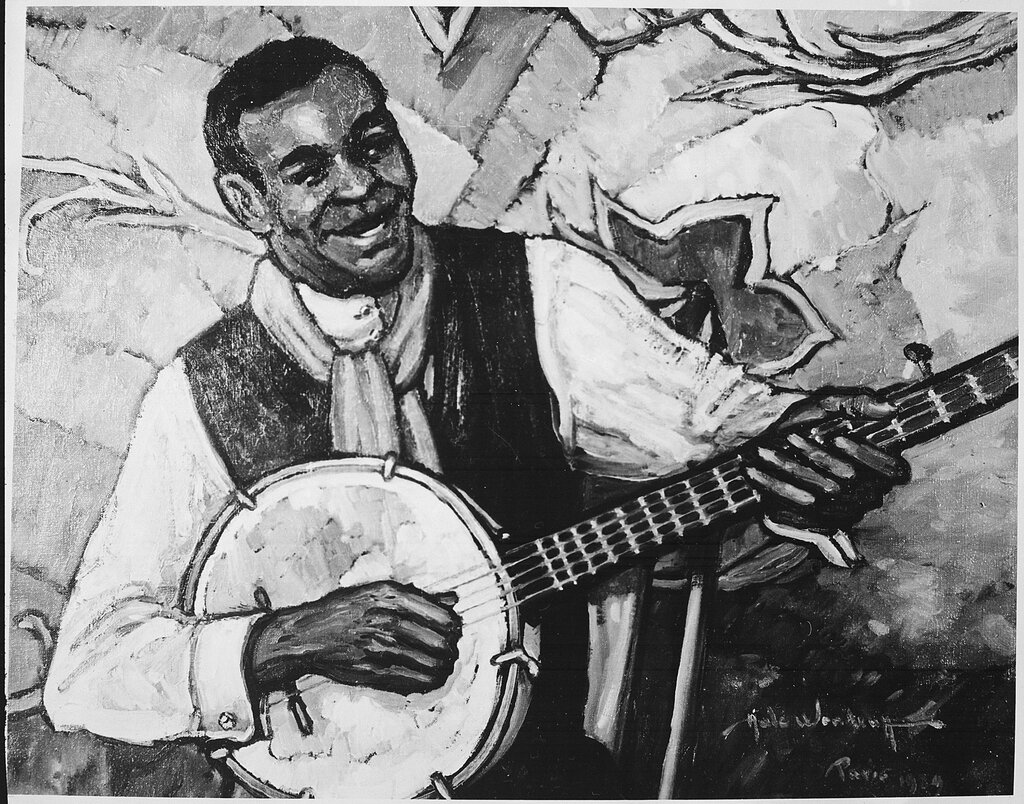
Rest the banjo's pot on your right thigh. The neck should angle upwards, at about a 45-degree angle. This position gives both of your hands easy access to the strings without having to stretch or strain. If you're using a strap, adjust it so it supports the banjo's weight, allowing your hands to stay relaxed.
Your goal is to be relaxed. If you feel tension in your shoulders, back, or arms, take a break and readjust.
Now for your hands. Your left hand is your fretting hand. Your thumb should rest lightly on the back of the neck, roughly opposite your middle finger. Your fingers should curve naturally over the fretboard, ready to press down on the strings. Keep your wrist straight and avoid letting it bend at a sharp angle.
Your right hand is your picking hand. It's responsible for striking the strings to create sound. Rest your forearm on the armrest (if your banjo has one). Your hand should hover over the strings near the bridge. Keep your wrist straight and relaxed. Many banjo styles use fingerpicks, but for now, just focus on a comfortable, neutral hand position.
With the banjo in tune and your posture set, you're ready to start making some music. These fundamentals are the foundation for everything else you'll learn.