Balloon Pump vs Impella Device
Introduction to Mechanical Circulatory Support Devices
When the Heart Needs Help
Sometimes, the heart is too weak to pump enough blood to meet the body's needs. This can happen after a major heart attack, during severe heart failure, or in other critical situations. When this occurs, doctors can turn to mechanical circulatory support (MCS) devices. These are machines that temporarily take over some or all of the heart's pumping function.
The main goals of MCS are to give the heart a rest so it can recover, and to ensure that vital organs like the brain and kidneys continue to receive oxygen-rich blood. Think of it as a temporary crutch for a tired heart. These devices aren't a permanent fix, but they can be a crucial bridge to recovery, a heart transplant, or a more long-term solution.
The Intra-Aortic Balloon Pump
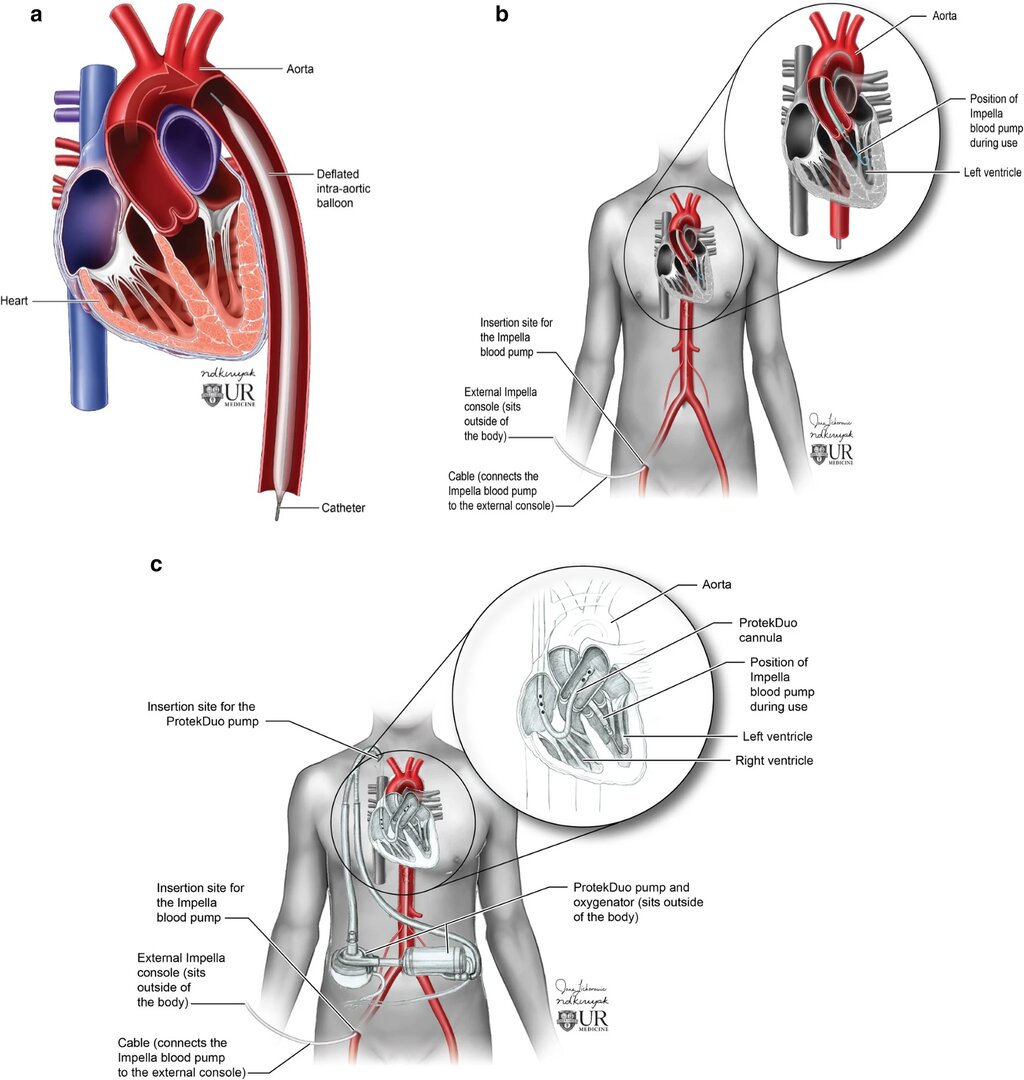
One of the most common MCS devices is the intra-aortic balloon pump, or IABP. It consists of a thin, flexible tube called a catheter with a long balloon at its tip. This catheter is usually inserted through an artery in the leg and advanced up into the aorta, the main artery that carries blood from the heart to the rest of the body.
The IABP works by inflating and deflating in sync with the heartbeat, a process called counterpulsation. It's all about timing.
-
Inflation: When the heart relaxes between beats (diastole), the balloon inflates. This pushes blood backward toward the coronary arteries, which supply the heart muscle itself with oxygen. It also increases pressure in the aorta, helping to push blood forward to the body's other organs.
-
Deflation: Just before the heart contracts to pump blood out (systole), the balloon rapidly deflates. This creates a moment of lower pressure in the aorta, making it easier for the weakened heart to push blood out.
This cycle of inflating and deflating reduces the heart's workload while improving blood flow where it's needed most.
Impella Devices
Another type of MCS device is the Impella. Unlike the IABP, which assists the heart indirectly, the Impella is a tiny pump that actively moves blood. It's one of the world's smallest heart pumps.
Similar to an IABP, an Impella is inserted via a catheter, typically through the femoral artery in the leg. It's carefully positioned so that it passes through the aortic valve, with one end in the left ventricle and the other in the aorta. The device then works like a tiny propeller, pulling blood directly out of the left ventricle and pumping it into the aorta. This directly unloads the ventricle, significantly reducing its workload and allowing it to rest.
There are several different Impella devices, each designed to provide a different level of circulatory support depending on the patient's needs.
| Feature | Intra-Aortic Balloon Pump (IABP) | Impella Device |
|---|---|---|
| Mechanism | Assists heart indirectly (counterpulsation) | Actively pumps blood |
| Action | Inflates and deflates a balloon in the aorta | Pulls blood from the left ventricle to the aorta |
| Primary Goal | Decrease heart's workload and increase coronary blood flow | Directly unload the left ventricle and increase cardiac output |
General Indications for Use
Mechanical circulatory support is reserved for very sick patients. The decision to use a device like an IABP or Impella is made when the heart is failing and medications are not enough to stabilize the patient.
Common situations include cardiogenic shock, where the heart suddenly can't pump enough blood to sustain the body. They might also be used to support a patient during a high-risk procedure, such as stenting a blocked coronary artery in someone with a very weak heart. The choice between an IABP, an Impella, or another device depends on the specific clinical situation, the degree of heart failure, and the goals of treatment.
cardiogenic shock
noun
A life-threatening condition in which your heart suddenly can't pump enough blood to meet your body's needs.
Understanding these devices is the first step in learning about advanced cardiac care. They are powerful tools that can provide life-saving support when the heart is at its most vulnerable.