Balisong Flipping Mastery for Beginners
Balisong Basics
The Balisong Knife
The balisong, more famously known as the butterfly knife, is a fascinating tool with a rich history. Its unique folding mechanism, where two handles rotate around the blade, is both practical and mesmerizing. This design allows it to be opened and closed with one hand, making it a compact utility knife that has also evolved into a medium for an impressive art form called "flipping."
A Filipino Heritage
The balisong traces its roots to the Philippines, where it was developed as a versatile utility and self-defense tool. The name "balisong" is believed to come from the Tagalog words baling sungay, meaning "broken horn," as the handles were traditionally made from carved carabao horn.
Its design was perfect for Filipino martial arts and for everyday tasks. The knife's quick, one-handed deployment was a significant advantage. The name "butterfly knife" is a more modern term, inspired by the fluid, wing-like motion of the handles as they open and close.
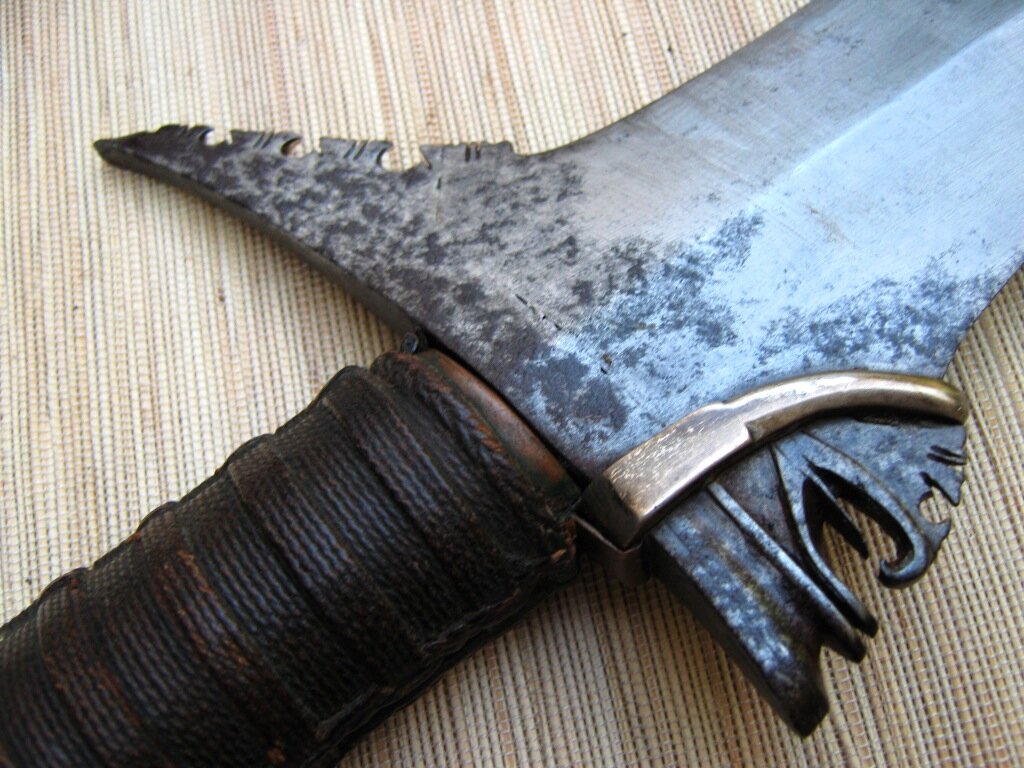
Anatomy of a Balisong
To handle a balisong safely, you first need to understand its parts. Unlike a standard folding knife, the balisong's construction is based on two independently pivoting handles. Let's break down its key components.
Each part has a specific function:
- Blade: This is the steel part with a sharpened edge for cutting and a dull spine. The base of the blade, where it connects to the handles, is called the tang.
- Handles: There are two handles that rotate around the tang. This is the most important concept for safety.
- Latch: A small lock that holds the handles together, keeping the knife either securely open or closed.
Safe vs Bite Handle
The single most important rule of handling a balisong is knowing the difference between the two handles. All your movements should revolve around controlling the correct one.
Bite Handle
noun
The handle that covers the sharp cutting edge of the blade when the knife is closed. If your hand is in its path while closing, you will get cut.
The other handle is, fittingly, called the safe handle. It's the one that closes on the dull spine of the blade. You can, and should, grip this handle firmly during manipulations, as it won't cut you.
How do you tell them apart? The easiest way is to look at the latch. The latch is almost always attached to the bite handle.
Bite handle has the latch. Safe handle does not.
Before you ever try to open or close a balisong, take a moment to identify which handle is which. Your foundational handling principle is to always maintain a firm grip on the safe handle. The bite handle should be the one moving freely through the air, away from your fingers.
Ready to test your knowledge on the fundamentals?
What is the country of origin for the balisong?
The handle that closes on the sharp edge of the blade is known as the...
Understanding these core concepts is the first and most important step. It ensures you can approach the balisong with the respect and safety it requires.