Bad Bunny and the Super Bowl Stage
Staging the Caribbean
Building a Neighborhood on the Field
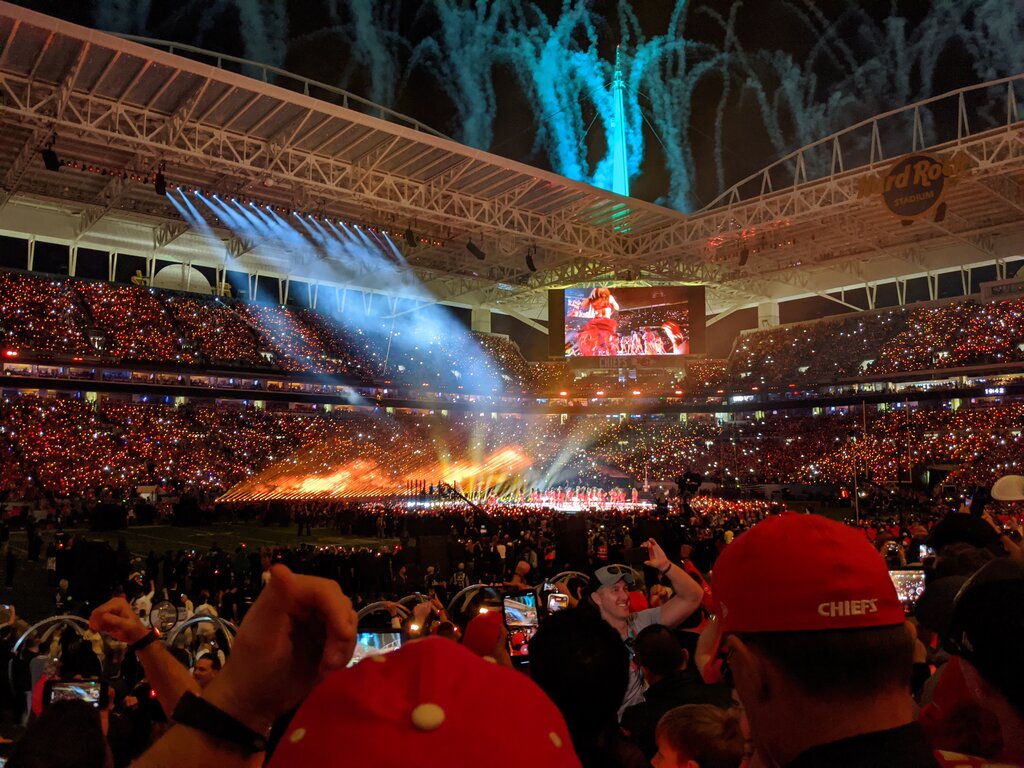
The Super Bowl halftime show is a massive technical production, but the 2020 show starring Bad Bunny aimed for something more intimate: the feel of a real neighborhood. The set design transformed the stadium's field into a vibrant vecindad, a Spanish term for a community of neighbors sharing a common space. Instead of a sterile, abstract stage, the design featured elements suggesting a lived-in Latin American street, complete with storefronts and building facades. This choice immediately grounded the spectacle in a specific cultural context, inviting the global audience into a shared, communal world.
Vecindad
noun
A term used in Spanish-speaking countries, particularly in Mexico and parts of Latin America, to refer to a type of communal housing where multiple families live in individual apartments arranged around a central courtyard or patio. By extension, it signifies a close-knit neighborhood or community.
The goal was to create a sense of place that felt authentic and familiar to those within the culture, while being expressive enough to communicate its spirit to those outside of it. The visual language of the vecindad emphasized connection and daily life, setting the stage for a performance that was as much about community as it was about music.
The 'Casita' as Centerpiece
At the heart of this stage neighborhood was a casita, or small house. This element was more than just a prop; it was the symbolic core of the performance. In many Caribbean cultures, the home, and particularly its front porch or covered carport (marquesina), is the primary space for social gatherings. The stage design leveraged this by creating a 'party de marquesina'—a carport party—right on the 50-yard line.
This setting reframed the relationship between the performers. Celebrities like Pedro Pascal and Cardi B weren't just guest stars; they were positioned as neighbors dropping by the party. They interacted casually, blurring the lines between backup performers and community members. This technical and choreographic choice reinforced the theme of an authentic neighborhood gathering, making the massive stadium feel like a local block party.
Landscapes of Identity
The production went beyond architecture to incorporate symbolic landscapes. One of the most powerful visual motifs was the use of simulated sugar cane fields. Projections and stage elements created an immersive backdrop that referenced Puerto Rico's agricultural history. Sugar cane is deeply tied to the island's economic development, but also to its colonial past and the labor of enslaved people. Including this imagery added a layer of historical depth, acknowledging the complex heritage that shapes modern Caribbean identity.
In another scene, the stage transformed into a New York-style street, complete with a bodega and apartment fire escapes. This was a direct nod to the Nuyorican diaspora—the community of Puerto Ricans living in New York City. By juxtaposing the island's rural history with the urban experience of its diaspora, the show painted a comprehensive picture of what it means to be Puerto Rican today. It acknowledged that culture is not static or confined to one place, but is carried, adapted, and remade across generations and geographies.
As the first Latin male artist to headline the Super Bowl Halftime Show, and the first artist to win Grammy Album of the Year and take the Super Bowl stage within the same week, the moment marked not only a once-in-a-lifetime career milestone for Bad Bunny but a defining cultural moment for the Latin community and the global music industry.
Technologically, the show was a marvel of orchestration. Rapid set changes, dynamic video projections, and lighting were all precisely coordinated to shift the environment from a rural field to a bustling city block. The sound design mixed stadium-level amplification with the ambient sounds one might hear at a real neighborhood party. This fusion of high-tech production and culturally specific aesthetics allowed the performance to feel both grand and grounded, broadcasting an authentic sense of community to an audience of millions.
Let's test your knowledge of how the stage was brought to life.
What was the central concept behind the set design for the 2020 Super Bowl halftime show described in the text?
The use of a casita (small house) and marquesina (carport) on stage was significant because it represented a central space for what activity in many Caribbean cultures?
Through deliberate set design and cultural symbolism, the halftime show transformed an American football stadium into a space that celebrated Caribbean life and history.