Backgammon Priming Strategy
Introduction to Backgammon
The Oldest Game in Town
Backgammon is a classic blend of luck and skill, making it one of the most enduring board games in history. Variations of the game have been played for over 5,000 years, with roots in ancient Mesopotamia. It's a two-player game where you race your pieces, called checkers, around the board before your opponent does.
The objective is simple: be the first player to move all 15 of your checkers off the board. While the roll of the dice introduces an element of chance, strategic moves are what separate beginners from seasoned players. Your goal is to get your checkers into your "home board" and then "bear them off"—that is, remove them from play.
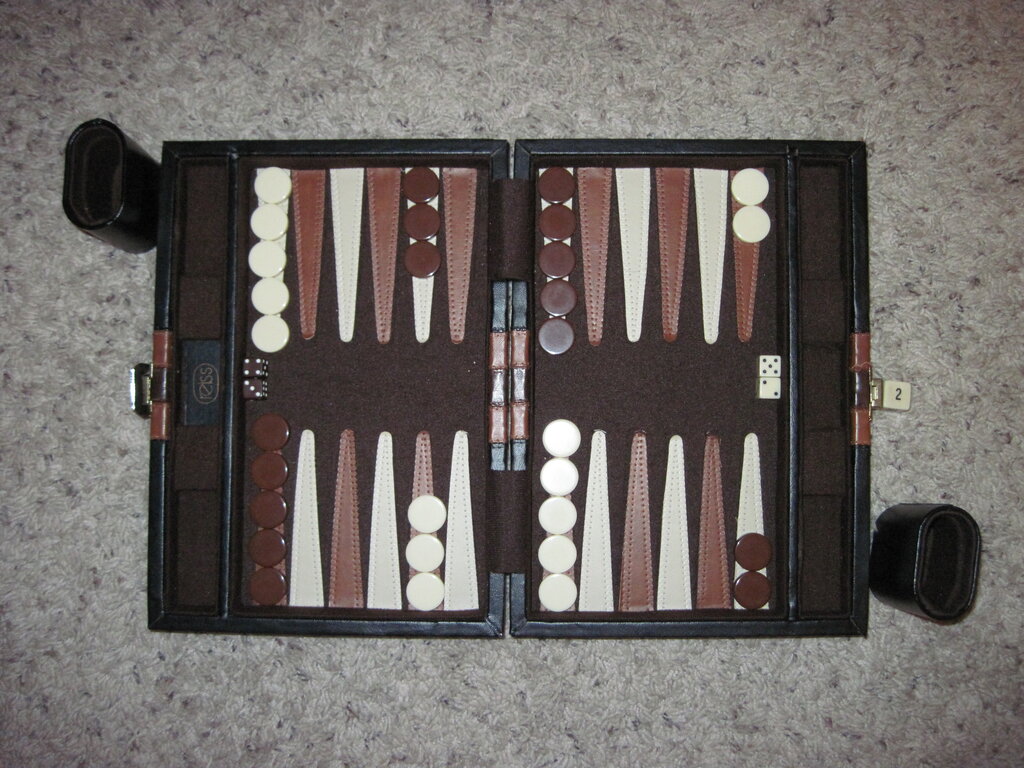
Setting Up the Board
A backgammon board has 24 narrow triangles called points. The points are colored in alternating shades and are grouped into four quadrants of six points each. The board is divided down the middle by a ridge called the bar.
Each player has 15 checkers of their own color. The setup is always the same. If you're playing with white checkers, you'll place them on the board as follows:
- Two checkers on your 24-point
- Five checkers on your 13-point
- Three checkers on your 8-point
- Five checkers on your 6-point
Your opponent places their checkers in a mirror image on the opposite side of the board. Notice that your 24-point is your opponent's 1-point.
How to Play
To start, each player rolls one die. The player with the higher number goes first and uses both dice rolls for their first move. If it's a tie, you roll again. After the first roll, players alternate turns, rolling two dice at the beginning of each turn.

The numbers on the dice tell you how many points, or pips, you can move your checkers. For example, if you roll a 3 and a 5, you can move one checker 3 spaces and another checker 5 spaces. Alternatively, you can move a single checker a total of 8 spaces, but you must make the moves separately (3 spaces to a legal point, then 5 spaces from there, or vice versa). A legal point is any point not occupied by two or more of your opponent's checkers.
If you roll doubles, say two 4s, you get to move twice as many times. Instead of two moves of 4, you get four moves of 4. You can move any combination of checkers to use these four moves.
A key rule involves "hitting." If you land on a point occupied by just one of your opponent's checkers (a "blot"), you hit it. The hit checker is moved to the bar in the middle of the board. That player can't make any other moves until they bring that checker back into play by rolling a number that corresponds to an open point in your home board.
Once all 15 of your checkers are in your home board (the last six points on your side), you can start bearing them off. You remove a checker by rolling a number that corresponds to its point. If you roll a 4, you can remove a checker from the 4-point. If you roll a number higher than your highest checker, you can remove a checker from the highest occupied point. The first player to bear off all their checkers wins.
Let's check your understanding of these basic rules.
What is the primary objective in a game of Backgammon?
How is the first turn of a Backgammon game determined?
These are the fundamental rules of backgammon. While dice rolls add luck, your choices about which checkers to move and when to take risks will ultimately determine your success.