Backend Engineering and DevOps Fundamentals
Backend Engineering Fundamentals
The Engine Room
Think of a busy restaurant. You, the customer, sit in the dining room, see the menu, and talk to the waiter. That's the frontend—what you see and interact with. But behind the kitchen doors, there's a whole other world: chefs cooking, ingredients being prepped, and orders managed. That's the backend.
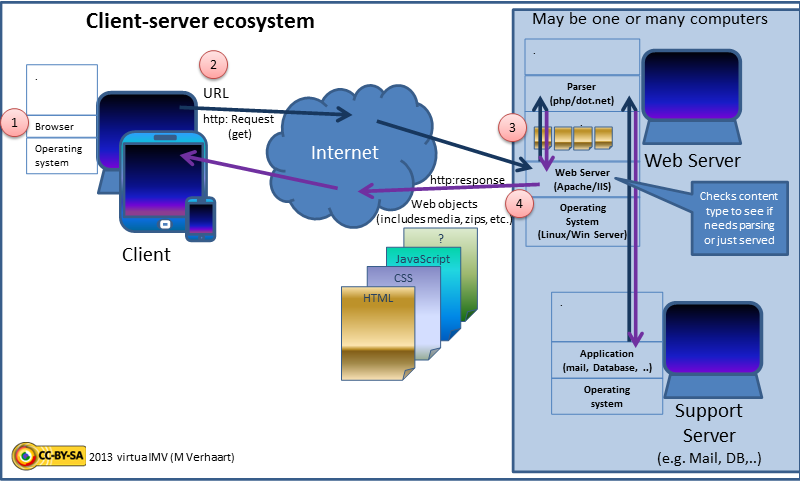
The backend is the engine of any application. It's where the core logic lives, where data is stored and managed, and where all the heavy lifting happens. When you log into an app, the backend verifies your password. When you buy something online, the backend processes your payment. It's the part of the system users never see, but it's what makes everything work.
Choosing Your Tools
Building a backend requires a specific set of tools, starting with a programming language that runs on a server, not in a user's browser. These server-side languages are designed to handle requests, connect to databases, and execute the application's logic.
Popular choices include Python for its simplicity and powerful libraries, Java for its performance and wide use in large companies, and Node.js, which lets developers use JavaScript on both the frontend and backend.
// A simple Node.js server
const http = require('http');

const server = http.createServer((req, res) => {
  res.statusCode = 200;
  res.setHeader('Content-Type', 'text/plain');
  res.end('Hello, World!');
});

server.listen(3000, '127.0.0.1', () => {
  console.log('Server running...');
});
Next, you need a place to store data. That's where databases come in. Without them, every piece of information—user accounts, product listings, blog posts—would vanish the moment the application closed. There are two main families of databases: SQL and NoSQL.
SQL
noun
Stands for Structured Query Language. These databases store data in tables with rows and columns, much like a spreadsheet. They have a predefined structure, which makes them reliable and consistent.
SQL databases are great for applications where the data is structured and consistency is key, like an e-commerce store's inventory.
NoSQL databases are different. They are more flexible and don't require a fixed structure. Data can be stored in various formats, like documents that resemble JSON objects. This makes them suitable for large amounts of data that might not fit neatly into tables, such as social media posts or user preferences.
Blueprints for Building
With your tools chosen, you need a plan. System architecture is the blueprint that dictates how all the pieces of your application connect and communicate. A common and straightforward pattern is the three-tier architecture, which separates the application into distinct layers.
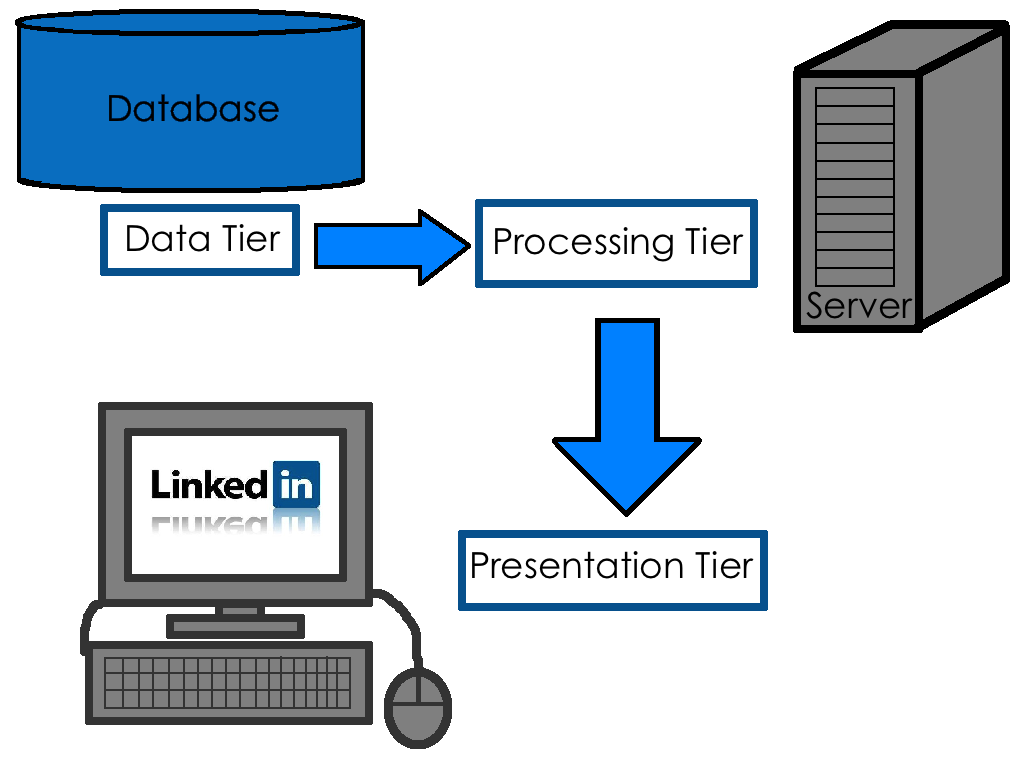
The Presentation Tier is the frontend—what the user sees. The Application Tier is the backend, containing the business logic. The Data Tier is the database where information is stored.
This separation makes the system easier to build, update, and maintain. If you want to redesign the user interface, you can do so without touching the backend logic. If you need to switch databases, the other tiers remain unaffected.
But how do these layers talk to each other? They use APIs.
API
noun
An Application Programming Interface. It's a set of rules and protocols that allows different software applications to communicate with each other. It acts as an intermediary, processing requests and ensuring that data is delivered correctly.
Going back to the restaurant analogy, the API is the waiter. It takes your order (a request) from the frontend, brings it to the kitchen (the backend), and returns with your food (the response). The API defines what requests can be made and what format the response will take. This creates a clear contract between the frontend and backend, allowing them to work together without needing to know the messy details of each other's inner workings.
Keeping Things Secure
Finally, security is not an afterthought—it's a core part of backend development. Because the backend handles sensitive user data and controls the application's logic, it's a prime target for attacks.
Good security practices include:
- Authentication and Authorization: Verifying who a user is (authentication) and what they're allowed to do (authorization).
- Input Validation: Never trusting data that comes from a user. Always check it to make sure it's safe before processing it.
- Data Encryption: Protecting data both when it's being sent over a network (in transit) and when it's stored in the database (at rest).
A secure backend protects both the users and the business. It builds trust and ensures the application runs reliably.
Now, let's test your understanding of these core backend concepts.
Using the restaurant analogy, what part of a restaurant best represents the backend of a web application?
Which of the following is NOT considered a core security practice for backend development?
Understanding these fundamentals is the first step in building powerful, scalable, and secure applications. From here, you can dive deeper into specific languages, frameworks, and architectural patterns.