Backend Coding Fundamentals
Introduction to Backend Development
The Engine Room
Every website or application has two parts: the part you see and interact with, and the part that works behind the scenes. The part you see—the buttons, text, and images—is called the frontend. The backend is everything else. It's the hidden engine that makes everything run smoothly.
Think of a restaurant. The frontend is the dining area: the decor, the menu, the waiter who takes your order. The backend is the kitchen: the chefs, the recipes, and the ingredients that come together to create your meal.
Backend developers build and maintain this engine. They write the logic that powers the application, manage the data, and make sure everything is secure and efficient. When you log into an account, buy something online, or post a photo, the backend is doing the heavy lifting.
The Client-Server Model
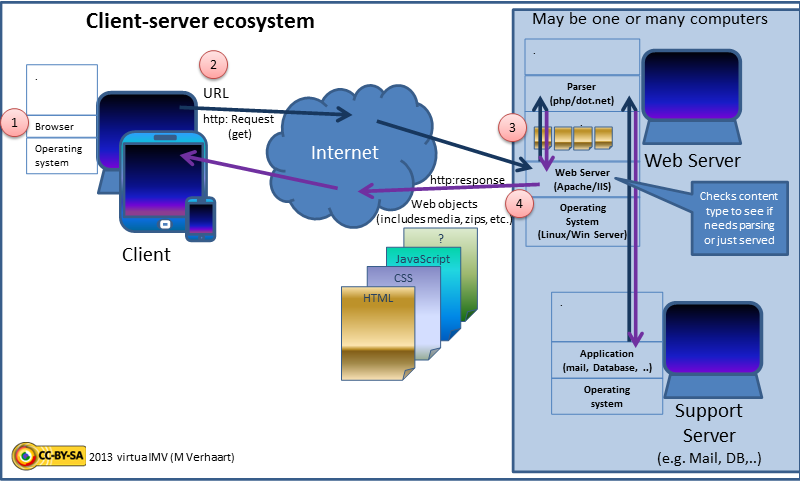
Web applications work on a simple principle called the client-server model. The client is your device—your web browser on a laptop or an app on your phone. The server is a powerful computer somewhere else that stores the website's data and code.
When you visit a website, your browser (the client) sends a request to the server. The server processes this request, figures out what information you need, and sends a response back to your browser, which then displays the webpage. This constant conversation between the client and the server is what makes the web work.
Backend developers are responsible for the server side of this conversation. They write the code that runs on the server, ensuring it understands requests from clients and sends back the correct responses.
If the frontend is the face of an application, the backend is the brain and nervous system.
Frontend vs. Backend
While they are two sides of the same coin, frontend and backend development focus on very different things. The frontend is all about the user experience, while the backend is about logic, data, and infrastructure. One can't exist without the other in a dynamic application.
| Aspect | Frontend | Backend |
|---|---|---|
| What it is | The visual part of the website you see and interact with. | The hidden server, application, and database that power it. |
| Main Concerns | User interface (UI), user experience (UX), layout, design. | Logic, data storage, security, performance, scalability. |
| Example | Clicking a 'Like' button. | The code that counts the 'Like' and saves it. |
Frontend developers use languages like HTML, CSS, and JavaScript to build what you see. Backend developers use languages like Python, Java, or Node.js to build the systems that make it all work. Together, they create a complete, functioning web application.
Now that you have a grasp of the basics, let's test your knowledge.
In a web application, which part is considered the backend?
In the client-server model, your web browser acts as the ______, sending a ______ to the server.
Understanding these core concepts is the first step in a developer's journey. The backend is where the core logic of an application lives, making it a critical piece of modern technology.