B2C Startup Product Launch Mastery
Understanding B2C Market Dynamics
Why People Buy
To succeed in a Business-to-Consumer (B2C) market, you first need to understand a simple but deep question: why do people buy things? The answer is rarely just about function. A person doesn't just buy a coffee maker; they buy the ritual of a warm cup in the morning. They don't just buy a pair of running shoes; they buy the feeling of health and accomplishment.
This is the core of consumer behavior analysis. It's the study of how individuals or groups select, purchase, use, and dispose of products to satisfy their needs and wants. It’s about digging into the psychology behind a purchase.
Your goal isn't just to know what customers buy. It's to understand why they buy it.
Several factors shape these decisions:
- Psychological: What’s going on in their head? This includes their motivations, perceptions, beliefs, and attitudes. Is a customer motivated by a need for safety, or a desire for social status?
- Personal: Who are they as an individual? Their age, occupation, financial situation, and lifestyle all play a role. A college student and a retiree will likely have very different purchasing habits.
- Social: Who influences them? Family, friends, and social networks can heavily sway purchase decisions. We often look to others for cues on what to buy.
Understanding these layers helps you see your product through your customer's eyes. It's the first step in creating something people genuinely want.
Finding Your People
Once you have a sense of why people buy, the next step is to figure out who your specific buyers are. The reality is, not everyone is your customer. Trying to appeal to everybody is a recipe for appealing to nobody. This is where market segmentation comes in.
Market segmentation is the process of dividing a broad consumer market into smaller subgroups of consumers with common needs, interests, and priorities. This allows you to focus your efforts on the segment that is most likely to value what you offer.
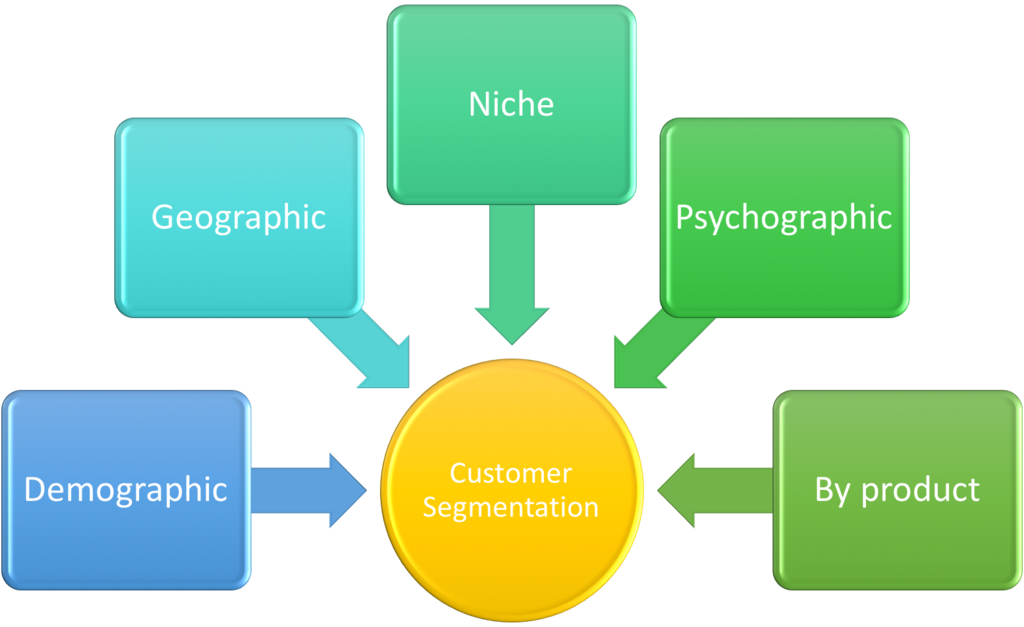
There are four primary ways to segment a market:
| Segmentation Type | Description | Example |
|---|---|---|
| Demographic | Based on statistical data about a group of people. | Age, gender, income, education level, occupation. |
| Geographic | Based on where consumers are located. | Country, region, city, climate, urban vs. rural. |
| Psychographic | Based on lifestyle, values, interests, and personality traits. | A company selling eco-friendly products targets consumers who value sustainability. |
| Behavioral | Based on consumers' actions and patterns. | Purchase history, brand loyalty, product usage rate, benefits sought. |
Effective segmentation helps you move from a general idea of your customer to a detailed portrait. You can then tailor your product and messaging to resonate deeply with that specific group.
Navigating the Competitive Landscape
No business operates in a vacuum. Before launching, you need a clear-eyed view of your competition. A competitive landscape assessment is an in-depth analysis of your competitors to understand their strengths, weaknesses, and market positioning.
Understanding the competitive landscape, conducting thorough market research, and developing unique value propositions are essential to succeed in this competitive environment.
Start by identifying two types of competitors:
- Direct Competitors: These are businesses that offer a product or service that is very similar to yours and targets the same audience. If you sell organic dog food, other organic dog food brands are your direct competitors.
- Indirect Competitors: These businesses offer a different solution to the same problem your product solves. For the organic dog food brand, an indirect competitor might be a company selling fresh, human-grade dog food or even a service that provides recipes for homemade dog food.
Once you've identified them, analyze what they're doing. Look at their product features, pricing, and how they communicate with customers. The goal isn't to copy them, but to find gaps in the market. Where are customers being underserved? What frustrations do they have with existing options? Your opportunity lies in answering these questions better than anyone else.
Challenges of a B2C Launch
Launching a B2C product is uniquely challenging. Unlike in a B2B setting where you might be dealing with a few key decision-makers, you're trying to capture the attention of potentially millions of individuals in a very crowded space.
The biggest hurdles are often grabbing attention and building trust from scratch.
Consumers are bombarded with thousands of messages every day, leading to significant ad fatigue. Cutting through that noise to make a memorable first impression is difficult. You have only a few seconds to communicate your value.
Furthermore, individual consumers tend to be more risk-averse and price-sensitive than business buyers. A company might invest $10,000 in software after a long evaluation process, but a consumer might hesitate to spend $20 on an app from an unknown brand. Building credibility and social proof is essential to overcome this skepticism.
Finally, the path to purchase is often shorter and more emotionally driven. This means your product's appeal must be immediate and compelling, as you may not get a second chance to convince a potential customer.
Understanding these dynamics—the customer's mind, the market segments, the competitive field, and the inherent challenges—is the foundation upon which successful B2C products are built.
According to consumer behavior analysis, what is the primary reason people buy products?
A company sells premium, bottled iced coffee. Which of the following would be considered an indirect competitor?