B2B SaaS Editorial Calendar Mastery
Strategic Content Goals
From Business Goals to Content Goals
Your content calendar isn't just a schedule of blog posts. It’s a strategic tool designed to achieve specific business outcomes. For a B2B SaaS company, content must directly support larger objectives like increasing Annual Recurring Revenue (ARR), reducing customer churn, or entering a new market segment. The first step is to translate those high-level business goals into concrete content missions.
To succeed, focus on creating high-quality content, aligning with business goals, maintaining consistency, optimizing for search engines and social media, and regularly analyzing and measuring performance to refine the approach.
Let's say a primary business goal is to increase new customer acquisition by 20% this quarter. This doesn't automatically mean "write more blog posts." Instead, we break it down. To get more customers, we need more qualified leads. To get more leads, we need to attract more of the right people and convince them to engage.
This translates into a content goal: "Increase Marketing Qualified Leads (MQLs) from organic search by 30% in the next three months." Suddenly, we have a clear, measurable objective that the content team can own. Every piece of content planned in the calendar should now answer the question: "Does this help us generate more MQLs from search?"
Setting SMART Objectives
Vague goals lead to vague results. To ensure your content efforts are focused and effective, every objective on your calendar should follow the SMART framework an acronym that provides a clear, actionable structure for goal setting.
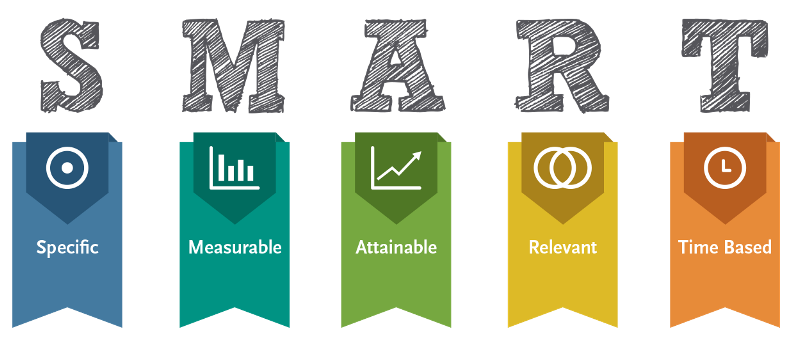
Let's apply this to a common B2B SaaS scenario: improving user onboarding.
- Specific: Instead of "improve onboarding," a specific goal is "Reduce user drop-off during the first week of the free trial."
- Measurable: How will you measure it? "Decrease the first-week user churn rate from 40% to 25%."
- Achievable: Is this realistic? A 15-point drop is ambitious but possible with targeted efforts. Dropping it to 2% is likely not achievable in one quarter.
- Relevant: Does this matter to the business? Absolutely. Better onboarding leads to higher conversion rates from trial to paid, directly impacting revenue.
- Time-bound: When will this be accomplished? "By the end of Q3."
Putting it all together gives you a powerful, actionable goal: "Decrease the first-week user churn rate from 40% to 25% by the end of Q3 by creating a new in-app video tutorial series and a five-part onboarding email sequence."
Mapping Content to the Sales Funnel
A potential customer's journey from stranger to happy user is often visualized as a funnel. In B2B SaaS, this funnel has distinct stages, and your content must meet the audience's needs at each one. Your content calendar should have a healthy mix of assets targeting different funnel stages to ensure a steady flow of new leads and to nurture them toward a purchase decision.
-
Top of Funnel (ToFu): At this stage, people are aware they have a problem but might not know about your solution. The goal is to attract and educate. Content here should be high-level and helpful, like blog posts on industry trends or comprehensive eBooks.
-
Middle of Funnel (MoFu): Now, potential customers are evaluating solutions. They know about you, but they're comparing you to competitors. Your goal is to build trust and demonstrate value. This is the perfect place for case studies, white papers, and detailed comparison guides.
-
Bottom of Funnel (BoFu): The prospect is ready to make a decision. The content goal here is conversion. This means clear, compelling calls-to-action for demos, free trials, and transparent pricing pages.
-
Post-Purchase: The journey isn't over. Your content must now help with customer retention and turn users into advocates. This includes in-depth onboarding tutorials, a robust knowledge base, and regular updates on new features.
Choosing the Right KPIs
Once you have your SMART goals and have mapped them to the sales funnel, you need to select the right Key Performance Indicators () to track success. A KPI is a measurable value that demonstrates how effectively you are achieving a key business objective. Vanity metrics, like social media likes, are nice to have but don't tie directly to business outcomes. Focus on metrics that do.
| Funnel Stage | Content Goal Example | Primary KPIs to Track |
|---|---|---|
| ToFu | Increase brand awareness in the enterprise sector | Organic traffic, keyword rankings, backlink acquisition, webinar sign-ups |
| MoFu | Generate high-quality leads for the sales team | MQLs, content downloads (e.g., white papers), demo requests |
| BoFu | Convert trial users to paid subscribers | Trial-to-paid conversion rate, SQLs (Sales Qualified Leads), customer acquisition cost (CAC) |
| Post-Purchase | Improve customer retention and reduce churn | Churn rate, product adoption metrics, Net Promoter Score (NPS), lifetime value (LTV) |
By aligning each piece of content with a specific funnel stage and tracking the right KPIs, your content calendar becomes more than a to-do list. It transforms into a powerful engine for predictable, scalable growth.
What is the primary strategic purpose of a content calendar for a B2B SaaS company?
A B2B SaaS company has a business goal to 'increase new customer acquisition by 20%.' Which of the following is the most effective translation of this into a content mission?
With these principles, you can build a content calendar that's not just busy, but productive. Every article, video, and webinar will have a clear purpose tied directly to moving the business forward.