B-24 Liberator in WW2 Europe
Introduction to the B-24 Liberator
A New Kind of Bomber
In the late 1930s, the world was on the brink of war, and the U.S. Army Air Corps needed a new heavy bomber. It had to fly farther, faster, and carry more bombs than anything before it. The request went out to Consolidated Aircraft, a company known more for its large, sturdy flying boats than for bombers.
Consolidated's response was the Model 32, which would soon be known as the B-24 Liberator. The company promised a prototype in record time, and they delivered. The design was radical for its day, moving away from the conventional shapes of earlier aircraft to embrace new aerodynamic principles. This wasn't just an update; it was a leap forward in aviation technology, designed from the ground up for the demands of a new kind of global conflict.
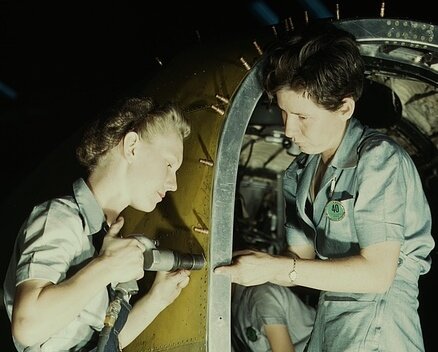
Designed for Performance
Two key features set the B-24 apart from its contemporaries. The first was its unique, high-efficiency wing. Known as the Davis wing, it was long, thin, and deep. This high aspect-ratio design generated incredible lift and minimized drag, allowing the Liberator to carry a heavy bomb load over vast distances. It was the secret to the plane's exceptional range.
The second innovation was its tricycle landing gear. Most large aircraft of the era were "tail-draggers," with a small wheel at the back. This configuration made them notoriously difficult to handle on the ground. The B-24's nose wheel made takeoffs and landings much more stable and safer, especially on the rough, hastily-built airfields from which it would often operate.
Another distinctive feature was its twin-tail rudder design, which provided stability and control. The fuselage itself was deep and slab-sided, designed more for function than beauty. This spacious interior, combined with bomb bay doors that rolled up like a garage door, allowed the B-24 to carry a wide variety of ordnance, including bulky bombs that wouldn't fit in other aircraft.
Putting It to the Test
The B-24's combination of design features resulted in impressive performance for its time. It boasted a higher top speed and a greater range than the B-17 Flying Fortress, its more famous counterpart. Its ability to carry a bomb load of up to 8,000 pounds was also a critical asset. These capabilities meant the Liberator could strike targets deep within enemy territory and perform long-range maritime patrols that other aircraft simply couldn't.
| Specification | B-24 Liberator |
|---|---|
| Crew | 10–11 |
| Top Speed | 290 mph (470 km/h) |
| Range | 2,100 miles (3,400 km) |
| Service Ceiling | 28,000 ft (8,500 m) |
| Max Bomb Load | 8,000 lbs (3,600 kg) |
Initially, the B-24's incredible range made it a natural fit for the British Royal Air Force. Before the U.S. even entered the war, the British were using Liberators as long-range maritime patrol aircraft to hunt German U-boats in the Atlantic. They were also used for ferrying personnel and supplies across the ocean.
When the United States entered World War II, the B-24 quickly found its place in every theater of operations. Its first roles included anti-submarine warfare, bombing missions in Europe and the Pacific, and serving as a long-range transport. Its versatility and robust design proved invaluable during the war's early, critical stages.
The B-24 Liberator was a product of urgent necessity, an aircraft born on the eve of a global conflict. Its innovative design, particularly the Davis wing, gave it a unique combination of speed, range, and payload that made it one of the most important Allied bombers of the war.