Azure AI Fundamentals
Introduction to AI
What Is Artificial Intelligence?
Artificial Intelligence is about making computers smart. The goal is to create machines that can perform tasks that typically require human intelligence, like learning from experience, understanding language, recognizing objects, and solving problems.
Artificial Intelligence
noun
A field of computer science dedicated to creating systems that can perform tasks that normally require human intelligence.
Think of it this way: when you teach a dog to fetch, you're rewarding a certain behavior. AI works on a similar principle, but instead of a dog, it's a computer program, and instead of a treat, it's data. The more data the program processes, the better it gets at its task, whether that's identifying a cat in a photo or recommending your next favorite song.
A Quick Trip Through Time
The dream of intelligent machines has been around for centuries, but the actual field of AI officially started in the 1950s. Since then, its journey has been a series of exciting breakthroughs and periods of slower progress, often called "AI winters."
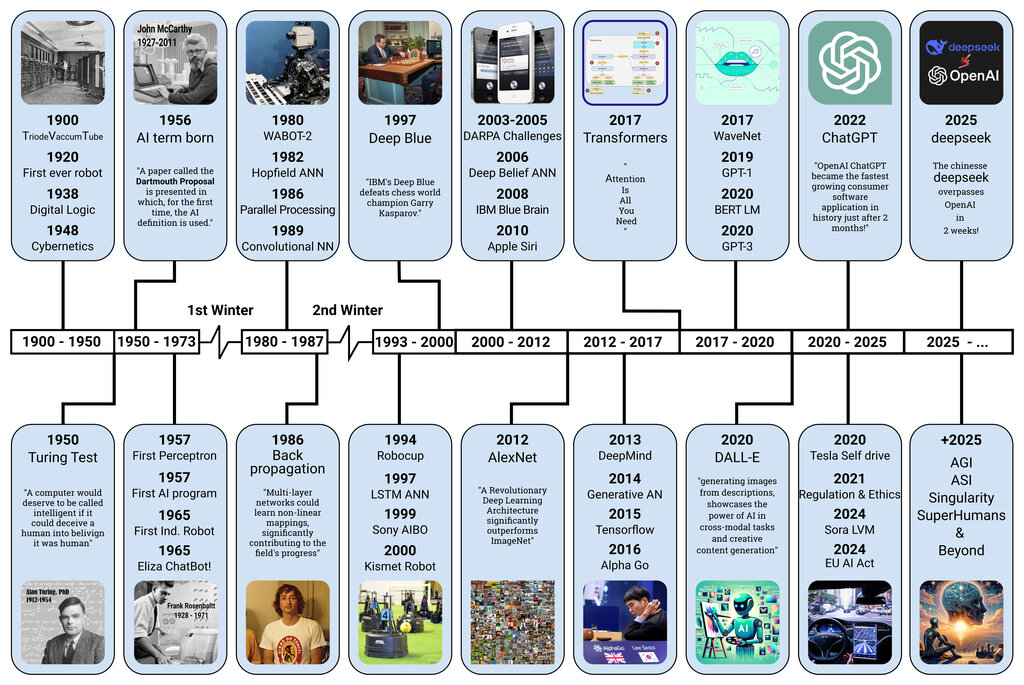
Early research focused on problem-solving and symbolic reasoning. A key moment was the creation of the Turing Test, a way to measure a machine's ability to exhibit intelligent behavior indistinguishable from that of a human. In recent decades, the explosion of available data and massive increases in computing power have fueled a new era of rapid AI advancement, making technologies like the ones in your phone possible.
AI in the Wild
AI isn't just a futuristic concept from science fiction; it's already a part of our daily lives. Every time you use a navigation app to find the fastest route, get a movie recommendation from a streaming service, or see your email automatically sort out spam, you're interacting with an AI system.
AI powers many of the conveniences we now take for granted, from voice assistants and language translation to fraud detection at your bank.
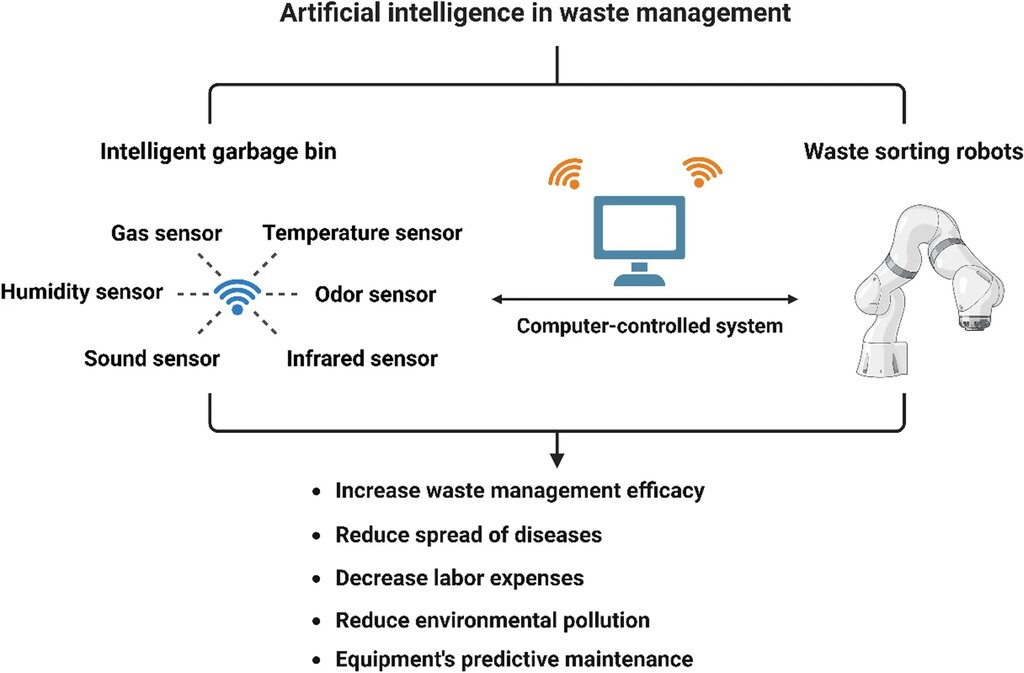
Beyond personal convenience, AI is transforming entire industries. In healthcare, it helps doctors diagnose diseases earlier and more accurately. In agriculture, it optimizes crop yields to feed a growing population. And in environmental science, AI models climate change and helps find more efficient ways to manage resources, like waste.
AI, Machine Learning, and Deep Learning
You'll often hear the terms Artificial Intelligence, Machine Learning, and Deep Learning used together, and it can be confusing. They aren't the same thing, but they are closely related. The easiest way to think about them is as a set of Russian nesting dolls, with each one fitting inside the other.
Artificial Intelligence (AI) is the broadest concept. It's the entire field of making machines intelligent in any way.
Machine Learning (ML) is a subset of AI. Instead of programming a computer with explicit rules for every situation, ML involves creating algorithms that allow the computer to learn from data. It finds patterns and makes predictions without being told exactly how. Your spam filter is a classic example: it learns to identify junk mail by analyzing thousands of examples of spam and legitimate emails.
Deep Learning (DL) is a subset of Machine Learning. It's an even more advanced technique that uses structures inspired by the human brain, called artificial neural networks. These networks have many layers, allowing them to learn very complex patterns from huge amounts of data. Deep learning is the magic behind self-driving cars recognizing pedestrians and voice assistants understanding your commands.
So, all Machine Learning is AI, but not all AI is Machine Learning. And all Deep Learning is Machine Learning, but not vice-versa.
Understanding these distinctions gives you a clear framework for how modern smart technology is built. It starts with the broad goal of AI, narrows to the technique of learning from data with ML, and can be further specialized with the powerful neural networks of DL.
What is the fundamental goal of Artificial Intelligence?
How can the relationship between Artificial Intelligence (AI), Machine Learning (ML), and Deep Learning (DL) be best described?