Azure AI Engineer Associate Certification Prep
Azure AI Fundamentals
The Building Blocks of AI
Artificial intelligence, or AI, is a broad field focused on creating systems that can perform tasks that typically require human intelligence. This could be anything from understanding language to recognizing objects in a photo.
Machine learning (ML) is a core part of modern AI. Instead of writing explicit, step-by-step instructions for a computer, machine learning involves training a system on large amounts of data. The system learns to recognize patterns and make decisions on its own, based on the examples it has seen.
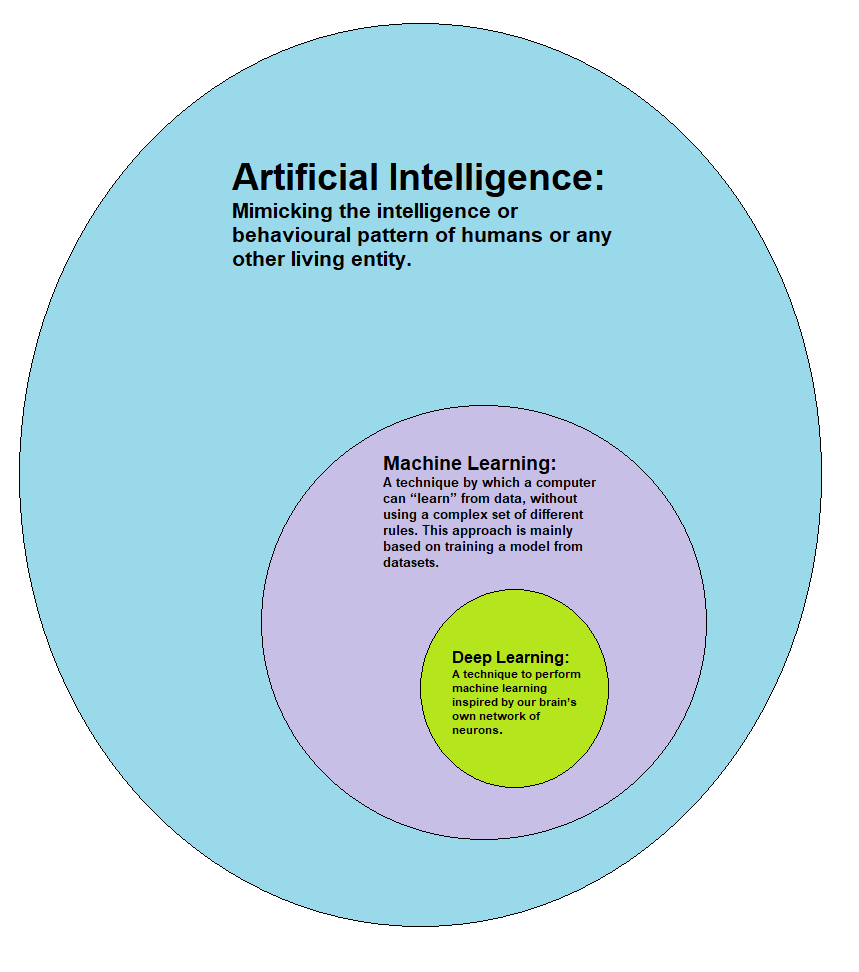
Think of it this way: AI is the goal of creating an intelligent machine, and machine learning is a primary method for getting there. Most of the AI applications we use today are powered by machine learning.
Learning with and without a Teacher
Machine learning models learn in different ways. The two most common approaches are supervised and unsupervised learning.
Supervised Learning
noun
A type of machine learning where the model is trained on a dataset that is labeled. The model learns to map input data to a specific, known output.
Supervised learning is like studying with flashcards. Each card has a question (the input) and a correct answer (the output). You show the model thousands of examples, like images labeled "cat" or "dog." Over time, it learns the features that distinguish a cat from a dog. The goal is to get the model to correctly label a new photo it has never seen before.
Then there's unsupervised learning.
Unsupervised Learning
noun
A type of machine learning where the model is trained on a dataset that is not labeled. The model tries to find patterns and structure in the data on its own.
Unsupervised learning is like being given a huge box of mixed Lego bricks and being told to sort them. You aren't told what the categories are. You naturally start grouping them by color, shape, or size. The machine does the same thing, looking for inherent structures in the data, such as clustering customers into different purchasing groups based on their buying habits.
| Feature | Supervised Learning | Unsupervised Learning |
|---|---|---|
| Input Data | Labeled | Unlabeled |
| Goal | Predict an output | Discover hidden patterns |
| Analogy | Learning with a teacher | Learning on your own |
AI on Microsoft Azure
Building AI systems from scratch is complex. It requires deep expertise and a lot of computational power. Microsoft Azure simplifies this with Azure AI Services, a collection of tools and services that let you add powerful AI capabilities to your applications without needing to be a machine learning expert.
Instead of building and training your own models, you can use pre-built models that are ready to go. These services can analyze images, understand text, translate languages, and respond to spoken commands.
For example, you could use the Computer Vision service to identify objects in pictures or the Language service to analyze customer reviews and understand their sentiment. Azure provides the building blocks, so you can focus on solving your specific problem.
Azure AI Services provide pre-built AI capabilities for various scenarios
Now, let's review these core concepts.
What is the primary relationship between Artificial Intelligence (AI) and Machine Learning (ML)?
Which of the following scenarios is a classic example of supervised learning?
Understanding these fundamentals is the first step toward building intelligent applications with Azure.