AWS ML Specialty Certification Mastery
Data Engineering
Building the Foundation
Before a machine learning model can predict anything, it needs high-quality data. But data in the real world is rarely clean or organized. It’s often messy, incomplete, and spread across different systems. Data engineering is the crucial process of collecting, storing, and preparing this raw data, turning it into a reliable resource for machine learning.
Data engineering is the backbone of any modern data-driven organization.
Think of it like building a house. You can't start putting up walls and a roof without first laying a solid foundation. In machine learning, data engineering is that foundation. Without it, even the most sophisticated model will fail.
Choosing Your Data's Home
The first step is deciding where your data will live. Different types of data have different needs, and AWS offers specialized storage solutions for various scenarios.
For unstructured or semi-structured data of any size—like images, logs, or JSON files—Amazon S3 (Simple Storage Service) is the go-to choice. It's like a massive, endlessly scalable digital filing cabinet. You can store virtually anything in S3, making it a perfect starting point, often called a data lake.
For structured, relational data, like customer records or sales transactions, you'd use Amazon RDS (Relational Database Service). RDS makes it easy to set up, operate, and scale a relational database like PostgreSQL or MySQL. It’s like a meticulously organized library, where every piece of information has a specific, predictable place.
When you need to analyze huge volumes of structured data quickly, Amazon Redshift is the tool. It's a data warehouse built for high-speed queries on petabyte-scale datasets. Think of it as a specialized research library designed for complex analysis across vast collections of information.
| Service | Best For | Analogy |
|---|---|---|
| Amazon S3 | Any type of data, data lakes, backups | A vast warehouse |
| Amazon RDS | Structured, transactional data | An organized library |
| Amazon Redshift | Large-scale analytical queries | A high-tech research facility |
Moving and Shaping Data
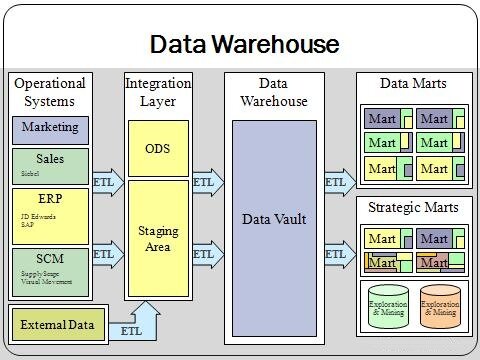
Once you have a place to store your data, you need to get it there and clean it up. This process is often called ETL: Extract, Transform, and Load.
Data engineers create and manage ETL processes that take data from various sources, transform it into a usable format, and load it into a storage system.
AWS provides services to automate this. AWS Glue is a serverless data integration service that makes it easy to discover, prepare, and combine data. It can automatically crawl your data sources, identify data formats, and suggest schemas to build a central Data Catalog. It then generates the code needed to transform and move your data.
For more complex workflows, AWS Data Pipeline helps you reliably process and move data between different AWS compute and storage services, as well as on-premises data sources, at specified intervals. It's like an automated logistics system for your data, ensuring everything moves where it needs to, when it needs to.
Preparing Data for Models
Raw data is rarely ready for a machine learning model. It needs to be transformed into a consistent and numerical format. This involves several key techniques.
Feature Engineering involves creating, selecting, or transforming features (input variables) to improve the performance of machine learning models.
Normalization and Standardization are used to scale numerical features so they are on a similar range. This prevents features with large values (like home prices) from dominating features with small values (like number of bedrooms). Normalization scales data to a fixed range, usually 0 to 1. Standardization rescales data to have a mean of 0 and a standard deviation of 1.
Encoding Categorical Variables is necessary because models understand numbers, not text like 'red', 'green', or 'blue'. A common method is one-hot encoding, which converts a category into a binary vector. For example, a 'Color' feature with values 'Red' and 'Blue' would become two new features: 'Is_Red' and 'Is_Blue'.
| Original | Color | One-Hot Encoded | Is_Red | Is_Blue | |
|---|---|---|---|---|---|
| 1 | Red | ➡️ | 1 | 1 | 0 |
| 2 | Blue | 2 | 0 | 1 | |
| 3 | Red | 3 | 1 | 0 |
Finally, real-world data often has missing data and outliers. Missing values might be filled in (imputed) using the mean or median of the column, or the row might be dropped entirely. Outliers—unusually high or low values—can skew a model's training and may need to be removed or adjusted.
Keeping Data Safe
Throughout the entire process, security is paramount. AWS provides robust tools to protect your data. This includes encrypting data both when it's stored (at rest) and when it's being moved (in transit). Using AWS Identity and Access Management (IAM), you can control exactly who has permission to access which data and services.
For sensitive information, it's also important to consider compliance with regulations like GDPR or HIPAA. AWS offers services and guidance to help build compliant applications, ensuring that data is handled responsibly and securely from start to finish.