AWS Machine Learning Specialty Certification Prep
Data Engineering
The Foundation of Machine Learning
Before a machine learning model can predict anything, it needs high-quality data. Getting that data ready is a discipline in itself called data engineering. It’s the essential, behind-the-scenes work of building the infrastructure that collects, stores, and prepares data for analysis.
Data engineering is the backbone in mordern analytics, AI, and business intelligence.
Think of it like building the plumbing for a house. You don't see it, but nothing works without it. In machine learning, data engineering ensures that clean, reliable data flows smoothly to the models that need it. This process starts with figuring out where your data will live.
Where Data Lives on AWS
Data can come from anywhere: user activity on a website, sensor readings from machinery, or records in a company database. Once you've identified your data sources, you need a place to store everything in the cloud. AWS offers several options, each suited for different needs.
Amazon S3 (Simple Storage Service) is the most common choice. It’s an object storage service, which is like having a nearly infinite digital warehouse. You can store any amount of data, from text files and images to massive datasets, in its raw format. This flexibility makes S3 the ideal foundation for a data lake, a central repository for all your structured and unstructured data.
Sometimes, you need storage that acts more like a traditional file system. For this, AWS provides two main options:
-
Amazon EFS (Elastic File System): This is like a shared network drive in the cloud. Multiple virtual servers can access and modify the same files at the same time. It's useful for applications that need a common file system to work from.
-
Amazon EBS (Elastic Block Store): Think of this as a high-performance hard drive attached directly to a single virtual server. It’s perfect for running an operating system or a database that requires fast, low-latency access to its data.
Getting Data into the Cloud
Once you have a destination, the next step is getting your data there. This process, called data ingestion, involves moving data from its original source into your AWS storage. The right tool for the job depends on the type and speed of the data.
For data that arrives in a continuous flow, like clicks on a website or social media mentions, you need a streaming solution. Amazon Kinesis is designed for this. It acts like a massive conveyor belt, capturing and processing huge streams of data in real-time as they are generated.
For batch data—large, discrete chunks of information like daily sales reports or log files—AWS Glue is a powerful option. It’s a serverless data integration service that can automatically discover the structure of your data, then move it from hundreds of different sources into S3 or other databases. It simplifies the process of building and managing data pipelines.
Sometimes, you need raw processing power for truly massive datasets. Amazon EMR (Elastic MapReduce) provides a managed cluster of virtual servers designed to run big data frameworks like Apache Hadoop and Apache Spark. It's the heavy-duty tool for large-scale data processing jobs.
Transforming Raw Data
Data rarely arrives in a perfect, ready-to-use state. It's often messy, incomplete, or in the wrong format. Data transformation is the process of cleaning, structuring, and enriching raw data to make it useful for machine learning models.
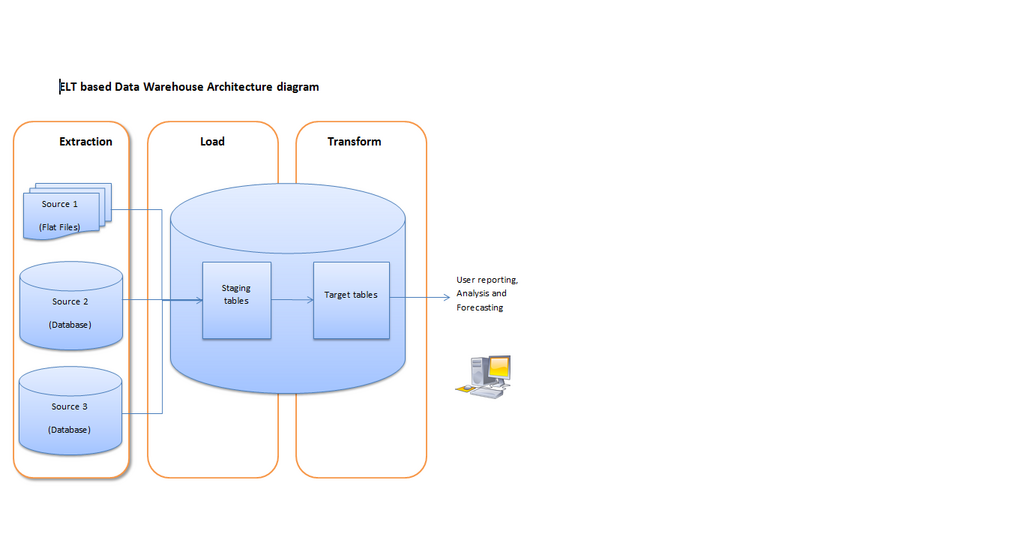
Data engineers create and manage ETL processes that take data from various sources, transform it into a usable format, and load it into a storage system.
The most common method for this is ETL (Extract, Transform, Load). The process works exactly like it sounds:
- Extract: Pull data from its original source (like a database or an application).
- Transform: Apply a series of rules to clean it up. This could involve removing duplicates, correcting errors, converting data types, or combining data from multiple sources.
- Load: Place the newly transformed, clean data into a final destination, like a data warehouse, where it's ready for analysis.
AWS Glue is a primary service for building ETL pipelines. For massive-scale transformations, data engineers often turn to frameworks like Apache Hadoop and Apache Spark, which can be run on Amazon EMR. These frameworks use a technique called MapReduce to distribute the processing work across many computers, allowing them to transform petabytes of data far more quickly than a single machine ever could.
With data properly stored, ingested, and transformed, the foundation is set. The clean, structured data is now ready to be explored and used to train powerful machine learning models.