AWS Fundamentals and Applications
AWS Global Infrastructure
The Global Reach of AWS
When you use a service on the internet, it's easy to forget that it's all running on physical hardware somewhere in the world. For a cloud provider like Amazon Web Services (AWS), that 'somewhere' is everywhere. Instead of one massive data center, AWS operates a vast, interconnected network of facilities spread across the globe. This physical backbone is what makes cloud computing's speed, reliability, and scale possible.
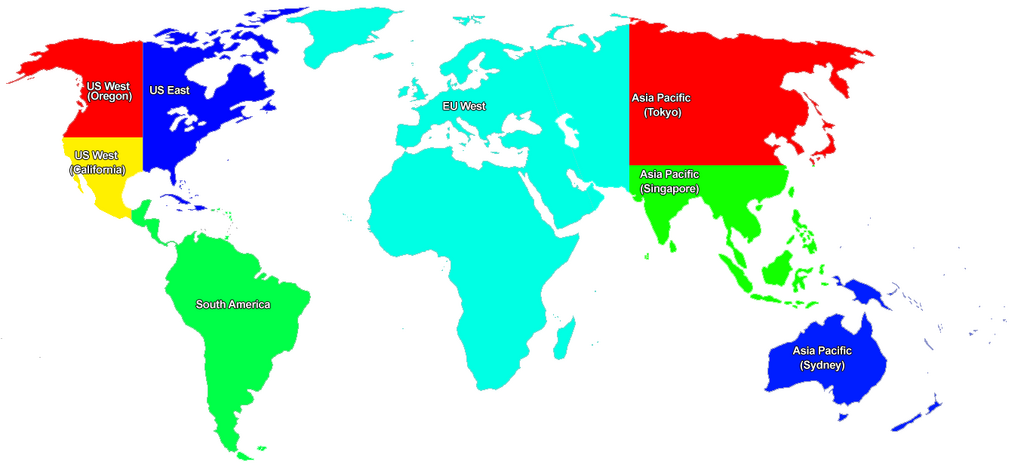
This global infrastructure isn't just a random collection of servers. It’s a carefully designed architecture built on three core components: Regions, Availability Zones, and a network of edge locations. Understanding how these pieces fit together is key to building resilient and performant applications.
Regions and Availability Zones
The highest-level building block is the AWS Region. A Region is a physical, geographic area, like Northern Virginia or Ireland. Each Region is designed to be completely isolated from the others. This separation provides a strong boundary for both stability and data governance. If an issue affects one Region, the others keep running independently.
Choosing the right Region is your first architectural decision. You typically select one based on proximity to your users to reduce latency, or to comply with data residency laws that require data to be stored within a specific country's borders.
Within each Region are multiple, isolated locations known as Availability Zones (AZs). Think of an AZ as one or more discrete data centers, each with its own redundant power, cooling, and networking. They are physically separate—often miles apart—to protect against localized disasters like fires or floods. However, they are close enough to have low-latency, high-bandwidth connections between them.
This multi-AZ structure is the foundation of building highly available and applications on AWS. By deploying your application's resources across at least two AZs within a Region, you ensure that if one data center fails, your application can continue running from the other. This isn't theoretical; it's the standard best practice for any production workload on AWS.
The Network Edge
While Regions and AZs handle the core computing and storage, AWS also has a vast network of smaller infrastructure deployments called edge locations and Local Zones. These are designed to bring AWS services closer to end-users, dramatically reducing latency for specific tasks.
| Infrastructure Type | Primary Purpose | Key Services |
|---|---|---|
| Edge Locations | Content delivery and DNS resolution | Amazon CloudFront (CDN), Route 53 |
| Local Zones | Low-latency compute and storage for specific metro areas | EC2, EBS, and other services |
| Wavelength Zones | Ultra-low-latency applications for 5G mobile devices | Services embedded within telecom provider data centers |
Edge locations are the most numerous. They are used by Amazon CloudFront, a Content Delivery Network (CDN), to cache copies of your content (like images and videos) close to viewers around the world. When a user requests a file, it's served from the nearest edge location, not from your origin server in a distant AWS Region. This makes websites and applications feel much faster.
Local Zones and Wavelength Zones are newer, more specialized extensions. Local Zones are essentially mini-extensions of an AWS Region located in major cities, allowing you to run latency-sensitive parts of an application closer to users in that metro area. Wavelength Zones embed AWS infrastructure directly into the 5G networks of telecommunication providers, enabling applications that require single-digit millisecond latency to mobile devices.
Global vs. Regional
It's important to know that not all AWS services are confined to a single Region. Some services are, by their nature, global. You don't choose a region to use them; they operate worldwide by default.
A key example is AWS Identity and Access Management (IAM), which manages users and permissions. An IAM user is a global entity, not one tied to
us-east-1orap-southeast-2.Amazon CloudFront is another example. You configure a distribution once, and it automatically uses the entire global network of edge locations.
Most services you'll work with, however, are regional. When you launch a virtual server (an EC2 instance) or create a database, you must choose which Region it will live in. Your data and resources for that service are then homed in that specific geographic area. This regional isolation is a powerful feature for building secure and resilient systems.
Let's check your understanding of these foundational concepts.
What is the highest-level building block of the AWS global infrastructure, designed to be completely isolated from others for stability and data governance?
What is the primary purpose of an AWS Edge Location?
This physical architecture is the bedrock upon which all other AWS services are built. By understanding the roles of Regions, AZs, and the edge network, you can make informed decisions to create applications that are fast, reliable, and available to users anywhere.