AWS Cloud Fundamentals
Introduction to Cloud Computing
What is Cloud Computing?
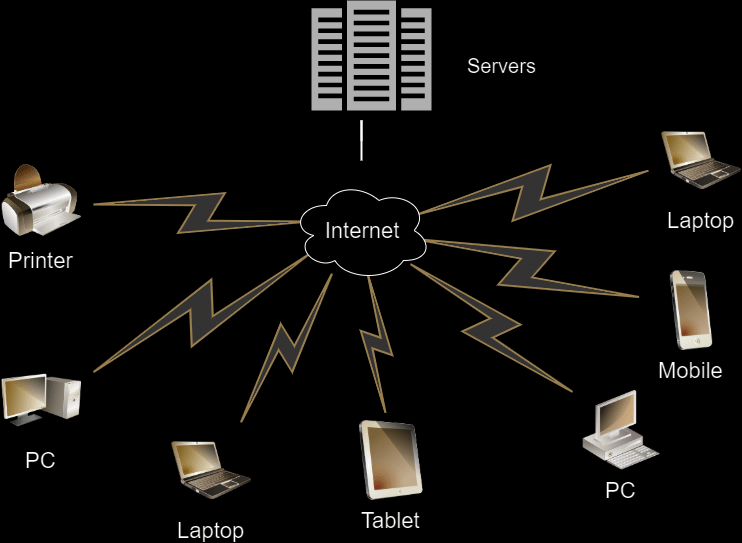
At its core, cloud computing is about accessing computing resources over the internet instead of hosting them on your own physical hardware. Think of it like streaming a movie. You don't own the movie file on your device; you just access it from a service like Netflix or Hulu when you want to watch it. The movie lives on their powerful computers, or servers, and you just need an internet connection to enjoy it.
Cloud computing is the delivery of computing services—servers, storage, databases, networking, software, analytics, and intelligence—over the internet (“the cloud”).
This model allows you to rent access to everything from applications to data storage and processing power from a cloud provider, such as Amazon Web Services (AWS). This means you don't have to buy and maintain your own expensive servers. Instead, you get on-demand access to what you need and typically pay only for what you use, a model known as pay-as-you-go pricing.
The Benefits of the Cloud
Why has cloud computing become so popular? It solves many old problems associated with traditional IT. Instead of guessing how much server space you'll need and buying expensive hardware that might sit unused, the cloud offers flexibility and efficiency.
| Benefit | Description |
|---|---|
| Cost Savings | Pay only for what you use. Avoid the large upfront cost of buying and maintaining hardware. |
| Scalability | Easily increase or decrease your resources as your needs change. This is called elasticity. |
| Performance | Access state-of-the-art hardware and a global network of data centers, ensuring speed and low latency. |
| Reliability | Cloud providers offer data backup, disaster recovery, and redundancy, making your data safer. |
| Speed | Provision powerful computing resources in minutes, allowing you to innovate and deploy faster. |
Cloud computing allows organizations to focus on their core business and leave unwanted work like IT infrastructure capacity planning, procurement, and maintenance to cloud providers.
The Three Service Models
Cloud computing isn't a one-size-fits-all solution. It comes in three main service models, each offering a different level of control and management. Think of it like getting a car.
Infrastructure as a Service (IaaS) This is the most basic level. You rent the fundamental building blocks of computing: servers, storage, and networking. It's like leasing a car. You get the car, but you're responsible for driving it, maintaining it, and putting gas in it. IaaS gives you the most control over your hardware.
Platform as a Service (PaaS) This model provides a platform for you to develop, run, and manage applications without dealing with the underlying infrastructure. It's like using a ride-sharing service. You don't own or maintain the car; you just tell the driver where to go and enjoy the ride. PaaS is for developers who want to focus on writing code, not managing servers.
Software as a Service (SaaS) Here, you're essentially renting a fully-functional application. You access it over the internet, usually with a web browser. This is like taking a bus or a train. You don't control the vehicle or the route; you just get on and off at your stop. Most people use SaaS products every day, like Gmail or Salesforce.
Cloud Deployment Models
Finally, where does the cloud infrastructure live? There are three main ways to deploy cloud services.
Public Cloud: This is the most common model. The cloud infrastructure is owned and operated by a third-party provider like AWS, Google, or Microsoft. All hardware, software, and other supporting infrastructure are owned and managed by the provider and shared by multiple organizations (tenants).

Private Cloud: The cloud infrastructure is operated exclusively for a single organization. It can be managed by the organization or a third party and may be located on-premises or off-premises. This offers more security and control but comes at a higher cost.

Hybrid Cloud: This approach combines public and private clouds, allowing data and applications to be shared between them. This gives businesses greater flexibility, more deployment options, and helps optimize their existing infrastructure, security, and compliance.
With these fundamentals in mind, you're ready to understand how specific cloud platforms like AWS provide these services to power businesses and applications around the world.