AWS Cloud Fundamentals
Introduction to AWS
Welcome to the Cloud
Amazon Web Services, or AWS, is a massive collection of computing services you can access over the internet. Think of it like a utility company, but for technology. Instead of building your own power plant to get electricity, you just plug into the grid. Similarly, instead of buying and managing your own physical servers and data centers, you can use AWS to power your applications.
This is the core idea of cloud computing: renting access to someone else's computers.
AWS offers a huge range of services, from simple data storage to complex machine learning tools. This allows businesses and developers to build and run applications without the heavy upfront cost and maintenance of owning their own hardware. It’s a pay-as-you-go model, so you only pay for what you actually use.
A Global Network
AWS doesn't run on a single giant computer. Its power comes from a vast, physical network of data centers spread across the globe. To make this manageable and reliable, AWS organizes its infrastructure into a few key concepts.
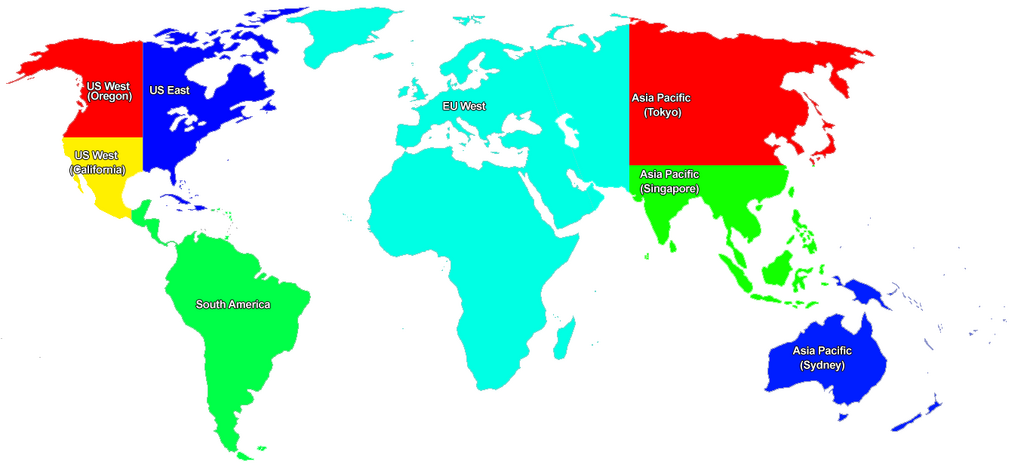
First are Regions. A Region is a specific geographic area, like Northern Virginia or Ireland. Each Region is completely isolated from the others. This helps keep data close to customers, reducing delays.
Within each Region, there are multiple Availability Zones, or AZs. An AZ is one or more discrete data centers with redundant power, networking, and cooling. They are physically separate from each other, housed in different buildings miles apart. If a fire or flood takes out one AZ, the others in the Region keep running.
This structure provides high availability and fault tolerance. You can design applications to run across multiple AZs, so if one fails, your application stays online.
Key Benefits and Services
Why do so many organizations use AWS? There are three main advantages:
-
Cost-Effectiveness: Instead of a huge capital expense to buy hardware, you have a variable operating expense. You don't have to guess your capacity needs in advance. You pay for what you consume, often leading to lower overall costs.
-
Scalability and Elasticity: Imagine your website is featured in a popular news article. Traffic might spike by 100 times. With traditional servers, your site would crash. With AWS, you can automatically add more computing power to handle the load and then scale back down when traffic returns to normal. This ability to grow and shrink on demand is called elasticity.
-
Flexibility and Speed: Need a new server? You can have a virtual one running in minutes. Want to try a new type of database? You can spin one up for a few hours. This allows teams to experiment and innovate much faster than they could with physical hardware.
By mastering EC2, S3, RDS, Lambda, VPC, and IAM, you build a strong foundation for future AWS projects—whether for personal, professional, or enterprise use.
AWS offers hundreds of services, but most work builds on a few core ones. Here are a few you'll encounter constantly:
- EC2 (Elastic Compute Cloud): These are the virtual servers in the cloud. It’s like renting a computer that you can configure and run your applications on.
- S3 (Simple Storage Service): This is a highly durable and scalable object storage service. It’s perfect for storing everything from website images to data backups.
- RDS (Relational Database Service): This service makes it easy to set up, operate, and scale a relational database like MySQL or PostgreSQL in the cloud.
- IAM (Identity and Access Management): IAM lets you manage users and their access to AWS services and resources securely. You control who can do what within your AWS account.
These foundational services are the building blocks for a vast number of applications running on the cloud today. Understanding them is the first step toward using AWS effectively.
Which statement best describes the relationship between an AWS Region and an AWS Availability Zone (AZ)?
A retail website experiences a massive, unexpected surge in traffic during a flash sale. Which core benefit of AWS allows the site to handle the increased load without crashing?