AWS Certified Solutions Architect Associate Prep
AWS Fundamentals
What Is AWS?
Imagine you need a powerful computer to run a new application. In the past, you'd have to buy expensive hardware, set it up, and maintain it. This process was slow and costly. Cloud computing changed all that.
Think of it like electricity. You don't build your own power plant; you just plug into the grid and pay for what you use. Cloud computing is similar. Instead of owning your own computing infrastructure, you access it over the internet from a cloud provider.
Amazon Web Services (AWS) is the world's leading cloud provider. It offers a massive collection of services, from computing power and data storage to machine learning and analytics. You can rent these resources on-demand, paying only for what you consume. This means you can launch a new project in minutes instead of months and scale up or down instantly as your needs change.
Since launching in 2006, AWS established itself as the dominant player in the cloud infrastructure space, commanding a huge share of the global market and traditionally eclipsing key competitors such as Microsoft and Google Cloud.
This pay-as-you-go model offers incredible flexibility and cost savings. Instead of a huge upfront investment in physical servers, you can experiment and grow without breaking the bank.
Core Services
AWS offers hundreds of services, which can feel overwhelming. But most applications are built on a foundation of just four core types of services: compute, storage, networking, and databases. Think of these as the fundamental building blocks of the cloud.
Compute services are like the engine of your application. They provide the processing power to run your code. The most fundamental compute service is Amazon EC2 (Elastic Compute Cloud), which lets you rent virtual servers in the cloud.
Storage is where you keep your data. For files like images, videos, and documents, you'd use Amazon S3 (Simple Storage Service). It's incredibly durable and scalable. For the hard drives attached to your virtual servers, you'd use a service like EBS (Elastic Block Store).
Networking connects all your cloud resources together and to the internet. Amazon VPC (Virtual Private Cloud) lets you create your own isolated network within AWS, giving you control over who and what can access your resources.
Databases are for storing and retrieving structured information, like user profiles or product catalogs. Amazon RDS (Relational Database Service) makes it easy to set up, operate, and scale popular databases like MySQL or PostgreSQL without worrying about the underlying hardware.
A Global Footprint
How does AWS provide these services so reliably? Through a massive global infrastructure. This network is organized into Regions and Availability Zones.
A Region is a physical geographic area in the world, like Northern Virginia or Ireland. Each region is completely independent of the others.
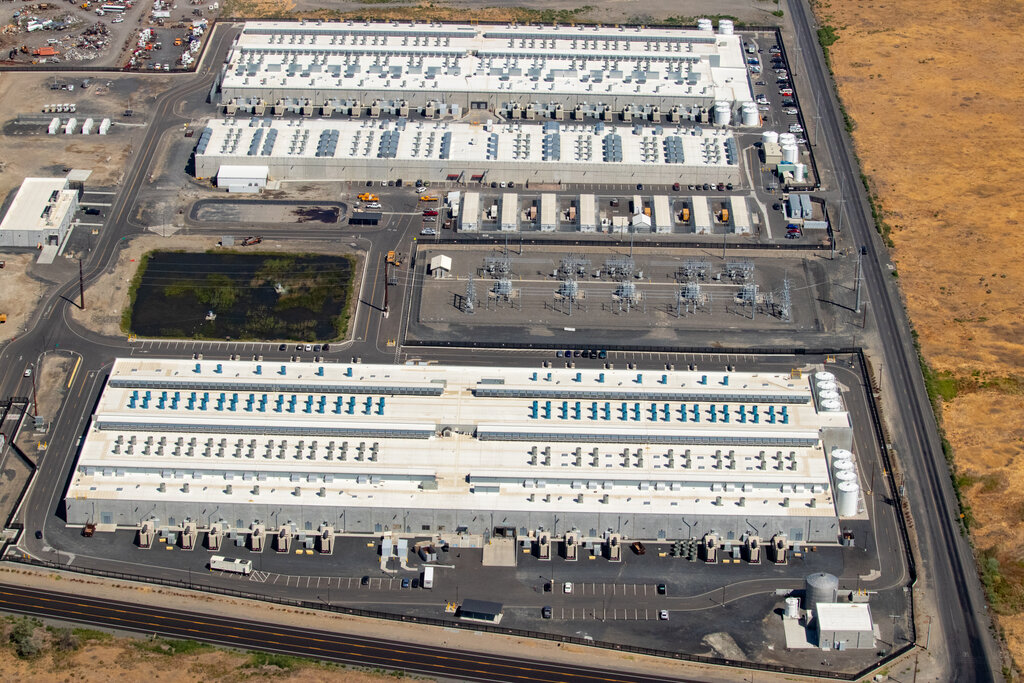
An Availability Zone (AZ) is one or more discrete data centers within a Region. Each AZ has its own power, cooling, and networking, and they're connected with high-speed, low-latency links. By deploying your application across multiple AZs, you can protect it from failure. If one data center has a problem, your application keeps running in another.
This structure is key to building resilient and highly available applications. It allows you to place your resources closer to your users for better performance and to design systems that can withstand failures without going offline.
Sharing the Responsibility
When you use the cloud, security is a partnership. AWS calls this the Shared Responsibility Model. It clearly defines who is responsible for what.
AWS is responsible for the security of the cloud. This includes the physical security of data centers, the hardware, the software that runs the core services, and the global network. They make sure the foundation is secure.
You are responsible for security in the cloud. This means you're in charge of configuring your services securely. Your responsibilities include managing user access, encrypting your data, configuring network firewalls, and ensuring your applications are patched and secure.
Think of it this way: AWS provides a secure building and locks on the doors. You are responsible for who you give keys to and for locking the door behind you.
Understanding this model is crucial. It empowers you to build securely on AWS by clarifying which security tasks are handled by Amazon and which are yours to manage.
Let's check your understanding of these core concepts.
What is the primary economic advantage of the pay-as-you-go model in cloud computing like AWS?
Which of the following is NOT considered one of the four core types of AWS services?
With these fundamentals, you have a solid starting point for exploring what's possible with AWS.