AWS Certified Cloud Practitioner Mastery
AWS Global Infrastructure
AWS Global Infrastructure
Amazon Web Services organizes its massive computing resources into a global network. The fundamental building block of this network is the AWS Region. A Region is a physical, geographic area in the world where AWS clusters data centers. Each Region is designed to be completely isolated from the others, providing the greatest possible fault tolerance and stability.
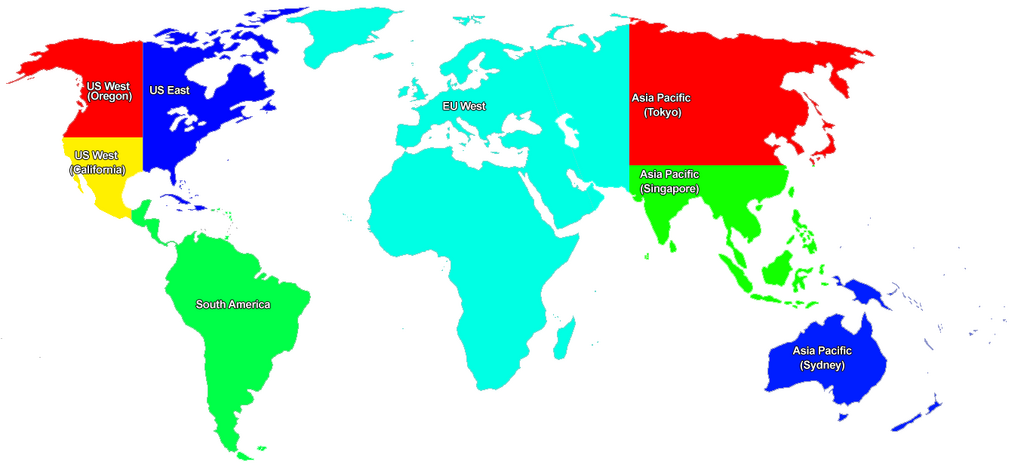
Choosing the right Region isn't just about picking the closest one. It's a strategic decision based on several factors:
- Data Sovereignty and Compliance: Many countries have laws requiring citizen data to remain within their borders. Placing your infrastructure in a specific Region helps you comply with these local regulations, like the GDPR in Europe.
- Latency: To provide the best experience for your users, you want to host your applications as close to them as possible. A user in Tokyo will have a much faster connection to the
ap-northeast-1(Tokyo) Region than theus-east-1(N. Virginia) Region. - Service Availability: While most core AWS services are available in all Regions, the newest, most specialized services often roll out to a few key Regions first. If your architecture depends on a niche service, you'll need to choose a Region where it's supported.
- Cost: Pricing for AWS services can vary slightly from one Region to another due to factors like local taxes and the cost of electricity and land. These differences can add up for large-scale deployments.
Building for Resilience
Within each Region, AWS provides a crucial architectural component for building resilient systems: Availability Zones (AZs). An AZ consists of one or more discrete data centers, each with redundant power, networking, and connectivity, housed in separate facilities. Think of an AZ as a self-contained, isolated failure domain.
They are physically separated within a metropolitan area—far enough apart to be protected from a single disaster like a fire or flood, but close enough to provide low-latency connections between them. This separation is the key to creating applications with high availabilitys. By deploying your application across at least two AZs, you can ensure that if one fails, your application remains online, running from the other AZ.
This multi-AZ architecture is a foundational principle for building reliable applications on AWS. It moves the conversation from hoping a server doesn't fail to assuming it will and designing a system that can handle it gracefully.
Getting Closer to the User
While Regions and AZs form the core compute and storage backbone, AWS has another layer of infrastructure designed to deliver content and applications with the lowest possible latency. These are often called Points of Presence (PoPs).
Edge Locations are data centers that cache content close to end users. They are the workhorses behind Amazon CloudFronts, the AWS Content Delivery Network (CDN). Instead of a user in London fetching an image from a server in Virginia, CloudFront serves a cached copy from an Edge Location in London, drastically reducing load times.
Local Zones and Wavelength Zones are more specialized. Local Zones are extensions of a Region that place compute and storage services closer to large population centers, ideal for latency-sensitive applications like real-time gaming. Wavelength Zones embed AWS infrastructure within the 5G networks of telecommunications providers, designed for ultra-low-latency mobile applications.
For global applications, two key services leverage this distributed network to improve performance: Amazon CloudFront and s. They both aim to reduce latency, but they solve different problems.
CloudFront is about moving your content closer to users (caching). Global Accelerator is about moving your users closer to your application over an optimized network path.
| Feature | Amazon CloudFront | AWS Global Accelerator |
|---|---|---|
| Primary Use | Caching static/dynamic content (CDN) | Accelerating application traffic (non-cacheable) |
| How it works | Serves content from a global network of Edge Locations. | Routes traffic over the AWS global network backbone. |
| Good for... | Websites, video streaming, API acceleration. | Gaming, VoIP, APIs, IoT, non-HTTP traffic. |
| Key Benefit | Reduced latency by caching content near users. | Reduced latency and jitter by avoiding public internet congestion. |
Understanding these layers of infrastructure is essential for making smart architectural decisions. By strategically placing resources in Regions and AZs and leveraging services like CloudFront and Global Accelerator, you can build applications that are secure, resilient, performant, and cost-effective on a global scale.
Time to check your understanding.
A European company is launching a new application and must comply with the General Data Protection Regulation (GDPR), which requires that user data for EU citizens remains within the EU. Which factor is the primary driver for selecting an AWS Region in this scenario?
What is the primary purpose of deploying an application across multiple Availability Zones (AZs) within a single AWS Region?
By correctly selecting and combining these components, you can architect a solution tailored to meet specific requirements for performance, availability, and compliance anywhere in the world.