Aviation Percentage Calculations Made Easy
Understanding Percentages
The Basics of Percentages
At its core, a percentage is just a fraction of 100. The word "percent" comes from the Latin per centum, which means "per hundred." So, when you see 50%, it's just another way of saying 50 out of 100, or the fraction $50/100$.
The most important thing to understand is that percentages, fractions, and decimals are three different ways of expressing the same thing!
This relationship is key. If you have half a tank of fuel, you can say you have a tank, of a tank, or 50% of a tank. They all mean the same thing. Being able to switch between these forms is a fundamental skill, especially in aviation where quick mental math is often necessary.
Making Conversions
Converting between decimals, fractions, and percentages is straightforward once you know the rules.
Decimal to Percentage: Move the decimal point two places to the right and add a percent sign. This is the same as multiplying by 100.
Fraction to Percentage: First, convert the fraction into a decimal by dividing the numerator (the top number) by the denominator (the bottom number). Then, convert that decimal to a percentage.
And to go the other way, from a percentage to a decimal, you just divide by 100. For example, becomes .
| Fraction | Decimal | Percentage |
|---|---|---|
| 1/4 | 0.25 | 25% |
| 1/2 | 0.5 | 50% |
| 3/4 | 0.75 | 75% |
| 1/5 | 0.2 | 20% |
| 1/10 | 0.1 | 10% |
Calculating Change
One of the most common uses for percentages is to describe an increase or a decrease. For example, a pilot might need to calculate the percentage increase in fuel consumption due to a headwind, or the percentage decrease in landing distance on a dry runway.
To find the percentage change, you calculate the difference between the two numbers, divide it by the original number, and then multiply by 100.
Let's say a flight that normally takes 200 gallons of fuel requires 220 gallons today because of weather. The difference is 20 gallons. You'd calculate the percentage increase like this: . The flight required 10% more fuel than usual.
Percentages in the Cockpit
Percentages appear frequently in aviation. Pilots monitor engine power settings as a percentage of maximum revolutions per minute (RPM) or engine pressure ratio (EPR). For example, a typical cruise power setting might be 90% N1, which refers to the speed of the engine's low-pressure compressor.
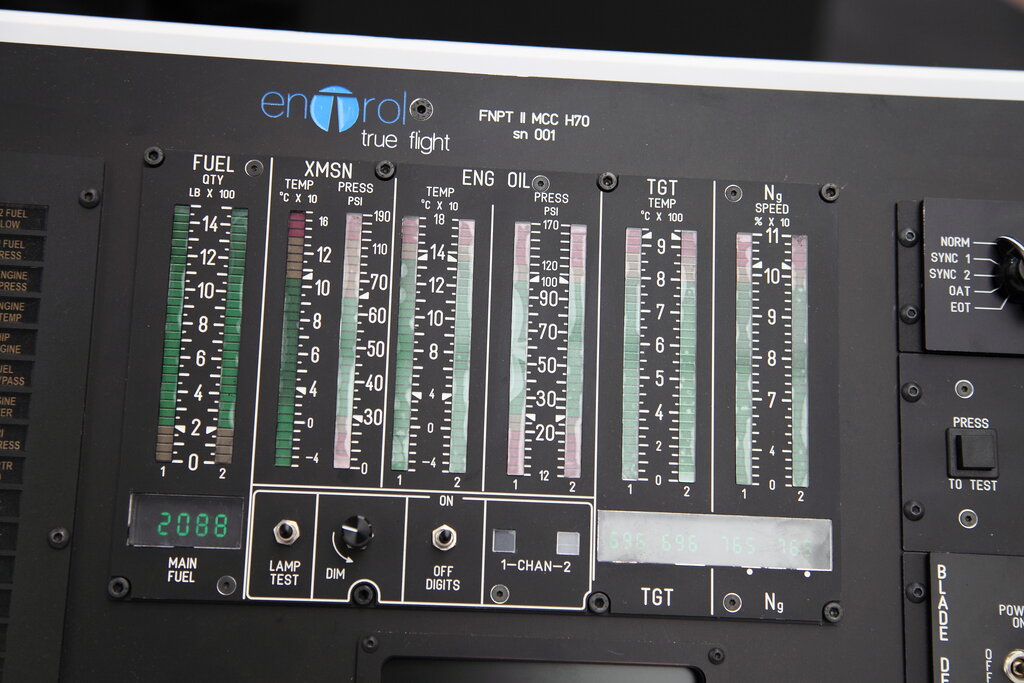
Fuel is another critical area. Fuel gauges often read in percentages, giving the pilot a quick and intuitive sense of how much flight time remains. A pilot might report having "70 percent fuel remaining."
Even the glide slope on an instrument landing system (ILS) approach is based on a percentage, though it's expressed in degrees. A standard 3-degree glideslope means the aircraft descends about 318 feet for every nautical mile it travels forward. This is roughly a 5.2% gradient.
Ready to test your knowledge? Let's try a few questions on these concepts.
The term "percent" is derived from the Latin phrase per centum. What does this phrase mean?
A pilot has used 1/4 of their aircraft's fuel. What percentage of the fuel is remaining?
Mastering these basics will help you handle the many calculations required for safe and efficient flying.