Aviation Command FAA Ground School and MOSAIC Integration
Regulatory Modernization and MOSAIC
Beyond Weight Limits
For years, the definition of a Light-Sport Aircraft (LSA) was simple and rigid, revolving around a maximum takeoff weight of 1,320 pounds. This rule created a clear boundary, but it also limited innovation and kept many popular, capable aircraft out of reach for sport pilots. The FAA’s rule changes everything by replacing this prescriptive weight limit with a more flexible, performance-based standard.
Instead of asking "How much does it weigh?", the new regulations ask "How does it fly?" This shift acknowledges that modern engineering can produce safer, more capable aircraft without being constrained by an arbitrary weight cap. It opens the LSA category to a much wider range of planes, including many legacy trainers that pilots have been flying for decades.
MOSAIC shifts from prescriptive limits (like the 1,320 lb weight cap) to performance-based criteria.
The New LSA Definition
Under MOSAIC, an aircraft's eligibility as an LSA is primarily determined by its aerodynamic performance, not its weight. The two key metrics are its stall speed and its maximum level flight speed.
Vs1
other
The stalling speed in a clean configuration, meaning the flaps, landing gear, and other high-lift devices are fully retracted. It represents the aircraft's minimum steady flight speed in this configuration.
The new rules state that a fixed-wing LSA must have:
- A clean stall speed () of 59 knots or less.
- A maximum level flight speed () of 250 knots calibrated airspeed (KCAS) or less.
- A maximum seating capacity of four seats.
This redefinition is massive. Common training aircraft like the Cessna 172, which were far too heavy under the old rules, can now be flown by sport pilots. This gives pilots access to more robust, widely available, and often better-equipped aircraft for both training and personal flying.
| Feature | Pre-MOSAIC LSA | MOSAIC LSA |
|---|---|---|
| Max Weight | 1,320 lbs (5,670 for seaplanes) | No weight limit |
| Stall Speed (Clean) | N/A (stall speed was 45 kts in landing config) | ≤ 59 knots () |
| Max Speed | 120 knots | 250 knots () |
| Max Seats | 2 | 4 |
| Propeller | Fixed-pitch only | Controllable-pitch allowed (with endorsement) |
| Landing Gear | Fixed only | Retractable allowed (with endorsement) |
Expanded Pilot Privileges
With more capable aircraft comes the need for new pilot privileges and responsibilities. MOSAIC allows sport pilots to fly aircraft with features previously reserved for higher certificates, provided they receive the necessary training and endorsements.
One of the biggest changes is access to aircraft with up to four seats. However, a key limitation remains for sport pilots: while they can fly an aircraft with four seats, they are still restricted to carrying only one passenger. This allows them to operate a wider variety of aircraft without changing the fundamental scope of the sport pilot certificate.
Furthermore, pilots can now get endorsements for operating aircraft with:
- Retractable Landing Gear: This allows for cleaner aerodynamics and higher speeds.
- Controllable-Pitch Propellers: These propellers allow the pilot to adjust the blade angle for optimal performance during different phases of flight, such as takeoff, climb, and cruise.
Flying After Sunset
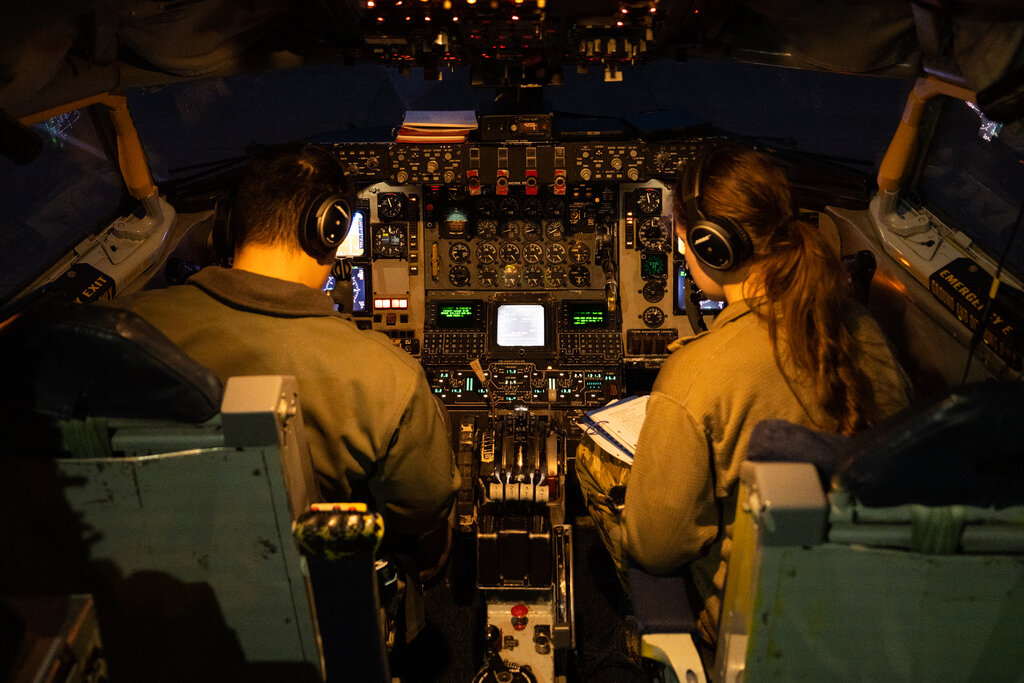
Previously, night flight was strictly off-limits for sport pilots. MOSAIC changes this, but with important safety requirements outlined in FARs like 14 CFR § 61.316 and § 61.329. To fly at night, a sport pilot must receive specific ground and flight training on night operations from an authorized instructor and earn an endorsement.
The aircraft must also be properly equipped for night flight according to 14 CFR § 91.205.
Crucially, there is an added medical requirement. While sport pilots can typically fly without a traditional FAA medical certificate (using a valid U.S. driver's license as proof of health), this privilege does not extend to night operations. For night flying, a sport pilot must hold either a valid FAA third-class medical certificate or a authorization.
This framework ensures that pilots who venture into the more challenging environment of night flying have the requisite training, equipment, and medical fitness to do so safely.
What is the primary shift in defining a Light-Sport Aircraft (LSA) under the new MOSAIC rule?
Under the MOSAIC rule, what is the maximum clean stall speed () and maximum level flight speed () for a fixed-wing LSA?
Understanding these changes is key for any pilot. MOSAIC represents a significant step forward, aligning regulations with the capabilities of modern aircraft and expanding the horizons for aviators.