Autonomous AI Agents
Introduction to Autonomous AI Agents
Beyond Simple Programs
Many of us interact with AI every day, from chatbots to recommendation algorithms. But a special class of AI is emerging that does more than just respond to commands. These are called AI agents, and their defining feature is autonomy.
Autonomy
noun
The ability to operate and make decisions independently, without constant human guidance or intervention.
Think of an AI agent like a smart thermostat. A basic program just follows rules: if the temperature is 68 degrees, turn on the heat. An AI agent, however, learns your habits. It notices you leave for work at 8 AM and lowers the heat on its own. It sees you're on your way home via your phone's location and warms the house up for your arrival. It perceives its environment, makes a decision, and takes action, all to achieve a goal you've set for it, like saving energy while keeping you comfortable.
An AI agent is an autonomous system designed to perceive its environment, analyze data, make decisions, and execute actions to accomplish specific objectives without continuous human oversight.
The Agent's Toolkit
So how do these agents work? They operate in a continuous loop using three core components.
First is perception. This is how an agent senses the world around it. For a self-driving car, perception involves using cameras to see traffic lights, radar to detect other cars, and microphones to hear sirens. For a spam filter, it means “reading” the content and metadata of an email.
Next comes cognition, or the “thinking” part. The agent processes the information from its sensors and decides what to do. The car's computer analyzes the data and concludes, “The light is red, so I must apply the brakes.” The spam filter analyzes the email's text and sender, deciding, “This looks like junk mail.”
Finally, there's actuation. This is the agent taking action in its environment. The car physically applies the brakes, and the spam filter moves the email to the junk folder. This action changes the environment, which the agent then perceives, starting the loop all over again.
This simple loop is the foundation of all autonomous agents, from the simple to the incredibly complex.
Why Autonomy Matters
The push for autonomy in AI is about creating systems that can handle complexity and scale in ways humans can't. An autonomous agent can manage a city's power grid, adjusting for demand in real time, or pilot a rover on another planet where direct control is impossible due to communication delays. They can analyze massive datasets to find new drug candidates or personalize learning for millions of students at once.
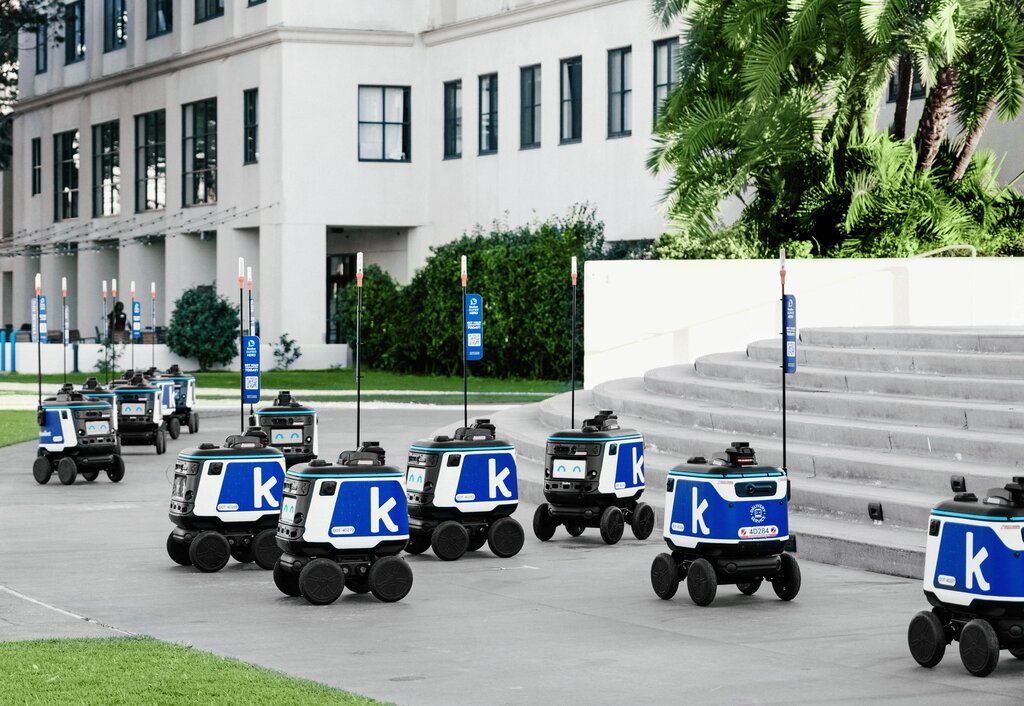
In robotics, agents navigate unpredictable spaces. In customer service, they handle complex queries without a script. In finance, they manage investment portfolios by reacting to market changes instantly. By giving agents the ability to act on their own, we unlock the potential to solve bigger, more dynamic problems.
What is the key feature that distinguishes an AI agent from a more basic computer program?
A self-driving car's computer analyzes data from its camera and radar, concluding that the car ahead is slowing down. This 'thinking' process is an example of which component of an agent's core loop?
This is just the beginning of what autonomous agents can do. Understanding their core components is the first step toward seeing how they are already changing our world.