Autonomous AI Agent Architecture and Deployment
Agentic Design Patterns
Beyond Simple Prompts
A standard interaction with a large language model (LLM) is a one-off conversation. You ask a question, it gives an answer. The context is limited to that single exchange. An agentic workflow, however, transforms this simple back-and-forth into a persistent, goal-oriented process.
Instead of just responding, an agent acts. It operates in a loop, taking an input, thinking about what to do next, performing an action, and then observing the result to inform its next move. The LLM acts as the reasoning engine or “brain” of this system, but it's part of a larger structure that can maintain memory and pursue a goal over multiple steps. This shift from a single response to an iterative cycle is the core of what makes an agent autonomous.
An effective agent combines observation, reasoning, action, and reflection in a continuous loop that can solve complex problems beyond what a simple LLM call could achieve.
Giving the Agent Its Job
An agent's behavior is defined by its system prompt. This isn't just a simple instruction; it's a detailed job description that establishes the agent's persona, its capabilities, its constraints, and its ultimate goal. A well-crafted system prompt turns a general-purpose LLM into a specialized worker.
For example, a customer support agent's prompt would emphasize empathy, accurate information retrieval, and a step-by-step problem-solving approach. A code-writing agent's prompt would prioritize efficiency, adherence to style guides, and the ability to debug its own output. The prompt sets the stage for everything the agent will do.
One of the most effective strategies for structuring this prompt is the ReAct framework, which stands for "Reason and Act." It forces the LLM to externalize its thought process before taking an action. Instead of just producing a final answer, the model first writes down its reasoning, the action it plans to take, and then, after executing, the observation it made.
This loop continues until the agent determines its goal is complete. It transforms the LLM from a black box that just gives answers into a transparent reasoner that shows its work, making it easier to debug and more reliable.
Core Agentic Patterns
Beyond the basic reasoning loop, several key patterns define how advanced agents operate. These patterns can be used individually or combined to create sophisticated, autonomous systems.
Reflection and Self-Correction: This pattern involves the agent reviewing its own work. After generating a response or completing a step, the agent is prompted to critique its output. Did it meet the requirements? Are there any errors? Could it be improved? This self-correction loop allows the agent to iteratively refine its work, leading to higher-quality results. It’s like having a built-in quality assurance checker.
Tool Use: An LLM's knowledge is limited to the data it was trained on. To overcome this, agents can be given access to external tools. These can be anything from a simple calculator or a calendar API to complex databases or web search capabilities. The agent's reasoning engine determines when it needs information it doesn't have, selects the appropriate tool, and uses its output to inform its next step. This dramatically expands an agent's ability to interact with the real world and access up-to-date information.
Planning: For complex, multi-step tasks, an agent needs a plan. Instead of tackling the entire problem at once, the agent first breaks it down into a sequence of smaller, manageable sub-tasks. The generates this plan, which then guides its actions. As it completes each step, it can update or modify the rest of the plan based on the results. This allows agents to handle tasks that would be impossible to solve in a single step, like planning a vacation or writing a research report.
Multi-agent Collaboration: Some problems are too big for a single agent. This pattern involves creating a team of specialized agents that work together. For example, you might have a "researcher" agent that scours the web for information, a "writer" agent that synthesizes the findings into a report, and a "critic" agent that reviews the report for accuracy and clarity. These agents communicate with each other, passing tasks and information back and forth until the collective goal is achieved. This approach mirrors how human teams collaborate to solve complex problems.
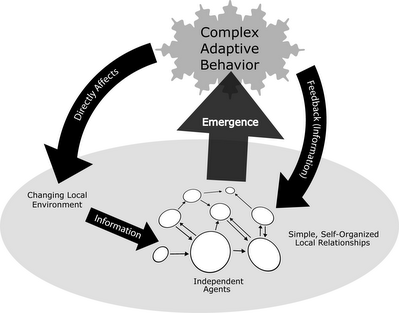
These patterns move us from the zero-shot, single-prompt world into a dynamic, iterative process. By giving an LLM a goal, tools, and a framework for reasoning, we can build systems that don't just answer questions but actively solve problems.
What is the core difference between a standard interaction with an LLM and an agentic workflow?
What is the primary function of a system prompt for an LLM agent?