Automotive Repair Fundamentals
Vehicle Systems Overview
The Heart of the Machine
Think of a car's engine as its heart. Instead of pumping blood, it converts fuel and air into the power that moves the vehicle. This process, called internal combustion, happens thousands of times per minute inside a set of cylinders.
Inside each cylinder is a piston that moves up and down. This movement is the core of the engine's power. A mixture of air and fuel is injected into the cylinder, compressed by the piston, and then ignited by a spark plug. The resulting small explosion forces the piston down with great force.
This up-and-down motion is converted into rotational motion by the crankshaft, which is connected to all the pistons. This spinning crankshaft is what ultimately sends power to the wheels. It all happens in a precise, four-step sequence for each cylinder: intake, compression, power, and exhaust.
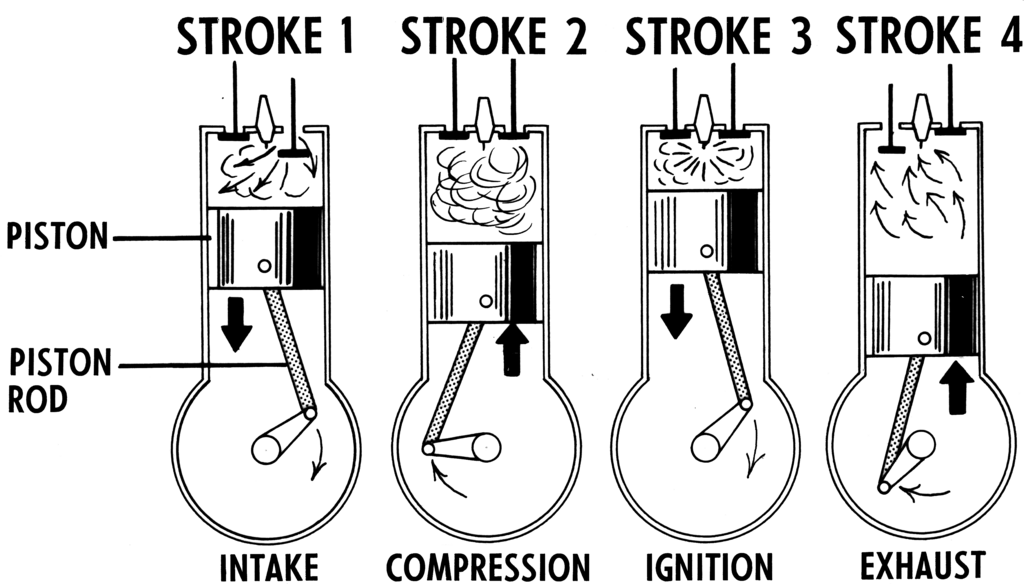
Valves at the top of each cylinder open and close at just the right moments to let the air-fuel mixture in and push the exhaust gases out. It's a beautifully coordinated dance of mechanical parts, all working together to create motion.
Power to the Pavement
The engine creates power, but the transmission delivers it to the wheels. Think of it like the gears on a bicycle. You use low gears to start moving or go up a hill, and high gears to cruise at high speed. A car's transmission does the same thing, selecting the right gear ratio to match the engine's speed with the vehicle's speed.
There are two main types you'll encounter:
- Automatic: The car's computer handles all the gear shifting for you. It uses a complex system of gears and a fluid-filled device called a torque converter to transfer power smoothly.
- Manual: The driver is in control, using a clutch pedal and a gear shifter to select gears. This offers a more direct connection to the car's mechanics.
A third type, the Continuously Variable Transmission (CVT), is also common. Instead of fixed gears, it uses a system of belts and pulleys to provide a seamless range of ratios, often resulting in better fuel efficiency.
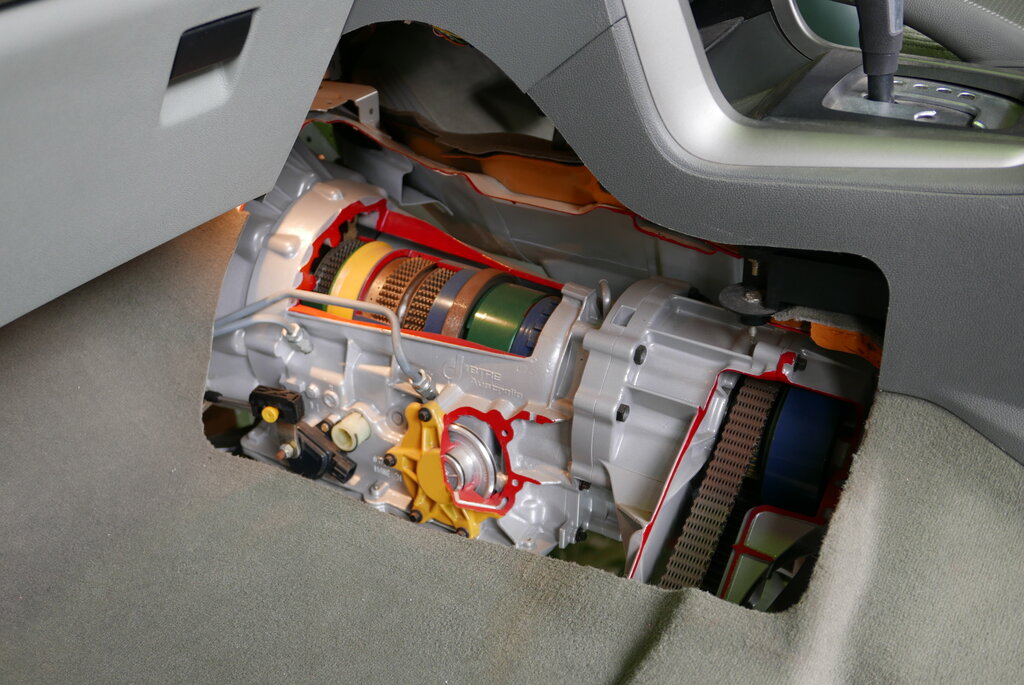
The transmission is part of a larger system called the drivetrain, which includes the driveshaft, axles, and differential. Together, they form the chain that carries power from the engine all the way to the tires on the road.
Bringing It to a Stop
Stopping is just as important as going. The braking system's job is to convert the car's forward motion (kinetic energy) into heat using friction. When you press the brake pedal, you're starting a hydraulic process.
Your foot pressure is amplified and used to push a special fluid through a network of brake lines. This pressurized fluid activates the braking hardware at each wheel.
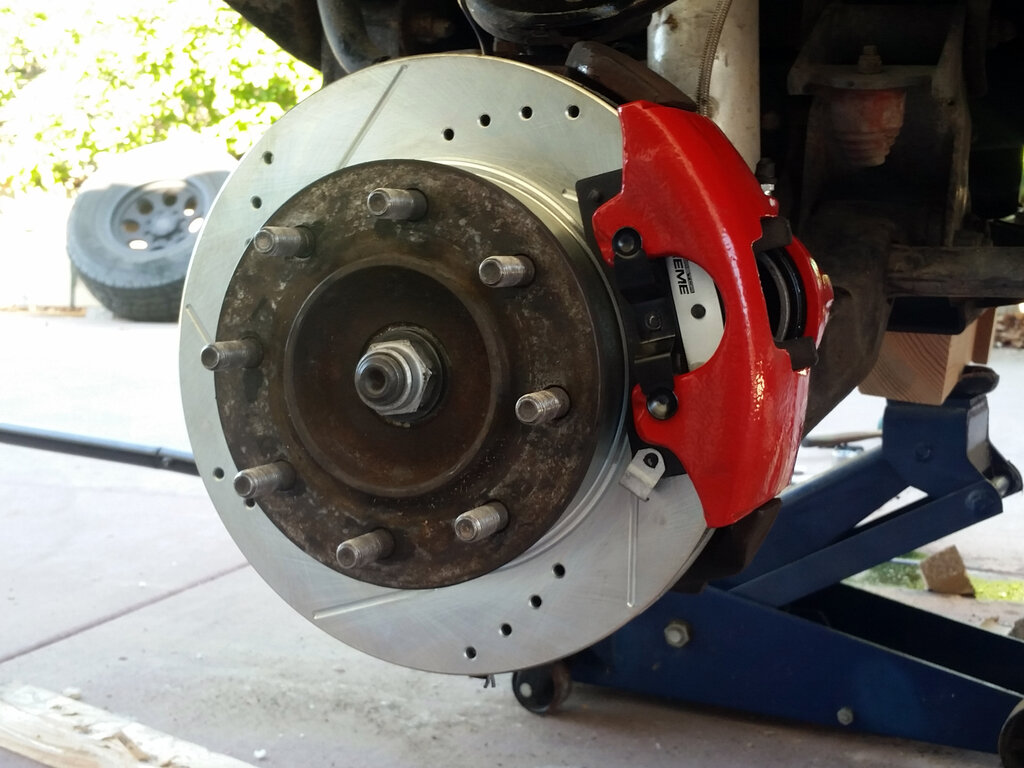
Most modern cars use disc brakes, especially on the front wheels. Here's how they work:
- A cast-iron disc (or rotor) spins with the wheel.
- A hydraulic clamp, called a caliper, surrounds the disc.
- When you brake, the caliper squeezes high-friction pads against the spinning disc, slowing the car down.
Some cars, particularly on the rear wheels, use drum brakes. These work by pushing brake shoes outward against the inside of a spinning drum.
The Nervous System
If the engine is the heart, the electrical system is the car's brain and nervous system. It powers everything from the spark plugs that ignite the engine to the radio and headlights. The system has three main parts:
- The Battery: This provides the initial jolt of electricity needed to start the engine. It also powers the car's electronics when the engine is off.
- The Alternator: Once the engine is running, the alternator takes over. Driven by a belt connected to the engine, it generates electricity to power the car and recharge the battery.
- The Wiring: A complex web of wires connects everything, carrying power from the source to where it's needed. Fuses and circuit breakers are built in to protect sensitive components from power surges.
The electrical system is responsible for starting the car, running all the onboard computers (ECUs), and powering lights, sensors, and accessories.
These four systems—engine, transmission, brakes, and electrical—are the foundation of how any modern car works. Understanding their basic roles is the first step toward diagnosing problems and performing your own basic maintenance.
What is the correct sequence of the four steps in an internal combustion engine's cycle?
What is the primary function of a car's transmission?