Automotive Engineering and Engine Dynamics
Architecture and Layout
The Engine's Skeleton
The engine block is the foundation of any internal combustion engine, a sturdy casing of iron or aluminum that contains the cylinders. But how those cylinders are arranged is one of the most fundamental decisions an engineer makes. This isn't just about fitting parts into a car; it's about defining the engine's personality, from its sound and smoothness to its power delivery.
At the heart of this decision is the concept of balance. Every time a piston flies up and down, it creates forces. Primary forces are the direct, once-per-revolution vibrations from this movement. Secondary forces are more complex, vibrating at twice the crankshaft speed. An engine's layout determines how well these competing forces cancel each other out, or if they need help from extra components like balance shafts to keep things smooth.
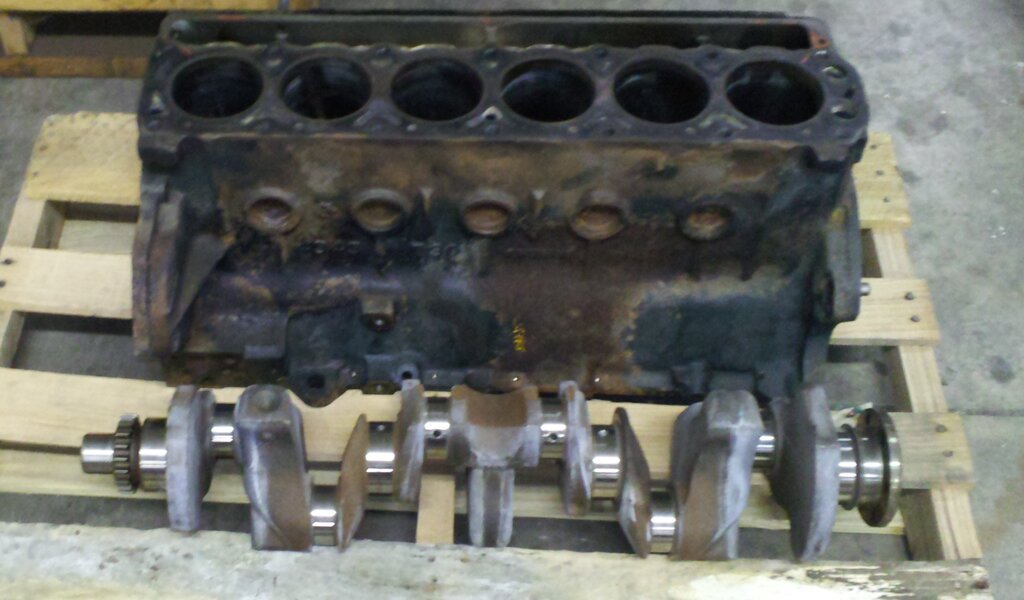
An engine is a sophisticated mechanical marvel, and at its core lies the engine block, a sturdy metal casing that houses the essential components driving the system's power.
The Straight and Narrow
The simplest arrangement is the inline or straight engine, where all cylinders stand in a single row. This design is straightforward to manufacture and mechanically simple. The Inline-4 (I4) is a workhorse of the automotive world, found in countless compact cars. It’s a good compromise of power, efficiency, and size. However, its secondary forces don't fully cancel, which can lead to vibrations at higher RPMs.
The Inline-6 (I6), on the other hand, is a master of smoothness. In an I6, the pistons move in pairs. For every piston moving up, another is moving down, perfectly canceling out the primary forces. More importantly, the secondary forces also cancel each other out, resulting in an engine that is inherently, perfectly balanced. This is why brands like BMW have long championed the I6 for its silky-smooth power delivery. The main drawback? An I6 is long, making it difficult to package in the small engine bays of modern front-wheel-drive cars.
The V Formation
To fit more cylinders into a smaller space, engineers arrange them in a V-shape. This creates a shorter, wider engine block that fits neatly into both longitudinal (rear-wheel drive) and transverse (front-wheel drive) engine bays. V6 and V8 engines are common in larger cars, trucks, and performance vehicles.
The angle between the two cylinder banks is critical. A 60-degree V6 provides even firing intervals, meaning the power pulses are spaced out equally, contributing to smooth operation. The most common angle for a V8 is 90 degrees, which allows for perfect primary balance when paired with a specific type of crankshaft. However, V-engines are not inherently balanced like an I6 and often require balance shafts or precisely weighted crankshafts to quell vibrations. The trade-off is clear: you sacrifice some inherent smoothness for a much more compact and power-dense package.
Beyond these common layouts, engineers have developed even more creative solutions. The VR6 engine from Volkswagen is a fascinating hybrid. It's technically a V6, but with an extremely narrow 10.6 or 15-degree angle between the banks. This allows the two banks to be staggered and fit under a single cylinder head, creating an engine nearly as compact as an I4 but with the power of six cylinders.
Taking this concept further, the W-engine essentially joins two VR banks together on a single crankshaft. This results in incredibly compact W8, W12, and even W16 engines, packing a huge number of cylinders into a space not much larger than a conventional V8. These are complex and expensive to build, reserving them for high-end luxury and performance cars like those from Bentley and Bugatti.
The Flat Advantage
The Boxer engine, also known as a flat engine, lays its cylinders down horizontally. The pistons are opposed, moving in and out like a boxer throwing punches. This configuration, famously used by Subaru and Porsche, has a major advantage: an extremely low center of gravity. Placing the heavy engine block lower in the car's chassis significantly improves handling and stability, reducing body roll during cornering.
Like the Inline-6, the Boxer engine is also inherently balanced. The opposing motion of the pistons cancels out primary vibrations perfectly. While secondary vibrations exist, they are often minimal. The result is a smooth-running engine with a distinct, burbling exhaust note and significant performance benefits rooted in pure physics.
Which engine configuration is renowned for being inherently, perfectly balanced, with both primary and secondary forces canceling each other out naturally?
What is the primary advantage of the Boxer engine layout, as used by manufacturers like Subaru and Porsche?
Ultimately, every engine layout is a compromise. Engineers must balance the desire for smoothness, power density, low center of gravity, and manufacturing cost to suit a vehicle's specific purpose, whether it's an economical city car or a track-focused supercar. The arrangement of a few cylinders in a block of metal sets the entire character of the machine.