Automotive Electrical and Electronic Systems
Automotive Electrical Fundamentals
The Flow of Power
A car's electrical system works a lot like the plumbing in your house. Instead of water, it moves electrical energy. To understand it, we need to know three key ideas: voltage, current, and resistance. They work together to power everything from your headlights to your radio.
Voltage
noun
The pressure or force that pushes electrons through a wire. Think of it as the water pressure in a pipe.
Current
noun
The rate at which electric charge flows through a circuit. It's like the volume of water flowing through a pipe per second.
Resistance
noun
The measure of opposition to the flow of current. A narrow pipe has more resistance to water flow than a wide one.
Voltage pushes, current flows, and resistance opposes. They're all connected by a simple rule called Ohm's Law.
This relationship is the foundation of every electrical circuit in your car. A high-power component like your headlights needs a lot of current to shine brightly, while a tiny dashboard light needs very little.
The Key Players
Every automotive electrical system is built around a few core components. Each one has a specific job, and they all have to work together.
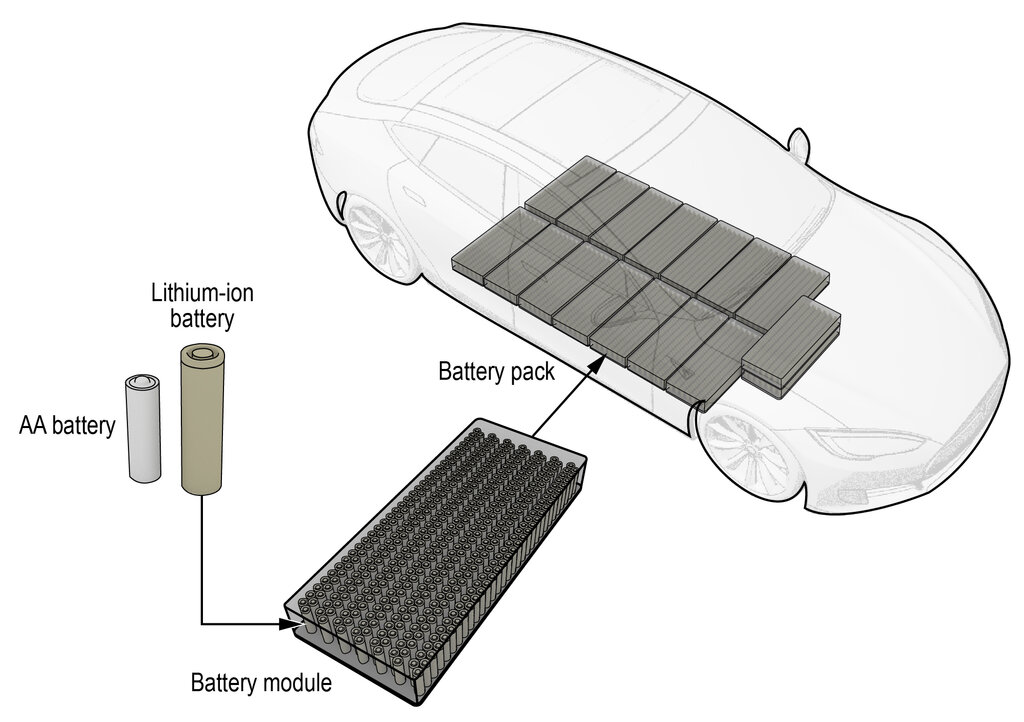
The Battery is the heart of the system when the engine is off. It's a chemical storage device that provides the 12-volt direct current (DC) needed to start the car and power electronics like the clock and security system. When you turn the key, the battery sends a massive surge of current to the starter motor.
The Alternator is the power plant. Once the engine is running, a belt spins the alternator, which generates electricity to power all the car's systems and, crucially, to recharge the battery. Without it, your battery would go flat in a short time.
The Starter Motor has one demanding job: to crank the engine until it can run on its own. It's the single biggest consumer of electricity in the entire vehicle, drawing hundreds of amps for a few seconds.
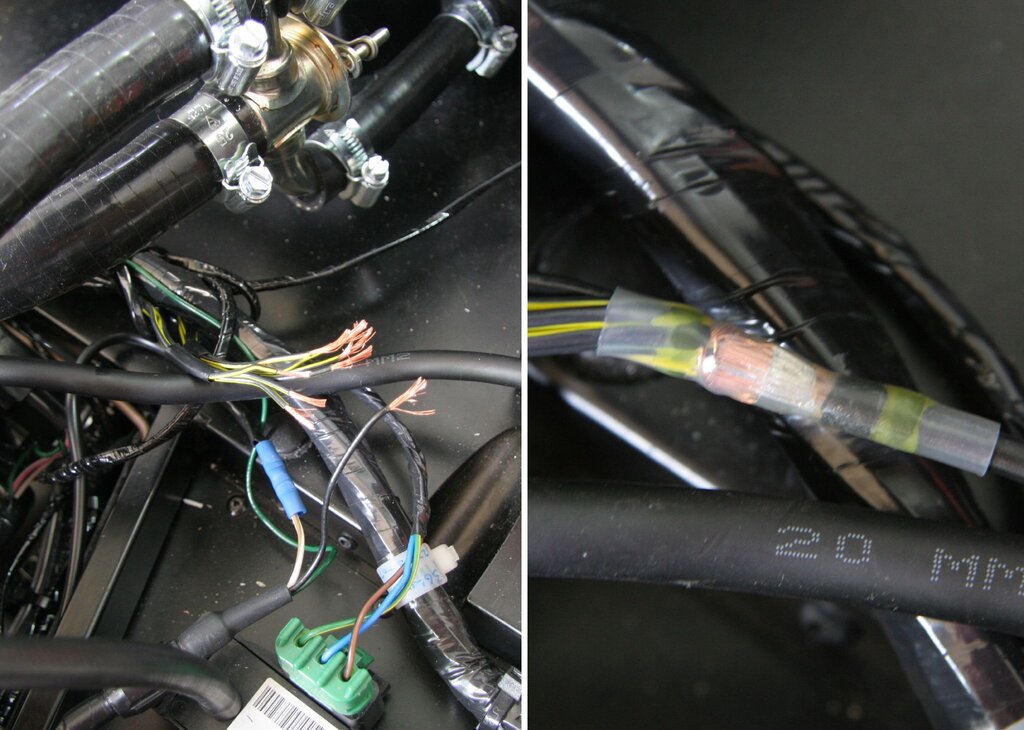
Wires and Harnesses are the nervous system of the car, carrying power and signals between components. They are bundled together into harnesses to protect them from heat and vibration and to keep the engine bay tidy. The thickness of a wire is determined by the amount of current it needs to carry; a starter cable is thick like a garden hose, while a wire for a sensor might be as thin as a strand of spaghetti.
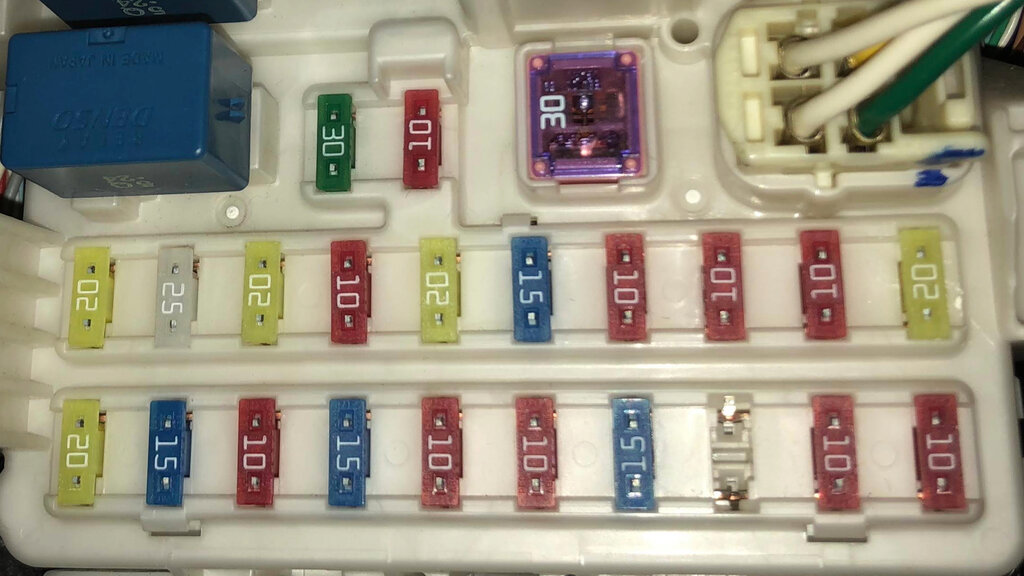
Fuses and Circuit Breakers are the system's safety guards. If too much current flows through a wire—due to a short circuit, for example—it can overheat and cause a fire. A fuse is a small, sacrificial wire designed to melt and break the circuit before that happens. This protects expensive components from damage.
Finally, Switches and Relays control the flow of electricity. A switch is a simple manual controller, like your headlight switch. A relay is an electrically operated switch. It allows a small amount of current from a switch on your dashboard to control a much larger current, like the one needed for the horn or starter motor. This keeps high-power wiring out of the passenger cabin.
System Architecture
All these components are wired together into circuits. A circuit is just a complete path for electricity to flow from a power source, through a component (like a light bulb), and back to the source.
In a car, the metal frame and body—the chassis—is used as part of the circuit. This is called a chassis ground system. Instead of running a second wire back to the battery's negative terminal for every single component, a single wire connects the negative terminal to the car's frame. Then, each electrical device is simply connected to the chassis nearby to complete its circuit.
This clever design saves an enormous amount of copper wire, reducing weight, cost, and complexity. It’s why you’ll often see wires bolted directly to the car's frame. That connection is just as important as the one going to the positive battery terminal.
What is the primary role of the alternator in a car's electrical system?
A relay is used in a car's electrical system to:
These fundamentals are the building blocks for every electrical system in a vehicle. Understanding how voltage, current, and resistance work together with key components in a grounded system will help you diagnose problems and understand more complex electronics.