Automotive Air Conditioning Explained
Introduction to Automotive Air Conditioning
The Science of Staying Cool
A car's air conditioning system does more than just blow cold air. It's a key part of your comfort and safety on the road. On a hot day, it makes driving bearable. On a cold, damp morning, it clears a foggy windshield, improving visibility. Without it, long trips would be miserable and some weather conditions would be hazardous.
The magic behind it all is a basic principle of thermodynamics: heat moves from a warmer area to a cooler one. An air conditioner doesn't create cold; it moves heat. Your car's A/C is essentially a heat pump that pulls heat from inside your vehicle's cabin and transfers it to the outside air.
Thermodynamics
noun
The branch of physics that deals with the relationships between heat and other forms of energy.
Think of it like a sponge. The system uses a special fluid called a refrigerant to absorb heat from the cabin air, much like a sponge soaks up water. This refrigerant, now carrying the heat, is pumped outside the cabin where it releases the heat into the atmosphere. The newly cooled refrigerant is then cycled back inside to absorb more heat, and the process repeats.
More Than Just an AC
In modern cars, we rarely talk about just the air conditioner. Instead, we refer to the HVAC system. HVAC stands for Heating, Ventilation, and Air Conditioning. It’s an integrated system that manages your car’s entire climate.
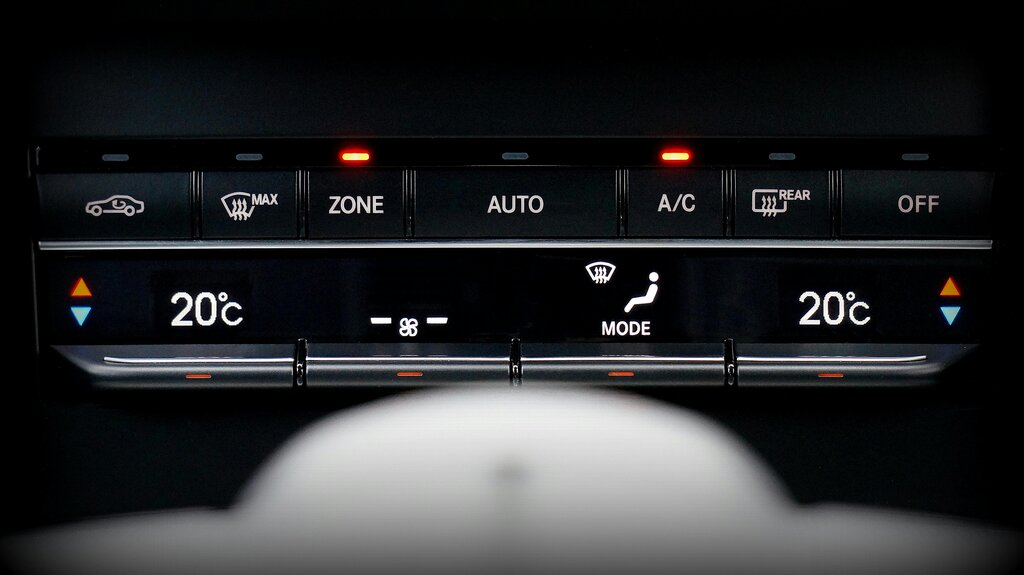
A traditional home air conditioner has one job: to cool a space. An automotive HVAC system is far more complex. It has to:
- Heat and cool: It must provide warmth in the winter and cool air in the summer.
- Ventilate: It circulates fresh outside air or recirculates inside air to maintain air quality.
- Dehumidify: The A/C component naturally removes moisture from the air, which is crucial for defogging and defrosting windows.
This system must perform all these functions in a compact, vibrating environment with rapidly changing temperatures. Unlike your home unit, which is stationary and has plenty of space, a car's HVAC system is squeezed into the dashboard and engine bay, designed to withstand the rigors of the road.
Your home AC cools a stable environment. Your car's HVAC system manages the entire cabin climate, from a freezing winter morning to a scorching summer afternoon.
Now, let's review the key terms we've covered.
Ready to test your knowledge?
What is the primary way a car's air conditioning system cools the cabin?
The term HVAC, used for a car's climate control, stands for Heating, Ventilation, and Air Conditioning.
Understanding these fundamentals is the first step toward grasping how your car keeps you comfortable and safe in any weather.