Automobile Manufacturing Explained
Introduction to Automotive Manufacturing
The Engine of the Economy
The automotive industry is a global giant. More than just car companies, it's a massive network of designers, engineers, factory workers, and suppliers. Millions of people have jobs because of the relentless demand for new vehicles, from the steel mills that forge the frames to the tech companies that develop the software inside.
This industry acts as a powerful engine for national economies. Its health is often seen as a barometer for the economy as a whole. When car sales are up, it means people are confident and spending, which creates a ripple effect of positive activity across countless other sectors.
Building a Car, Step by Step
Creating a car is a highly organized, step-by-step process that transforms raw materials into a complex machine. While designs and engineering happen long before production begins, the factory floor is where a vehicle truly comes to life. The entire process can be broken down into a few key stages.
First comes Stamping. Giant presses exert immense force on large sheets of steel or aluminum, shaping them into the recognizable parts of a car body—doors, fenders, hoods, and the roof. Each panel is formed with incredible precision to ensure a perfect fit.
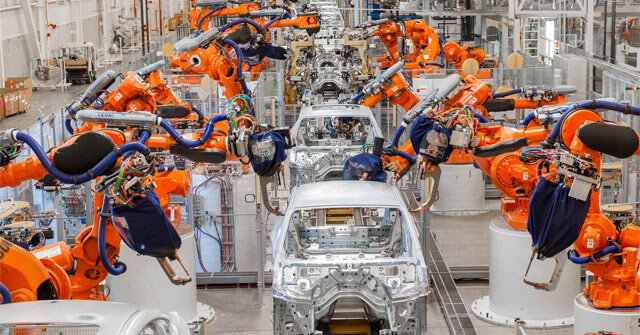
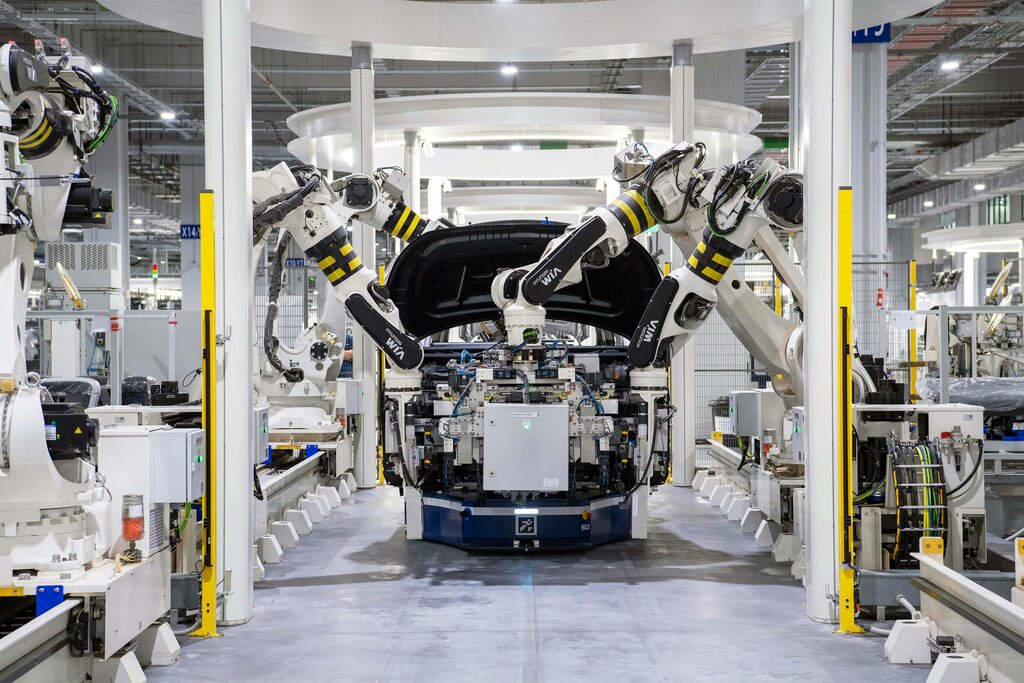
Next is the Body Shop, where the car takes its shape. Here, robotic arms weld the individual stamped panels together. This creates the car's frame and chassis, known as the "body-in-white." It's the bare, unpainted metal skeleton of the vehicle.
Once the body is built, it moves to the Paint Shop. This is a multi-step process crucial for both appearance and durability. The body is cleaned, dipped in anti-corrosion coatings, and then several layers of paint are applied: a primer, the color base coat, and a protective clear coat on top. This ensures the car will withstand the elements for years.
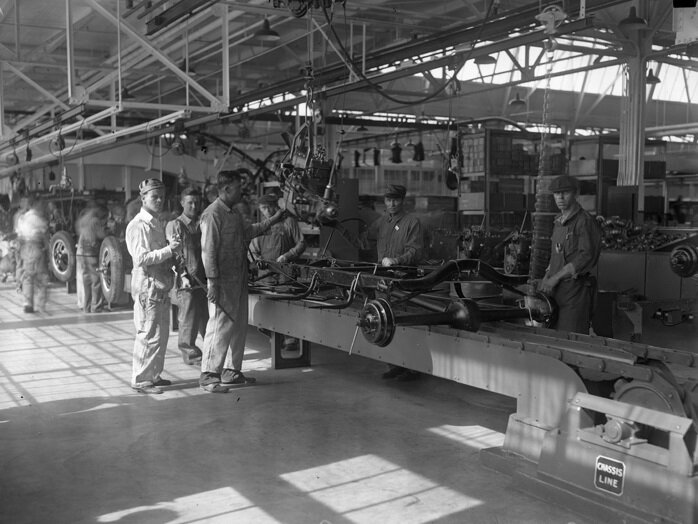
The final major stage is General Assembly. This is the classic assembly line people picture. The painted body moves down a line where thousands of parts are added. The engine and transmission are installed, along with the wiring harness, dashboard, seats, windows, wheels, and everything else. It's a carefully choreographed dance of people and machines.
Before any car is shipped, it undergoes rigorous Quality Control. Inspectors check everything from the paint job to the engine's performance. They ensure every vehicle that rolls off the line meets strict safety and quality standards. Only after passing these final checks is a car ready for the dealership.
The health of the automotive industry is often considered a barometer for the overall economy because...
What is the term for the bare, unpainted metal skeleton of a car created by welding stamped panels together?
This overview provides a glimpse into the scale and complexity of making a car. Each stage is a marvel of modern manufacturing, combining human skill with advanced automation.