Automating VM Setup with Cloud-init
Introduction to Cloud-init
Automating Your First Boot
When you launch a new virtual machine in the cloud, it's a blank slate. You still need to install software, create user accounts, set network settings, and apply security updates. Doing this manually for one machine is tedious. Doing it for ten or a hundred is a recipe for errors and wasted time.
This is where cloud-init comes in. It's the industry standard for handling the initial setup of a cloud instance. It runs only on the very first boot, automating all those initial configuration tasks so the machine is ready to use, exactly as you specified, moments after it's created.
instance
noun
A single virtual machine running in a cloud computing environment. It's like having your own virtual computer hosted by a cloud provider.
The benefits are straightforward but powerful:
- Speed: Instances are configured and ready in minutes, not hours.
- Consistency: Every instance is set up identically, eliminating configuration drift and manual errors.
- Scalability: You can launch dozens of pre-configured instances as easily as launching one.
How It Works
Cloud-init works by reading configuration data that you provide when you launch a new instance. This data, often called "user data," is a set of instructions that tells cloud-init what to do. The cloud platform makes this user data available to the instance during its startup process.
Think of user data as a checklist you give to a new employee on their first day. It tells them exactly how to set up their computer and what software to install.
Once the instance boots up for the first time, the cloud-init service starts automatically. It finds the user data and executes the instructions in a series of well-defined stages. This staged process ensures that tasks happen in the right order. For example, it sets up networking before trying to download software packages from the internet.
A Universal Tool
One of the greatest strengths of cloud-init is its wide adoption. It's not a proprietary tool for a single provider. Instead, it works across almost all major cloud platforms, including Amazon Web Services (AWS), Google Cloud Platform (GCP), Microsoft Azure, and private cloud software like OpenStack.
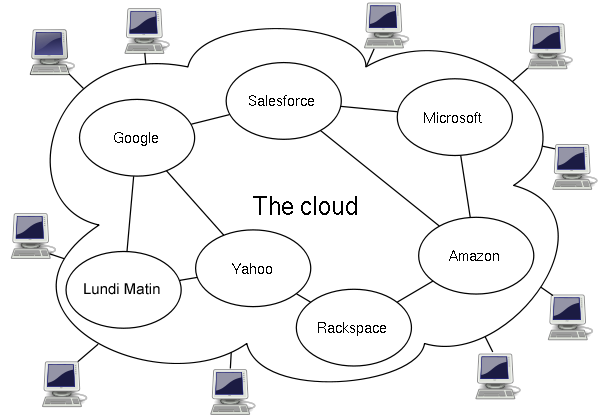
This cross-platform support means you can often use the same or similar configuration scripts to launch instances in different cloud environments. This simplifies managing a multi-cloud strategy and makes your infrastructure more portable. Cloud-init effectively provides a common language for the initial bootstrap of any cloud server, regardless of where it's hosted.
Now that you understand what cloud-init is for and how it generally works, let's test your knowledge.
What is the primary role of cloud-init?
Cloud-init runs a configuration script every time the virtual machine reboots to ensure consistency.
In the next step, we'll look at the specific format used for that user data and write our first simple configuration.