Automating Question Generation
Introduction to Question Generation
From Text to Test
Reading a dense chapter in a textbook can feel passive. You see the words, but are you really absorbing the information? What if, at the click of a button, the text could quiz you on what you just read? This is the core idea behind Automatic Question Generation, or AQG.
Automatic Question Generation
noun
The process of using a computer system to automatically create questions from a piece of text, video, or other educational material.
AQG transforms content into a tool for active learning. Instead of just reading, you are prompted to recall information, make connections, and think critically. This simple shift from passive consumption to active engagement can make a huge difference in comprehension and long-term memory.
Putting Questions to Work
The most obvious use for AQG is in education. Imagine reading an online article about biology and then instantly generating a set of flashcards or a practice quiz based on it. This allows for immediate self-assessment, helping you pinpoint exactly what you understood and what you need to review.
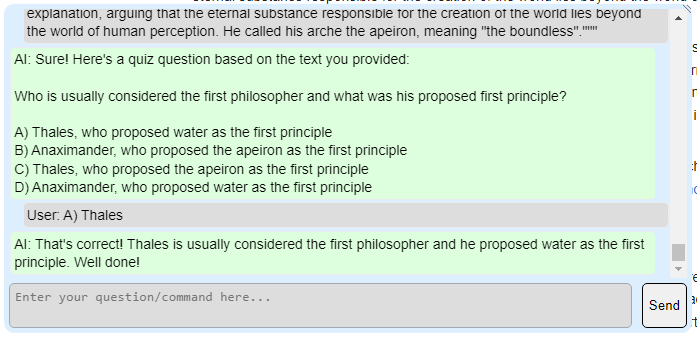
For educators, AQG systems can be a powerful assistant. A teacher could feed a chapter from a new textbook into an AQG tool to quickly create a homework assignment or a set of discussion prompts for class. This frees up valuable time that can be spent working directly with students.
Beyond quizzes, question generation can also power more sophisticated learning tools, like intelligent tutoring systems that adapt to a student's knowledge level by asking progressively harder questions.
A Quick History
The idea of generating questions automatically isn't new. Early systems, developed decades ago, were mostly rule-based. They relied on hand-crafted grammatical templates to transform declarative sentences into questions. These systems were clever but limited. They could handle simple statements but struggled with the complexity and nuance of human language.
| Statement | Rule | Generated Question |
|---|---|---|
| "Marie Curie discovered radium." | Replace subject with "Who" and add "did". | "Who did discover radium?" |
| "The mitochondria is the powerhouse of the cell." | Replace subject with "What". | "What is the powerhouse of the cell?" |
As you can see, the results were often functional but could be grammatically awkward. The big leap forward came with the rise of machine learning and, more recently, large language models. Modern AQG systems don't just follow rigid rules. They learn the patterns of language from analyzing vast amounts of text. This allows them to generate a much wider variety of questions, from simple fact-recall ("What year was the Declaration of Independence signed?") to more inferential questions that require deeper understanding ("Why was the Declaration of Independence significant?").
Question generation (QG) is a natural language processing task with an abundance of potential benefits and use cases in the educational domain.
Now you have a sense of what automatic question generation is and why it matters for learning. It’s a field that turns static information into an interactive experience.
Time to check your understanding.
What is the primary goal of Automatic Question Generation (AQG) in the context of learning?
How did early, rule-based AQG systems primarily function?